Surge Protector vs Lightning Protection – Expert Guide to Choosing the Right Electrical Safety Solution
Electrical safety is an essential consideration for every home, office, and industrial setup. With the increasing use of sensitive electronic devices, understanding the difference between surge protectors and lightning protection systems is crucial. While both serve the purpose of safeguarding electrical equipment, their design, application, and efficiency vary significantly.
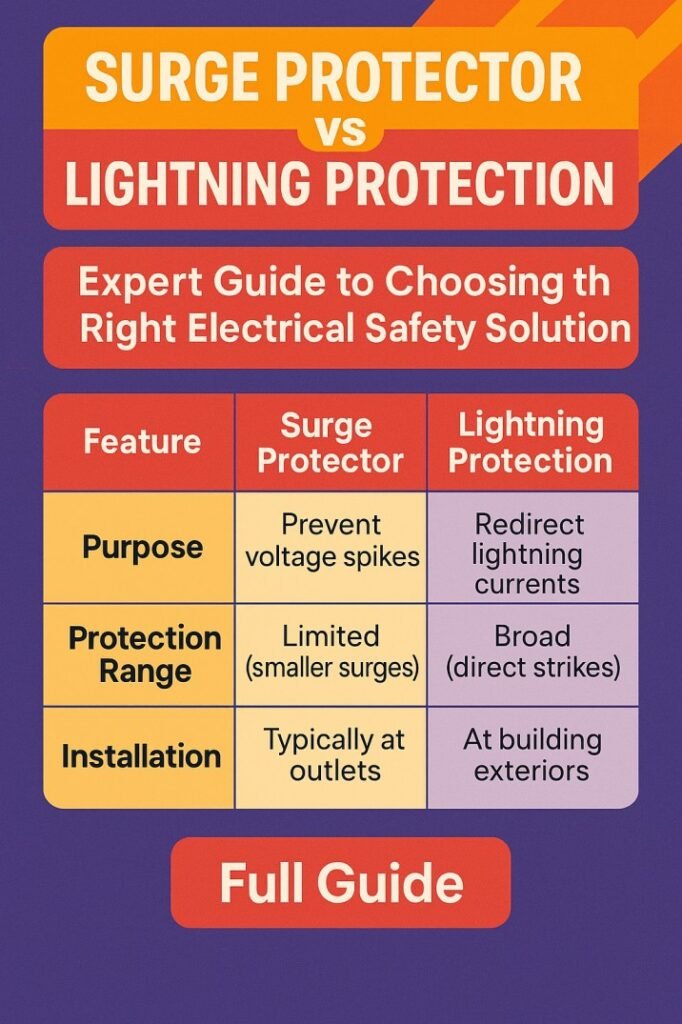
Table of Contents
In this expert guide, we will explore the key differences, advantages, limitations, and best practices for choosing the right electrical safety solution. By the end, you will have a clear understanding of when to use a surge protector versus lightning protection, ensuring maximum safety for your assets.
Know more about Types of Lightning Arrester Explained: Important Guide for Power Systems & Substations
What Is a Surge Protector?
A surge protector, often called a surge suppressor, is a device designed to protect electrical appliances from sudden voltage spikes. These voltage spikes, or surges, are usually caused by switching operations in the power grid, faulty appliances, or lightning strikes in nearby areas. Surge protectors work by diverting excess voltage to the ground, ensuring that connected devices receive a stable voltage supply. They are commonly used for computers, televisions, home entertainment systems, and industrial equipment.
Surge protectors come in various types, including plug-in devices, power strips, and panel-mounted units. Key specifications to consider include the joule rating, response time, clamping voltage, and the type of protection offered (single-phase or three-phase). A higher joule rating indicates a better ability to absorb energy from voltage surges, while a faster response time ensures quicker protection for sensitive electronics.
Know more about Top 10 Lightning Protection Design Softwares: Best Guide
What Is Lightning Protection?
Lightning protection, on the other hand, is a system specifically designed to protect buildings and structures from direct lightning strikes. Unlike surge protectors that primarily address minor voltage fluctuations, lightning protection systems provide a path for the immense energy of a lightning strike to safely travel to the ground, preventing structural damage, fires, and catastrophic equipment failure.
A standard lightning protection system includes air terminals (lightning rods), conductors, grounding electrodes, and bonding connections. Air terminals capture the lightning strike, conductors carry the energy safely to the ground, and grounding electrodes dissipate the current into the earth. Properly designed lightning protection is critical for large buildings, factories, and installations with critical electrical infrastructure. It is a structural and electrical solution, unlike surge protectors, which are primarily electrical. Know more about IEC Standard for Lightning Arrester – IEC 60099 Guide for Surge and Overvoltage Protection
Key Differences Between Surge Protector vs Lightning Protection
Understanding the distinction between surge protector vs lightning protection is essential when planning electrical safety measures. The table below summarizes the main differences:
| Feature | Surge Protector | Lightning Protection |
|---|---|---|
| Purpose | Protects devices from transient voltage spikes | Protects buildings and structures from direct lightning strikes |
| Protection Type | Electrical/electronic equipment | Structural and electrical safety |
| Installation | Plug-in, power strip, or panel-mounted | Roof-mounted air terminals, conductors, grounding system |
| Voltage Handling | Low to moderate surges (hundreds to thousands of volts) | Extremely high voltage from lightning strikes (millions of volts) |
| Response Time | Microseconds | Immediate, structural conductors handle energy |
| Maintenance | Periodic replacement of units | Regular inspection of grounding and rods |
| Cost | Relatively low | Higher cost due to structural installation |
| Lifespan | 3-5 years on average | Long-term (10-20 years with proper maintenance) |
This comparison clearly illustrates that while both systems aim to protect electrical assets, they operate at different levels and serve complementary roles rather than being interchangeable.
Know more about IEC Standard for Lightning Protection: A Complete Technical Guide
Advantages of Using a Surge Protector
Surge protectors offer several benefits for residential, commercial, and industrial users. They are easy to install, cost-effective, and suitable for protecting individual devices or small networks of equipment. Some advantages include:
- Device protection: Prevents damage to computers, appliances, and home electronics from voltage spikes.
- Cost efficiency: Less expensive than installing structural lightning protection.
- Ease of replacement: Can be easily upgraded or replaced as technology evolves.
- Multi-stage protection: Some surge protectors offer advanced features like filtering, multiple outlets, and network protection.
Advantages of Lightning Protection Systems
Lightning protection systems are designed to handle much higher energy levels than surge protectors and provide comprehensive safety for entire structures. Their key benefits include:
- Structural safety: Prevents fires, roof damage, and building collapse caused by direct strikes.
- Electrical network protection: Safeguards large electrical systems and industrial equipment from catastrophic surges.
- Longevity: Designed to last decades with proper maintenance.
- Compliance: Meets international safety standards and building codes for lightning protection.
Know more about Leakage Current in Lightning Arrester: Best Guide
When to Use Surge Protectors vs Lightning Protection
The choice between surge protector vs lightning protection depends on the risk level, type of installation, and the value of electrical assets.
- Residential homes: Surge protectors are sufficient for day-to-day protection against minor surges. In areas with frequent thunderstorms, combining surge protection with lightning rods provides added safety.
- Commercial buildings: Surge protection is essential for sensitive office equipment. Lightning protection is recommended for tall buildings or structures in lightning-prone regions.
- Industrial facilities: Critical electrical and automation systems require both surge protectors for equipment-level safety and lightning protection for structural and network-level safety.
A layered approach often works best. Installing a lightning protection system to handle extreme strikes, combined with surge protectors at key electrical panels, ensures a comprehensive defense strategy.
Know more about Earth Cable Size for Lightning Protection
Factors to Consider When Choosing the Right Solution
Selecting the correct safety solution requires analyzing multiple factors:
- Location and weather conditions: Regions prone to thunderstorms require robust lightning protection.
- Value of equipment: High-value electronics warrant high-quality surge protectors.
- Building height and structure: Taller buildings need advanced lightning rods and grounding systems.
- Electrical load and complexity: Industrial setups may require coordinated surge protection across multiple panels.
- Budget constraints: Surge protectors are cost-effective for homes; lightning protection involves higher upfront investment.
Maintenance and Best Practices
Regular maintenance ensures that both surge protectors and lightning protection systems function effectively. For surge protectors, monitor for tripped indicators or worn-out units and replace them periodically. For lightning protection systems, inspect grounding electrodes, conductors, and bonding connections at least once a year. Ensure compliance with local electrical codes and consider professional assessment for high-risk installations.
Know more about What Is Air Terminal in Lightning Protection? Function, Types & Installation Explained
Using a combination of both systems provides the highest level of safety. While surge protectors defend against small, frequent surges, lightning protection systems safeguard against rare but devastating lightning strikes. This dual-layered strategy is recommended for high-value or critical installations.
Common Misconceptions About Surge Protector vs Lightning Protection
Many users confuse surge protectors with lightning protection, assuming that a high-quality surge protector alone is enough. While surge protectors provide excellent protection against minor voltage spikes, they are not capable of safely handling the immense energy of a direct lightning strike. Similarly, a lightning protection system alone does not filter small voltage surges caused by switching operations. Understanding the specific role of each system prevents false security and reduces the risk of damage.
Know more about What Is Early Streamer Emission A Practical Guide for Engineers, Standards, and Lightning Protection Design
Conclusion
Choosing between surge protector vs lightning protection is not a matter of one being better than the other—they serve different purposes and complement each other. For everyday electronic protection, surge protectors are essential. For safeguarding buildings and critical electrical infrastructure from direct lightning strikes, lightning protection systems are indispensable.
By assessing your installation, location, and equipment requirements, you can implement a layered electrical safety approach that maximizes protection and ensures peace of mind. Investing in the right combination of surge protection and lightning safety is a smart decision that protects both your devices and your property for years to come.
Follow Us on Social:
Subscribe our Newsletter on Electrical Insights for latest updates from Electrical Engineering Hub
#SurgeProtectorVsLightningProtection, #SurgeProtection, #LightningProtection, #ElectricalSafety, #PowerSurge, #HomeSafety, #ElectricalProtection, #SurgeProtectionDevices, #LightningSafety, #ElectricalEquipmentProtection