LV Cable Size Calculator – Instantly Select the Correct Cable for Safe & Efficient Installations
Introduction
The LV cable size calculator is designed to help engineers, electricians, and contractors select the correct low-voltage cable size for electrical installations. It evaluates key electrical inputs such as load current, system voltage, installation type, and operating conditions to recommend a suitable conductor size that can safely carry the load.
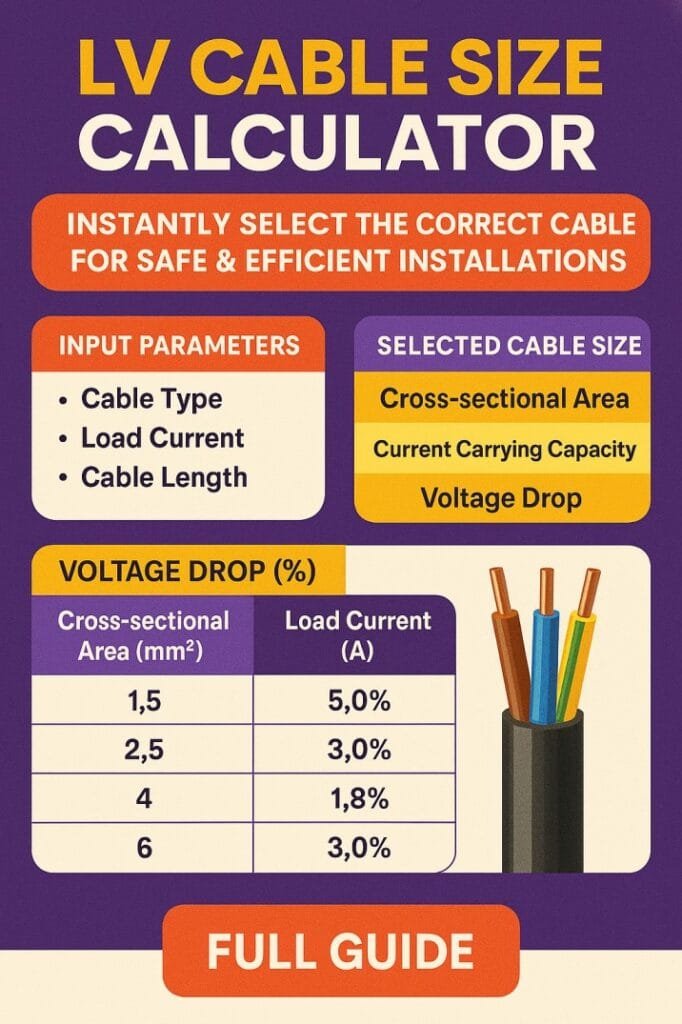
Table of Contents
In day-to-day electrical work, cable sizing directly affects system reliability, voltage performance, and safety. An undersized cable can overheat, cause excessive voltage drop, or lead to premature insulation failure. An oversized cable, while safer, increases project cost and complicates installation. The lv cable size calculator bridges this gap by supporting technically sound decisions based on practical electrical parameters.
Accurate electrical calculation is not only a design requirement but also a compliance and safety responsibility. Whether the application is residential distribution, commercial buildings, or industrial power systems, correct cable sizing ensures long-term performance and reduces operational risk.
Get instant results with our online tool earth cable size calculator
LV Cable Size Calculator
The lv cable size calculator is already available on this page. Enter the required electrical values and click calculate to obtain the recommended low-voltage cable size for your application.
LV Cable Size Calculator
IEC & NEC Based Interactive Tool
Input Parameters
How to Use
1. Enter the system voltage, load current, and cable length.
2. Select whether your system is single-phase or three-phase.
3. Choose installation method (buried, tray, or conduit).
4. Select the applicable standard (IEC or NEC).
5. Choose conductor material (Copper or Aluminium).
6. Click “Calculate Size” to get the recommended LV cable size.
This tool provides indicative sizing based on international standards. Always confirm with detailed engineering design and local regulations before implementation.
Find more Electrical Engineering Tools for easy electrical calculations and estimations.
How to Use LV Cable Size Calculator (Step-by-Step)
- Select the system type, such as single-phase or three-phase, based on your installation.
- Enter the operating voltage of the circuit.
- Input the load value, usually in current or power, as specified on the calculator.
- Choose the load type, such as motor load or general power load.
- Specify the installation condition, including ambient temperature or cable laying method if required.
- Click the calculate button to view the suggested cable size.
Each step is designed to guide users with minimal electrical background while still supporting professional-level accuracy.
How the Calculation Works
The lv cable size calculator works by determining how much electrical current the cable must carry under normal operating conditions. It considers the electrical demand of the connected load and adjusts the result based on real-world factors that influence heat buildup and voltage drop.
The calculator evaluates whether the selected cable can carry the required current without exceeding safe temperature limits. It also checks that voltage loss along the cable length remains within acceptable limits for low-voltage systems. The final output represents a cable size that balances thermal capacity, electrical efficiency, and practical installation limits.
This approach mirrors the logic used in professional electrical design, translated into a user-friendly format.
Discover our Electrical Cable Sizing Tools, a great resource for all types of cable calculations. It includes cable calculators for generators, transformers, earthing, and more.
Practical Electrical Example
Consider a three-phase commercial installation supplying a small workshop.
Given values:
- System voltage: 400 V
- Load type: Induction motor
- Total load current: 45 A
- Installation: Cable tray indoors
- Ambient temperature: Standard indoor conditions
Using the lv cable size calculator, the user selects three-phase operation, enters the voltage and current, and chooses a motor load. After calculation, the result may indicate a specific cable cross-sectional area suitable for continuous operation.
The output helps the user confirm that the selected cable can handle motor starting currents, maintain acceptable voltage performance, and comply with typical low-voltage installation practices.
Know more about Cable Gland Size Chart Hawke: Best NEC-Compliant Sizing & Industrial Application Guide
Key Factors That Affect the Result
Several electrical and environmental factors influence the output of the lv cable size calculator:
- Voltage level: Lower voltages require higher current for the same power, affecting cable size.
- Load type: Motors, heaters, and mixed loads behave differently under electrical stress.
- Power factor: Poor power factor increases current demand.
- Efficiency: Lower equipment efficiency results in higher current draw.
- Ambient temperature: Higher temperatures reduce the current-carrying capacity of cables.
- Installation method: Cables in conduits, trays, or buried conditions dissipate heat differently.
- Duty cycle: Continuous operation places more thermal stress on conductors.
Understanding these factors helps users interpret calculator results correctly.
Common Mistakes to Avoid
Incorrect cable sizing often results from avoidable input errors. Common issues include:
- Entering rated motor power instead of actual running current
- Ignoring installation conditions such as grouping of cables
- Assuming standard temperature when the environment is hotter
- Selecting single-phase when the system is three-phase
- Overlooking future load expansion
These mistakes can lead to undersized cables, overheating, nuisance tripping, or non-compliance with electrical standards. Using the lv cable size calculator carefully helps reduce these risks.
Know more about Cable Size Chart Gland Guide for Engineers: NEC-Compliant Sizing, Selection & Best Applications
Why Use LV Cable Size Calculator
The lv cable size calculator supports practical electrical decision-making by providing consistent and repeatable results. It reduces manual calculation time while improving confidence in cable selection.
Key benefits include:
- Improved accuracy compared to rough estimation
- Faster design and site planning
- Better alignment with engineering practice
- Reduced risk of overheating and voltage problems
- Useful reference for both learning and professional work
The calculator acts as a technical aid, not a replacement for engineering judgment.
Electrical Standards & Practical Considerations
Low-voltage cable sizing is guided by recognized electrical standards and industry guidelines. These standards define safe current limits, acceptable voltage drop, and installation correction factors.
Designing electrical system? Use this clearance and creepage calculator for accurate distances
Following established standards improves:
- Electrical safety
- Equipment lifespan
- Energy efficiency
- Regulatory acceptance during inspection
The lv cable size calculator aligns with these general principles, helping users make choices that are both practical and compliant in real installations. Use this tool if you are trying to calculate cable size for underground cables. Try here Underground Cable Size Calculator – Find Correct Wire Size for Long Distance Runs
Frequently Asked Questions (FAQs)
What is the purpose of an lv cable size calculator?
It helps determine the correct low-voltage cable size based on electrical load and installation conditions.
Can this calculator be used for residential and industrial systems?
Yes, it is suitable for residential, commercial, and light industrial low-voltage applications.
Does cable length affect the result?
Yes, longer cable runs increase voltage drop, which influences the recommended cable size.
Is the calculator suitable for motor loads?
It supports motor loads by accounting for higher current demand compared to general loads.
Should the calculator replace an electrical design review?
No, it is a support tool. Final cable selection should consider project-specific requirements and professional judgment.
Follow Us on Social:
Subscribe our Newsletter on Electrical Insights for latest updates from Electrical Engineering Hub
#LVCableSizeCalculator, #CableSizing, #ElectricalCalculation, #LowVoltageCables, #ElectricalEngineeringTools, #CableCurrentRating, #VoltageDropCalculation, #ElectricalDesign, #PowerCableSizing, #EngineeringCalculator