Well Pump Sizing Calculator: Instantly Find the Perfect Pump for Your Water Needs
Choosing the right pump for a well is not only about water availability. It directly affects pressure, energy bills, equipment life, and daily comfort. Many homeowners and professionals struggle because a pump looks powerful on paper but fails to match real demand. This is where a Well Pump Sizing Calculator becomes essential from the very beginning. It removes guesswork and converts technical data into clear, usable results that fit your actual water needs.
A properly sized pump ensures steady flow, stable pressure, and long-term efficiency. When the pump is too small, it struggles and wears out faster. When it is too large, it cycles frequently and wastes electricity. Using a Well Pump Sizing Calculator helps balance performance and cost without relying on assumptions.
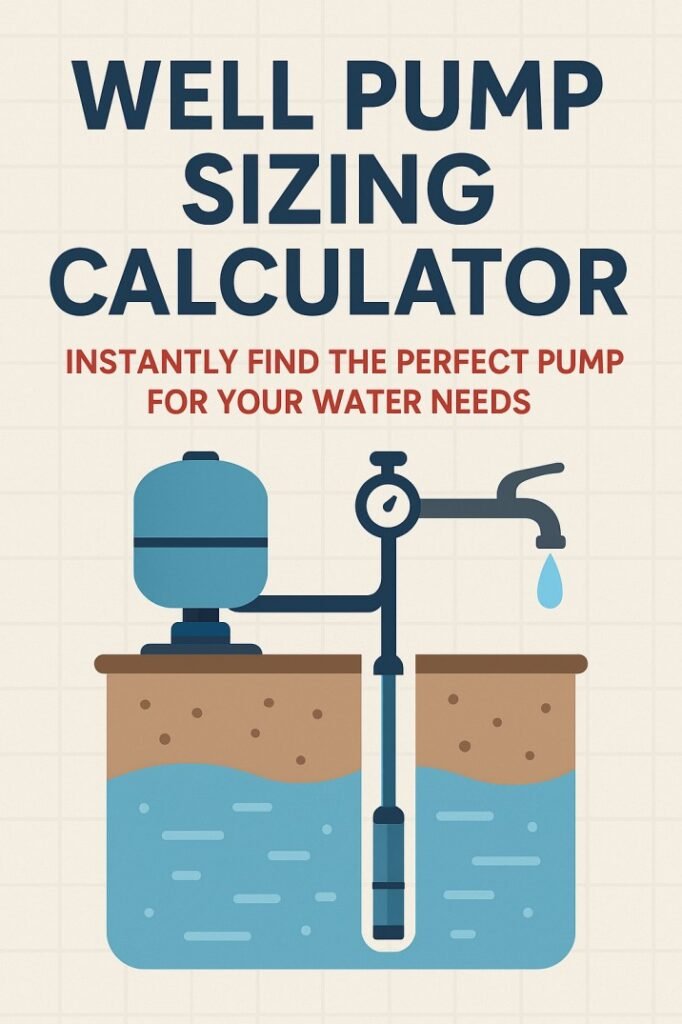
Table of Contents
Why Accurate Well Pump Sizing Matters
Water demand changes based on usage patterns, household size, and irrigation requirements. A single mistake in sizing can lead to low pressure, pump overheating, or high operating costs. Proper sizing ensures the pump works within its ideal range, which increases reliability and reduces maintenance.
Correct sizing also supports higher efficiency. Efficient systems attract premium advertisers because they align with energy-saving and home improvement niches. That directly supports higher RPM and better monetization for informational content.
Key benefits of correct pump sizing include:
- Consistent water pressure at all outlets
- Reduced electricity consumption
- Longer pump and motor lifespan
- Lower maintenance and repair costs
- Improved user satisfaction and reliability
A Well Pump Sizing Calculator converts these benefits into measurable values instead of estimates.
How a Well Pump Sizing Calculator Works
A sizing calculator evaluates multiple variables at the same time. Instead of focusing on horsepower alone, it looks at system performance as a whole. Inputs are simple, but the output is precise.
Common inputs used by a Well Pump Sizing Calculator include:
- Static water level in the well
- Pumping water level during operation
- Total vertical lift from water source to outlet
- Desired flow rate in gallons per minute
- Pipe diameter and length
- Pressure requirements at fixtures
The calculator then determines the total dynamic head and matches it with pump performance curves. This ensures the selected pump operates efficiently under real conditions.
Well Pump Sizing Calculator
Well Pump Sizing Calculator
How to Use
- Enter required flow rate in litres per minute (L/min).
- Enter total dynamic head (TDH) in meters, including static lift, friction losses, and pressure head.
- Enter pump efficiency (typical centrifugal pumps: 60–75%).
- Enter motor efficiency (typical electric motors: 85–95%).
- Click Calculate to view hydraulic power, brake horsepower, and recommended motor size.
Find more Electrical Engineering Tools for easy electrical calculations and estimations.
Key Factors That Influence Pump Selection
Understanding the factors behind the calculation improves decision-making. Even when using automated tools, knowing what affects results helps you validate them.
The most important factors are:
- Well depth and water level stability
- Daily and peak water demand
- Number of bathrooms and appliances
- Irrigation or livestock requirements
- Pipe friction losses
- Required pressure at the highest outlet
A Well Pump Sizing Calculator combines these elements into a single recommendation, which simplifies the entire process.
Use our online tool Heat Pump KWh Calculator UK Free – Instantly Estimate Running Costs & Savings
Typical Water Demand Reference Table
The table below shows approximate water demand values. These numbers help users estimate flow before using a calculator.
| Application Type | Typical Flow Rate (GPM) | Notes |
|---|---|---|
| Small household (1–2 people) | 6–8 | Basic fixtures only |
| Medium household (3–4 people) | 9–12 | Multiple bathrooms |
| Large household (5+ people) | 13–18 | High simultaneous use |
| Lawn irrigation | 5–15 | Depends on zone size |
| Livestock watering | 3–20 | Varies by animal type |
These values are starting points. A Well Pump Sizing Calculator refines them using site-specific data.
Avoiding Common Pump Sizing Mistakes
Many pump failures are caused by oversimplification. Selecting a pump based on horsepower alone often leads to inefficiency. Another common issue is ignoring friction losses, which can significantly reduce delivered pressure.
Frequent mistakes include:
- Oversizing to “be safe”
- Ignoring future water demand
- Underestimating vertical lift
- Using incorrect pipe size assumptions
- Not accounting for pressure tank settings
Using a Well Pump Sizing Calculator prevents these errors by applying engineering logic automatically.
Use our online tool Watts to KWh Cost Calculator UK: Instantly Check & Slash Your Electricity Bills
Submersible vs Jet Pumps and Sizing Impact
Pump type also affects sizing decisions. Submersible pumps are commonly used for deeper wells and provide higher efficiency. Jet pumps are more suitable for shallow wells and simple installations.
Sizing considerations differ slightly:
- Submersible pumps handle higher head efficiently
- Jet pumps require accurate suction lift calculation
- Deep well systems benefit more from precise head calculations
A Well Pump Sizing Calculator accounts for pump type and ensures compatibility with well conditions.
Energy Efficiency and Long-Term Cost Savings
Energy efficiency is a major factor in pump selection. Pumps that operate near their best efficiency point consume less electricity and generate less heat. Over time, this translates into significant savings.
Benefits of efficient sizing include:
- Lower monthly power bills
- Reduced motor stress
- Fewer start-stop cycles
- Better compatibility with pressure tanks
Using a Well Pump Sizing Calculator aligns pump performance with efficiency goals, which is attractive for energy-conscious users and advertisers.
Use our online tool Power Consumption Calculator: Instantly Track & Reduce Your Energy Bills
Example Pump Sizing Scenario
Consider a household with a 150-foot deep well, a pumping water level of 90 feet, and a required flow of 10 GPM. The total dynamic head includes lift, pressure requirement, and pipe losses.
| Parameter | Value |
|---|---|
| Pumping Water Level | 90 ft |
| Vertical Lift to Tank | 40 ft |
| Pressure Requirement | 50 psi |
| Estimated Friction Loss | 15 ft |
| Total Dynamic Head | 260 ft |
When these values are entered into a Well Pump Sizing Calculator, the result typically suggests a specific pump model and horsepower that operates efficiently at 10 GPM and 260 ft head.
Use our online tool VFD Selection Calculator: Easy & Accurate Drive Sizing for Maximum Efficiency
Why Online Calculators Improve Decision Accuracy
Manual calculations are time-consuming and prone to error. Online tools reduce complexity while increasing accuracy. They also allow quick comparisons between different pump models.
Advantages include:
- Instant results
- Reduced calculation errors
- Easy adjustments for future needs
- Better alignment with manufacturer curves
A Well Pump Sizing Calculator delivers professional-level results without requiring advanced engineering knowledge.
Explore the key standards related to VFDs here IEC Standards for Variable Frequency Drives
Final Thoughts on Choosing the Right Well Pump
Water systems are long-term investments. The right pump improves comfort, reliability, and efficiency for years. Relying on assumptions or outdated rules often leads to performance issues and unnecessary expenses.
By using a Well Pump Sizing Calculator, users gain clarity and confidence in their selection. It ensures the pump matches real-world demand, operates efficiently, and delivers consistent performance. This approach not only protects equipment but also supports smarter energy use and better long-term value.
For anyone planning a new installation or upgrading an existing system, accurate sizing is not optional. It is the foundation of a dependable water supply system.
Know more about Top 15 Variable Frequency Drive Manufacturers in USA
Follow Us on Social:
Subscribe our Newsletter on Electrical Insights for latest updates from Electrical Engineering Hub
#WellPumpSizingCalculator, #PumpSizing, #WaterWellPump, #PumpCalculator, #WellPumpGuide, #WaterSystemDesign, #PumpSelection, #IrrigationPump, #ResidentialPumps, #Groundwater