NEMA Standard for Transformer Noise Level: Compliance Guide, Limits & Design Best Practices
Transformer noise is a critical consideration in modern power systems, especially in urban, industrial, and commercial environments. The nema standard for transformer noise level provides a clear framework for acceptable sound limits, helping manufacturers, engineers, and project developers ensure compliance and maintain environmental comfort. Understanding these standards is essential for selecting the right equipment and avoiding costly redesigns or regulatory issues.
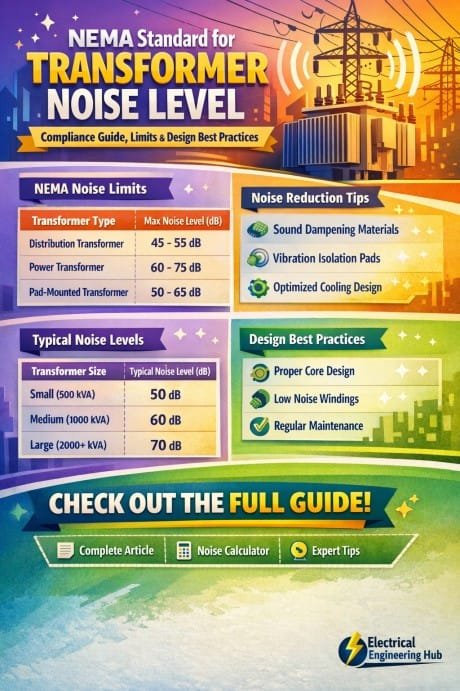
Table of Contents
What is the NEMA Standard for Transformer Noise Level
The nema standard for transformer noise level is defined by the National Electrical Manufacturers Association (NEMA), primarily under NEMA ST-20 guidelines. These standards specify permissible sound levels for dry-type and liquid-filled transformers under normal operating conditions.
Know more about Top Dry Type Transformer Manufacturers in the USA
Transformer noise is mainly generated due to core magnetostriction and winding vibrations. The standard ensures that this noise remains within acceptable limits to minimize disturbance in residential, commercial, and industrial zones.
By following the nema standard for transformer noise level, manufacturers can maintain product consistency while ensuring that installations meet local environmental and occupational noise regulations.
Why Transformer Noise Matters
Noise from transformers is more than just an inconvenience. It directly impacts human comfort, workplace productivity, and regulatory compliance. In densely populated areas, excessive transformer noise can lead to complaints and legal challenges.
Key reasons why noise control is important:
- Compliance with environmental noise regulations
- Improved workplace safety and comfort
- Reduced community disturbance
- Better equipment perception and brand value
- Avoidance of penalties and shutdowns
The nema standard for transformer noise level acts as a benchmark for addressing these concerns effectively.
NEMA Noise Limits for Transformers
NEMA provides recommended sound levels based on transformer kVA ratings. These limits are typically measured in decibels (dB) at a specified distance under no-load conditions.
Below is a reference table for dry-type transformers:
| Transformer Rating (kVA) | Average Sound Level (dB) |
|---|---|
| 0 – 50 | 45 |
| 51 – 150 | 50 |
| 151 – 300 | 55 |
| 301 – 500 | 60 |
| 501 – 700 | 62 |
| 701 – 1000 | 64 |
| 1001 – 1500 | 65 |
| 1501 – 2000 | 66 |
| 2001 – 3000 | 68 |
These values reflect typical expectations under the nema standard for transformer noise level, though slight variations may occur depending on design and installation conditions.
Know more about Transformers Earthspark Size Chart
Measurement Conditions and Testing
Accurate noise measurement is essential for compliance. The nema standard for transformer noise level outlines specific testing conditions to ensure consistency.
Important measurement factors include:
- Measurement distance, usually 1 meter from the transformer surface
- Ambient noise correction
- Testing under no-load conditions
- Use of calibrated sound level meters
- Open environment or controlled test room
These controlled parameters ensure that readings reflect actual transformer performance rather than environmental interference.
Factors Affecting Transformer Noise
Several technical and environmental factors influence transformer noise levels. Understanding these helps in both design and installation.
Core Design
The magnetic core is the primary source of noise. Poor core design increases vibration and sound emission.
Material Quality
High-grade silicon steel reduces magnetostriction, which directly lowers noise output.
Load Conditions
Although most noise is generated at no-load, increased load can introduce additional vibration.
Mounting and Installation
Improper mounting amplifies vibrations through structures, increasing perceived noise.
Know all about Transformer Sizing for EV Charger
Cooling System
Fans and pumps in forced cooling systems add to the overall sound level.
The nema standard for transformer noise level accounts for these factors by standardizing testing conditions, but real-world performance depends on how well these elements are managed.
Design Best Practices for Noise Reduction
Designing a low-noise transformer requires a combination of material selection, engineering precision, and manufacturing control.
Core Optimization
- Use step-lap core construction
- Reduce flux density
- Ensure tight core clamping
Vibration Control
- Install anti-vibration pads
- Use flexible connections
- Isolate the transformer base
Acoustic Enclosures
- Use soundproof enclosures for sensitive areas
- Apply acoustic panels around installations
High-Quality Materials
- Use low-loss silicon steel
- Select high-grade insulation materials
Explore all about Transformer Bond Sizing
Structural Design
- Reinforce tank walls
- Minimize resonance frequencies
Following these practices ensures compliance with the nema standard for transformer noise level while enhancing product quality.
Comparison with International Standards
While NEMA is widely used in the United States and many export markets, other standards also define transformer noise limits.
| Standard | Region | Focus Area |
|---|---|---|
| NEMA ST-20 | USA | Dry-type transformers |
| IEC 60076-10 | International | Power transformer noise |
| IEEE C57.12.90 | USA | Test procedures |
| EN 60076-10 | Europe | Sound level limits |
The nema standard for transformer noise level aligns closely with IEEE testing procedures but may differ slightly from IEC limits. Engineers working on international projects should compare standards before finalizing specifications.
Compliance Checklist for Engineers and Buyers
Ensuring compliance requires attention at every stage, from design to installation.
- Verify manufacturer test reports
- Check sound level ratings in technical datasheets
- Confirm testing standards used
- Inspect installation environment
- Use noise mitigation techniques if required
A systematic approach helps maintain alignment with the nema standard for transformer noise level and avoids post-installation issues.
Know more about Transformer Cooling Methods: ONAN, ONAF, OFAF & More
Installation Best Practices
Even a well-designed transformer can exceed noise limits if installed incorrectly.
Site Selection
Avoid placing transformers near offices, hospitals, or residential areas without proper noise control.
Foundation Design
Use concrete pads with vibration isolation to minimize structural transmission.
Distance and Barriers
Increasing distance and adding barriers can significantly reduce perceived noise levels.
Indoor Installations
Install acoustic treatments such as:
- Sound-absorbing walls
- False ceilings
- Rubber isolation mounts
These measures ensure that the installed system remains within the limits defined by the nema standard for transformer noise level.
Common Mistakes to Avoid
Many projects fail to meet noise requirements due to avoidable errors.
- Ignoring noise limits during procurement
- Using low-quality materials
- Skipping vibration isolation
- Poor site planning
- Lack of testing after installation
Avoiding these mistakes ensures long-term compliance and better system performance.
Know more about Transformer Sizing for Residential Building
Future Trends in Transformer Noise Reduction
The industry is evolving with a strong focus on sustainability and environmental impact. Manufacturers are investing in advanced materials and innovative designs to reduce noise further.
Emerging trends include:
- Amorphous metal cores for lower vibration
- Smart monitoring systems for noise tracking
- Advanced simulation tools for acoustic design
- Compact and silent transformer models
These innovations are shaping the future of the nema standard for transformer noise level and pushing the boundaries of quieter power solutions.
Final Thoughts
The nema standard for transformer noise level plays a vital role in ensuring that transformers operate within acceptable acoustic limits. It provides a structured approach for manufacturers and engineers to design, test, and install transformers that meet both technical and environmental requirements.
By understanding the limits, applying best design practices, and following proper installation techniques, it is possible to achieve full compliance while delivering high-performance and low-noise transformer systems.
Know more about Best Transformer Testing Companies in Canada | Trusted Electrical Testing Experts & Utility Service Providers
Follow Us on Social:
Subscribe our Newsletter on Electrical Insights for latest updates from Electrical Engineering Hub
#NEMAStandardForTransformerNoiseLevel, #TransformerNoiseStandards, #ElectricalStandards, #PowerTransformerDesign, #NoiseControlEngineering, #NEMAGuidelines, #TransformerCompliance, #IndustrialNoiseLimits, #ElectricalEngineeringStandards, #PowerSystemDesign