NEC Requirements for Ground Fault Protection: Essential Guide for Electrical Safety Compliance
Ensuring electrical safety in residential, commercial, and industrial installations is critical, and understanding NEC requirements for ground fault protection is a central part of achieving this. Ground faults occur when electricity finds an unintended path to the ground, often through a human body or equipment, which can result in electrical shock, fires, or damage to sensitive devices.
The National Electrical Code (NEC) provides clear guidelines to minimize these risks and protect both people and property. Compliance with these requirements is not optional—it is mandatory for safety and legal adherence in the United States.
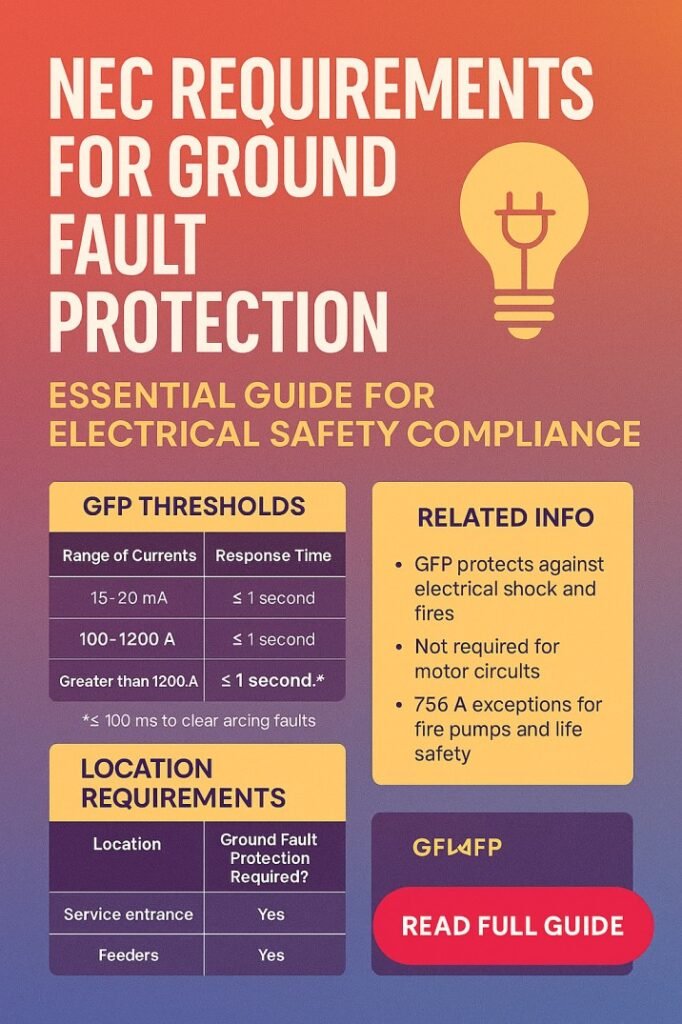
Table of Contents
Ground fault protection is particularly vital in areas where electrical circuits may come in contact with water, conductive surfaces, or areas with high human activity. Implementing the correct protective measures can prevent serious accidents and reduce the likelihood of costly equipment failure. This article offers a comprehensive guide to NEC requirements for ground fault protection, highlighting key provisions, practical applications, and compliance tips.
Know more about IEC Standard for Ground Fault Protection Explained: Compliance, Requirements & Best Practices
Understanding Ground Faults and Their Risks
A ground fault occurs when an unintended electrical path is established between a live conductor and the earth or grounded equipment. These faults can be subtle and sometimes go undetected by conventional circuit breakers, which is why specialized protection is necessary. The primary risks of ground faults include:
- Electric shock leading to injury or death
- Electrical fires caused by overheating or arcing
- Damage to sensitive electrical equipment and appliances
- Operational downtime in industrial settings
Understanding these risks emphasizes why the NEC mandates specific measures for ground fault protection across various applications, from commercial kitchens to industrial motor systems. Know more about Residual vs Zero Sequence Ground Fault Protection; Important Differences which every Engineer Must Know
Key NEC Articles on Ground Fault Protection
The NEC outlines several specific articles and requirements to ensure effective ground fault protection. The most relevant articles include:
- Article 210.8 – Ground-Fault Circuit-Interrupter (GFCI) protection for personnel in areas such as kitchens, bathrooms, outdoor receptacles, and other wet locations.
- Article 215.10 – Ground fault protection of equipment on feeders rated 1000A or more.
- Article 230.95 – Ground fault protection for service equipment in certain applications.
- Article 240.4(G) – Requirements for overcurrent devices designed to provide ground fault protection.
Each article addresses different types of ground fault hazards, whether for personnel, equipment, or systems. Compliance requires selecting appropriate devices and testing them regularly to ensure reliability.
Know more about How Does Earth Fault Relay Protect Electrical Circuits? Complete Guide to Ground Fault Protection
Ground Fault Protection Devices
The NEC specifies different types of ground fault protection devices depending on the application. The most commonly used devices include:
- Ground-Fault Circuit Interrupters (GFCIs): Protect personnel from electric shock by detecting current imbalances as small as 5 milliamperes and disconnecting the circuit rapidly.
- Equipment Ground-Fault Protection (EGFP): Primarily used in industrial applications to protect equipment and conductors from high fault currents.
- Residual Current Devices (RCDs): Commonly used internationally, these devices function similarly to GFCIs and can be applied in accordance with NEC standards.
Each device type has its installation requirements and application areas, which must be strictly followed to meet NEC compliance.
Areas Requiring Ground Fault Protection
The NEC clearly identifies locations where ground fault protection is mandatory. These areas include, but are not limited to:
- Kitchens and bathrooms in residential installations
- Outdoor receptacles and pool areas
- Commercial garages and service areas
- Industrial facilities with motor-driven equipment
- Feeder circuits rated over 1000A
- Healthcare facilities with specialized equipment
Meeting these requirements ensures that high-risk locations are adequately protected, reducing the likelihood of electrical incidents.
Know more about Benshaw Soft Starter Problems
Installation Guidelines
Proper installation is crucial to meet NEC requirements for ground fault protection. Key considerations include:
- Correct Device Rating: Ensure the GFCI or EGFP device matches the voltage and current rating of the circuit.
- Location Compliance: Install devices in locations mandated by NEC, such as wet or damp areas.
- Wiring Integrity: Use approved wiring methods and grounding techniques to maintain reliable operation.
- Regular Testing: NEC requires GFCIs and similar devices to be tested monthly to confirm functionality.
Failure to follow these installation guidelines can result in non-compliance, equipment damage, or unsafe conditions.
Table: Ground Fault Protection Devices and NEC Applications
| Device Type | NEC Article Reference | Application | Trip Rating | Key Feature |
|---|---|---|---|---|
| GFCI | 210.8 | Residential kitchens, bathrooms, outdoor receptacles | 5 mA | Protects personnel from electric shock |
| EGFP | 215.10 | Industrial feeders ≥1000A | 30–1000 mA | Protects equipment from ground fault damage |
| RCD | 210.8 & 215.10 | Residential, commercial, and industrial circuits | 30 mA or 100 mA | Detects leakage current and disconnects quickly |
| Service Ground Fault Protection | 230.95 | Service equipment in commercial installations | 30 mA – 100 mA | Protects both personnel and equipment |
This table illustrates the different ground fault protection devices, their NEC references, and appropriate applications. Selecting the correct device is essential for compliance.
Know more about NEC Grounding Table 250.122 Explained: Correct Equipment Grounding Conductor Size
Testing and Maintenance
NEC guidelines emphasize that installing ground fault protection devices is only part of the requirement. Regular testing and maintenance are mandatory for ongoing compliance. Recommended practices include:
- Monthly Testing: Most GFCIs include a “test” button to simulate a fault condition. Monthly testing ensures devices operate correctly.
- Periodic Inspection: Inspect wiring, connections, and devices for signs of wear, corrosion, or damage.
- Professional Verification: For industrial EGFP systems, periodic testing by a licensed electrician ensures proper calibration and reliability.
- Documentation: Keep a log of tests and inspections to demonstrate compliance in case of audits.
Neglecting maintenance can render ground fault protection ineffective, which can have severe safety and legal implications.
Common Compliance Challenges
While the NEC provides clear guidelines, electricians and facility managers often face challenges in achieving full compliance. Common issues include:
- Installing devices in incorrect locations or missing required circuits
- Using devices with improper trip ratings for the application
- Neglecting regular testing and maintenance procedures
- Lack of proper grounding or bonding, which can cause nuisance trips or failed protection
Understanding these pitfalls allows professionals to proactively address them and ensure consistent compliance.
Know more about Earth Fault Relay Testing Procedure
Benefits of NEC-Compliant Ground Fault Protection
Adhering to NEC requirements for ground fault protection offers multiple benefits:
- Enhanced safety for personnel in high-risk areas
- Reduced risk of electrical fires and equipment damage
- Compliance with legal standards, avoiding penalties or liability issues
- Long-term cost savings by preventing downtime and costly repairs
- Increased reliability of electrical installations
These benefits underscore why compliance is not just a legal obligation but also a best practice for electrical safety.
Conclusion
Compliance with NEC requirements for ground fault protection is fundamental for ensuring the safety of both people and equipment. Proper understanding of applicable NEC articles, selecting the right devices, adhering to installation guidelines, and performing regular testing are all critical steps toward meeting these standards. Ground fault protection is more than just a regulatory requirement; it is an essential aspect of modern electrical safety.
Following NEC Requirements for Ground Fault Protection protects lives, prevents property damage, and guarantees reliable operation of electrical systems in residential, commercial, and industrial settings.
Know more about Earth Fault Relay Sensitivity Setting: 5 Proven Tips for Better Protection
Follow Us on Social:
Subscribe our Newsletter on Electrical Insights for latest updates from Electrical Engineering Hub
#NECGroundFaultProtection, #ElectricalSafety, #GroundFaultNEC, #ElectricalCodeCompliance, #NECRequirements, #FaultProtection, #ElectricalEngineering, #GroundFaultSafety, #CodeComplianceTips, #NECGuidelines