NEC Grounding Table 250.122 Explained: Correct Equipment Grounding Conductor Size
Understanding the NEC Grounding Table 250.122 is essential for electricians, engineers, and anyone involved in electrical installations. This table, found in the National Electrical Code (NEC), provides precise guidance for sizing equipment grounding conductors (EGCs). Choosing the correct grounding conductor ensures safety, prevents electrical hazards, and keeps systems compliant with code requirements.
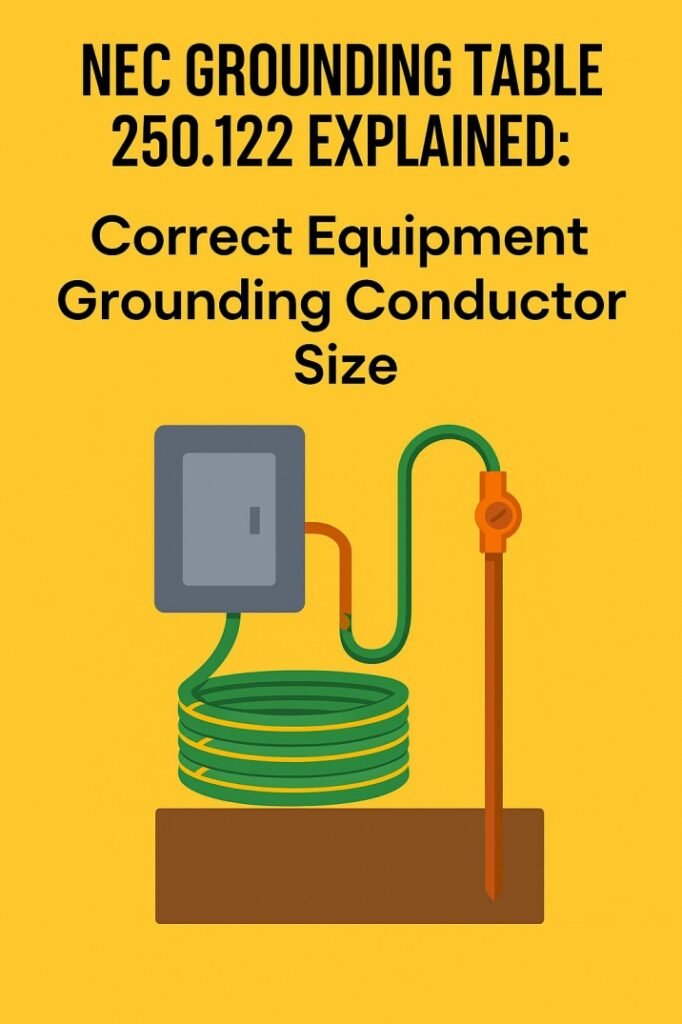
Table of Contents
What is NEC Grounding Table 250.122?
NEC Grounding Table 250.122 specifies the minimum size of equipment grounding conductors based on the overcurrent protection device (OCPD) rating. Essentially, it tells you the smallest wire size that can safely carry fault current to the ground without overheating. The table applies to copper and aluminum conductors and is crucial in both residential and commercial wiring. Proper grounding protects equipment and personnel from electrical faults, lightning strikes, and unexpected surges.
Use our online tool EMT Conduit Fill Calculator: Your Ultimate Guide for Accurate Electrical Wiring
Importance of Correct Equipment Grounding Conductor Size
Using the correct EGC size is not optional. Undersized grounding conductors can result in equipment damage, fires, or severe injury. For instance, if a fault occurs and the EGC cannot carry enough current to trip the breaker, the fault current may continue flowing through unintended paths. This can create dangerous touch voltages and compromise electrical safety. Following NEC Grounding Table 250.122 ensures that the grounding path is adequate for safely clearing faults.
How to Read NEC Grounding Table 250.122
Reading the table is straightforward. The left column lists the rating of the overcurrent protection device, usually in amperes. The right columns show the minimum wire sizes for copper, aluminum, and other conductor types. Always select a conductor that meets or exceeds the table’s specifications.
Here’s a simplified version of the table for quick reference:
| OCPD Rating (A) | Copper EGC Size (AWG) | Aluminum EGC Size (AWG) | Notes |
|---|---|---|---|
| 15 | 14 | 12 | Standard residential circuits |
| 20 | 12 | 10 | Common in kitchens and lighting |
| 30 | 10 | 8 | Appliances and HVAC units |
| 60 | 8 | 6 | Subpanels or larger equipment |
| 100 | 6 | 4 | Medium commercial loads |
| 200 | 4 | 2 | Large panels and distribution |
| 400 | 2 | 1/0 | Industrial applications |
| 600 | 1/0 | 2/0 | Heavy industrial or commercial |
This table shows a clear correlation: as the OCPD rating increases, the minimum conductor size must increase to safely carry fault currents.
Know more about Working Principle of an Earth Fault Relay: How It Protects Electrical Systems
Factors Affecting Equipment Grounding Conductor Size
While NEC Grounding Table 250.122 provides minimum values, other factors can influence conductor selection:
- Conductor Material: Copper conducts better than aluminum, so aluminum wires need to be larger for the same current rating.
- Ambient Temperature: High temperatures can reduce conductor capacity, necessitating a larger EGC.
- Length of Conductor: Longer grounding conductors may require upsizing to compensate for voltage drop during a fault.
- Type of Installation: Exposed or enclosed conductors may have different thermal ratings, affecting sizing.
Copper vs. Aluminum Grounding Conductors
Copper is preferred in most installations because of its excellent conductivity, durability, and lower susceptibility to corrosion. Aluminum conductors are lighter and more cost-effective but must be sized larger due to lower conductivity. NEC Grounding Table 250.122 accounts for this difference, listing separate sizes for copper and aluminum conductors.
Know more about TOP 10 Electrical Contractor Insurance Companies for Saudi Arabia
Practical Examples
Consider a 100-ampere breaker feeding a subpanel. According to NEC Grounding Table 250.122, the minimum copper EGC size is 6 AWG, and for aluminum, it is 4 AWG. Using a smaller wire would violate NEC requirements and could compromise safety.
For a 30-amp circuit serving an HVAC unit, the table specifies 10 AWG copper or 8 AWG aluminum. Properly sized conductors ensure that the breaker will trip immediately during a fault, protecting both equipment and personnel.
Common Misconceptions
Many electricians assume that the grounding conductor can be the same size as the circuit conductor. This is not always correct. The NEC Grounding Table 250.122 establishes a minimum based on the overcurrent device, not necessarily the phase conductors. Following the table prevents undersizing, which is one of the most common mistakes in electrical installations.
Another misconception is that a grounding conductor only protects people. While personal safety is crucial, the EGC also safeguards equipment and ensures the reliability of electrical systems. Proper grounding reduces the risk of fire, voltage spikes, and equipment failure.
How to Verify Compliance
Ensuring compliance involves a few key steps:
- Identify the OCPD rating for the circuit.
- Consult NEC Grounding Table 250.122 for the minimum conductor size.
- Choose the conductor material (copper or aluminum).
- Consider installation conditions that may require upsizing.
- Inspect the installed conductor to confirm proper sizing.
Documentation and labeling are also important. Marking the EGC with its size and material ensures future electricians can easily verify compliance.
Use our online tool Electrical Insurance Calculator Dubai: Estimate Electrical Coverage & Premiums Instantly
Benefits of Correct Grounding
Proper use of NEC Grounding Table 250.122 offers multiple advantages:
- Enhanced Safety: Reduces risk of electric shock and fire.
- Equipment Protection: Prevents damage from overcurrent events.
- Code Compliance: Avoids fines, insurance issues, or inspection failures.
- System Reliability: Ensures proper operation of circuit breakers and protective devices.
- Peace of Mind: Provides confidence that electrical systems meet national standards.
Tips for Electricians
- Always keep the latest NEC codebook handy, as table values may update in new code cycles.
- When in doubt, err on the side of a larger conductor for extra safety.
- Double-check aluminum conductor terminations, as they require anti-oxidation compounds for secure connections.
- Remember that NEC Grounding Table 250.122 applies to most branch circuits, feeders, and service equipment, but specialized equipment may have additional requirements.
Conclusion
NEC Grounding Table 250.122 is a fundamental reference for sizing equipment grounding conductors. Adhering to the table ensures safety, compliance, and reliability of electrical systems. By understanding how to read the table, considering factors like material and temperature, and verifying installations, electricians can prevent hazards and maintain high-quality electrical work.
Know more about Public Liability Insurance for Electrical Contractors
Whether for residential, commercial, or industrial applications, proper grounding is non-negotiable. Consistently using NEC Grounding Table 250.122 allows professionals to deliver safe and code-compliant installations that protect both people and equipment.
Follow Us on Social:
Subscribe our Newsletter on Electrical Insights for latest updates from Electrical Engineering Hub
#NECGroundingTable250122, #NEC250122, #EquipmentGroundingConductor, #NECGrounding, #ElectricalCodeNEC, #GroundingConductorSize, #ElectricalSafety, #NECCodeGuide, #ElectricalInstallation, #CodeCompliance