Journeyman Electrician License Requirements: Best Guide
Becoming a licensed journeyman electrician is one of the most reliable ways to build a strong career in the electrical trade. The path is clear, but every step must be followed carefully. This guide covers the essential journeyman electrician license requirements in a simple and practical way, so you know exactly what to expect during the process.
The goal is to help you understand how the license works, what qualifications you need, and how to move from trainee to licensed professional with confidence.
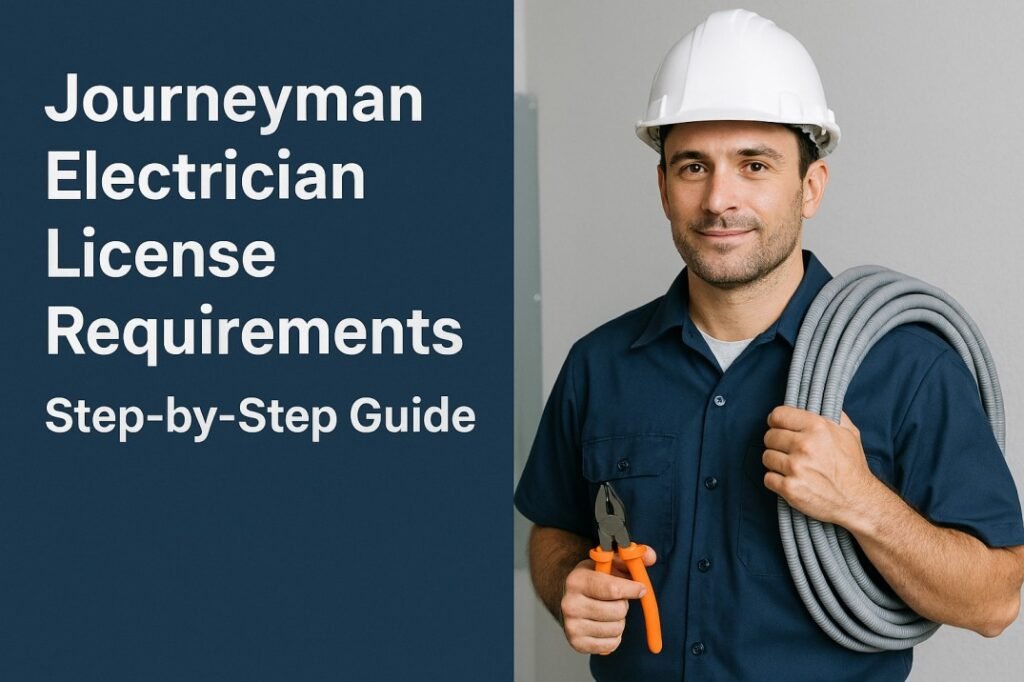
Table of Contents
What Is a Journeyman Electrician?
A journeyman electrician is a trained professional who can work independently on electrical systems under the rules of their local licensing authority. They work on wiring, control systems, troubleshooting, maintenance, installation, and upgrades for residential, commercial, and industrial projects.
They do not require constant supervision from a master electrician. But they must still follow electrical codes, safety standards, and licensing laws set by the state or region.
Know more about Electrical Safety Officer Certification in USA: Cost, Duration & Job Scope
Why You Need a Journeyman License
A license proves you have the skills, training, and hands-on experience to work safely. Many employers will not hire an electrician without it. Insurance companies also require licensed workers on job sites.
A journeyman license opens the door to better pay, full-time positions, and advanced roles. It also allows you to start preparing for the master electrician license if you want to grow further in the trade.
Step-by-Step Guide to Journeyman Electrician License Requirements
Below is a clear step-by-step guide so you can navigate the process easily.
Step 1: Meet Basic Eligibility Requirements
Before you begin the application, you must meet the basic entry criteria. These vary by state but usually include:
- Minimum age of 18
- High school diploma or GED
- Ability to read electrical drawings
- Understanding of basic math
Some states may require additional checks such as identification documents or background verification.
Know more about Electrical Safety Officer Roles & Responsibilities
Table: Basic Eligibility Overview
| Requirement | Description |
|---|---|
| Minimum Age | Usually 18 years |
| Education | High school diploma or GED |
| Documentation | Valid ID, application form |
| Background Check | Sometimes required depending on state |
Step 2: Complete an Approved Electrical Apprenticeship
This is one of the most important parts of the journeyman electrician license requirements. You must complete an apprenticeship that provides classroom learning and supervised field training.
Most apprenticeships require 4–5 years of training.
What You Learn in an Apprenticeship
- Wiring methods
- Electrical codes
- Safety procedures
- Motors and controls
- Blueprint reading
- Conduit bending
- Installation techniques
Training Hours Required (Typical Range)
| Type of Training | Required Hours |
|---|---|
| Classroom Instruction | 500–1,000 hours |
| On-the-Job Training | 6,000–8,000 hours |
Both types of hours must be completed to sit for the exam.
Know more about DEWA Electrical License Guide for Solar Projects in Dubai
Step 3: Fulfill the On-the-Job Experience Requirements
Experience is a core part of the journey. States often require thousands of hours of supervised work before you can apply for a journeyman license.
Your supervisor or master electrician signs off your hours. Keep accurate records because your licensing board may ask for proof.
You may work on:
- Residential wiring
- Maintenance work
- Commercial installations
- Troubleshooting tasks
- Control panel wiring
- Conduit and cable systems
This hands-on stage prepares you for real-world conditions and builds confidence for the licensing exam.
Step 4: Complete the Required Classroom Education
Technical learning is essential. States require a specific number of classroom hours to understand electrical theory and codes.
You learn topics such as:
- National Electrical Code (NEC)
- Load calculations
- Fault current
- Grounding and bonding
- Circuit design
- Electrical safety rules
Many states require annual updated code classes to stay current with changes in regulations.
Know more about NABCEP Certification for Solar Installers: Process & Cost
Step 5: Apply for the Journeyman Electrician Exam
Once you meet the education and experience requirements, you can apply for the licensing exam.
The application usually includes:
- Application form
- Proof of work hours
- Verification from your employer
- Education transcripts
- Application fee
After approval, the authority will schedule your exam date.
Step 6: Prepare for the Licensing Exam
The exam checks your knowledge of the electrical code, safety rules, and real-world electrical applications.
Most exams include:
- NEC questions
- Electrical theory
- Calculations
- Load sizing
- Wiring methods
- Safety regulations
Many candidates use codebooks, prep guides, and practice tests. A solid understanding of the NEC helps greatly.
Table: Typical Exam Format
| Section | Description |
|---|---|
| NEC Questions | Code rules, definitions, articles |
| Calculations | Load, motor circuits, conductor sizing |
| Safety | OSHA rules, PPE, risk prevention |
| Time Duration | 3–4 hours depending on state |
Know more about How to Get Electrical Certification in USA & Transfer It to Europe
Step 7: Pass the Journeyman Electrician Exam
To earn your license, you must pass the exam with the required score. Each state sets its own passing mark, usually between 70% and 75%.
After passing, you will receive your journeyman license, which allows you to work without supervision.
Step 8: Maintain and Renew Your License
Licenses must be renewed periodically. Renewal typically occurs every one to three years.
Most states require:
- Continuing education hours
- Updated NEC class
- Renewal fee
Staying current with new electrical code updates keeps your license valid and recognized by employers.
Additional Requirements in Some States
Some states add extra rules to their journeyman electrician license requirements. These may include:
- CPR and first aid certification
- OSHA 10 or OSHA 30 training
- State-specific electrical code courses
- Separate exams for commercial and residential work
Always review local regulations because licensing laws are unique in each state.
Tips to Succeed in Your Licensing Journey
- Keep all training records organized
- Study the NEC regularly
- Practice real exam questions
- Ask senior electricians for guidance
- Attend workshops or refresher classes
Small habits such as reviewing code changes a few minutes daily can make the exam much easier.
Know more about ISO 26262 Functional Safety Certification Cost in UK
Benefits of Holding a Journeyman Electrician License
A license does more than prove competence. It also opens up new career paths.
Key Benefits
- Higher earning potential
- More job opportunities
- Ability to work independently
- Access to large-scale projects
- Increased job security
- Eligibility to work in multiple industries
- Pathway to master electrician status
Licensed electricians often earn significantly more than unlicensed workers because they meet official competency standards.
Know more about Freelance Electrical Engineering Jobs: Where to Find Them
Final Thoughts
Understanding the journeyman electrician license requirements can help you plan your career with confidence. The process takes commitment, but the result is a stable and rewarding profession.
With the right training, proper documents, exam preparation, and continuous learning, you can achieve your journeyman license and build a strong future in the electrical field. Learn more about How to Become an Electrical Inspector in the UK
Follow Us on Social:
Subscribe our Newsletter on Electrical Insights for latest updates from Electrical Engineering Hub