IEC Standard for Natural Ester Oil – Guidelines, Properties, and Transformer Applications
Natural ester oil has become a preferred alternative to mineral insulating oil in power transformers and other electrical equipment. It is derived from renewable vegetable sources, offering superior biodegradability and safety advantages. As global industries shift toward sustainable practices, understanding the IEC standard for natural ester oil has become essential for manufacturers, utilities, and maintenance professionals.
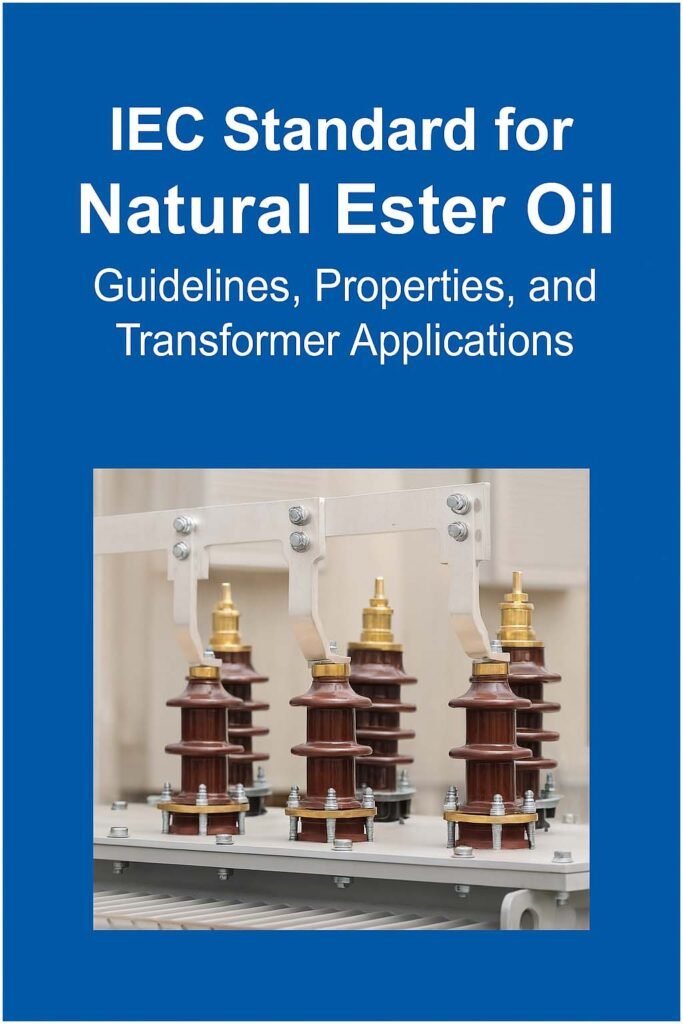
Table of Contents
This article explains what the IEC standard for natural ester oil is, why it matters, and how it ensures reliability and environmental performance in transformer applications.
What is the IEC Standard for Natural Ester Oil
The International Electrotechnical Commission (IEC) is the global body that sets standards for electrical, electronic, and related technologies. In the case of transformer insulating liquids, the IEC defines test methods, performance requirements, and safety parameters to ensure consistent quality.
The IEC standard for natural ester oil is officially designated as IEC 62770. This standard covers “Fluids for electrotechnical applications – Unused natural esters for transformers and similar electrical equipment.” It specifies the minimum requirements for unused natural esters, focusing on their physical, chemical, and electrical properties.
Know more about earthing cable size as per iec
In simple terms, IEC 62770 ensures that natural ester oils used in transformers meet global performance expectations before being filled into transformers or other electrical devices.
Importance of IEC Standard for Natural Ester Oil
The IEC standard for natural ester oil is crucial for several reasons. It provides a benchmark for product quality, helps ensure equipment reliability, and promotes environmental responsibility. Natural esters are known for their high fire point, biodegradability, and moisture tolerance, but these properties can vary depending on the raw material and manufacturing process.
By adhering to IEC 62770, transformer manufacturers and utilities can trust that the oil meets essential dielectric and chemical parameters. This minimizes transformer failure risks and extends operational life, even under high-temperature or humid conditions.
Another key benefit is global acceptance. When suppliers produce ester oils according to IEC 62770, utilities in different countries can confidently source compatible fluids without re-testing, which simplifies procurement and improves supply chain efficiency.
Scope of IEC 62770 Standard
IEC 62770 applies to unused natural esters obtained from renewable vegetable oils such as rapeseed, soybean, or sunflower oil. These esters are intended for use in liquid-filled electrical equipment, primarily power and distribution transformers.
The standard does not apply to synthetic esters (covered under IEC 61099) or used oils (covered under IEC 60422). It focuses on properties that influence the dielectric performance, thermal stability, and oxidation resistance of natural esters.
The following table summarizes the main properties covered under IEC 62770.
Table: Key Parameters Defined in IEC 62770
| Property | Typical Unit | IEC Requirement | Purpose |
|---|---|---|---|
| Appearance | Visual | Clear, no sediment | Ensures cleanliness and purity |
| Density at 20°C | kg/m³ | Typically 910–970 | Affects cooling performance |
| Kinematic viscosity at 40°C | mm²/s | ≤ 50 | Influences flow and heat transfer |
| Flash point | °C | ≥ 250 | Indicates fire safety |
| Fire point | °C | ≥ 300 | Confirms self-extinguishing property |
| Pour point | °C | ≤ -10 | Ensures performance in cold climates |
| Water content | mg/kg | ≤ 200 | Maintains dielectric strength |
| Breakdown voltage | kV | ≥ 35 | Reflects insulation capability |
| Acidity (TAN) | mg KOH/g | ≤ 0.06 | Ensures chemical stability |
| Dielectric dissipation factor (tan δ) | – | ≤ 0.2% | Measures energy losses |
| Oxidation stability | hours | ≥ 48 | Ensures long service life |
These values may vary slightly depending on the manufacturer’s formulation, but the IEC 62770 standard ensures all oils meet these minimum limits before use.
Know more about cable bending radius iec standard
Chemical and Electrical Properties under IEC Standard for Natural Ester Oil
Natural ester oils offer several advantages over mineral oils in dielectric performance. According to IEC 62770, the dielectric breakdown voltage should not be less than 35 kV, which ensures the oil can withstand high electric fields without failure.
Another significant parameter is the dielectric dissipation factor (tan δ), which measures energy losses due to dielectric heating. A low value, as required by the IEC standard, confirms that the oil is pure and free of conductive contaminants.
Chemically, natural esters are composed of triglycerides, which are stable under electrical stress. However, they can oxidize when exposed to air for long periods. IEC 62770 mandates that oxidation stability be tested under accelerated conditions to ensure the oil maintains performance throughout the transformer’s expected lifespan.
Differences Between Natural Ester Oil and Mineral Oil
Although both serve the same function as insulating liquids, they differ significantly in composition and performance. The IEC standard for natural ester oil ensures it performs on par or better than mineral oil in several areas.
Table: Comparison Between Natural Ester Oil and Mineral Oil
| Property | Natural Ester Oil | Mineral Oil |
|---|---|---|
| Source | Vegetable-based (renewable) | Petroleum-based (non-renewable) |
| Biodegradability | >98% | <30% |
| Fire point | >300°C | ~160°C |
| Moisture tolerance | High | Low |
| Oxidation stability | Moderate | High (with additives) |
| Environmental impact | Minimal | Potentially hazardous |
| IEC Standard | IEC 62770 | IEC 60296 |
Natural ester oil is therefore preferred for indoor or urban substations, renewable energy transformers, and environmentally sensitive areas due to its low fire risk and high biodegradability.
Know more about iec 61439 busbar clearance
Testing and Compliance under IEC Standard for Natural Ester Oil
To comply with IEC 62770, manufacturers must conduct a range of laboratory tests before certifying the oil as transformer-ready. The tests are categorized into:
- Physical tests: To check color, appearance, and viscosity.
- Chemical tests: To measure acidity, oxidation stability, and water content.
- Electrical tests: To evaluate dielectric breakdown voltage, resistivity, and dissipation factor.
Each test must meet or exceed the values specified in the IEC standard. Testing is often conducted using reference IEC methods such as IEC 60156 (breakdown voltage) and IEC 60247 (dissipation factor).
Transformers filled with natural ester oil should also undergo routine monitoring, similar to mineral oil systems. This includes periodic checks of acidity, moisture, and dielectric strength to ensure consistent performance.
Environmental and Safety Benefits
One of the major drivers behind the adoption of natural ester oil is its environmental safety. According to IEC 62770, all natural esters used must come from renewable sources and should be readily biodegradable. If spilled, they break down quickly in soil and water, minimizing ecological damage.
The high flash and fire points make natural esters less flammable than mineral oils. This allows their use in confined or high-density installations such as residential transformers, wind turbines, and solar farms.
Moreover, because natural ester oils can absorb more moisture without significantly reducing dielectric strength, they can extend the insulation life of paper-wound transformers. This moisture tolerance provides a practical advantage in humid or tropical regions.
Know more about iec standard for underground cable laying
Applications Following IEC Standard for Natural Ester Oil
Natural ester oils standardized under IEC 62770 are increasingly being adopted in various sectors. Typical applications include:
- Power distribution transformers in urban and rural grids
- Renewable energy transformers for solar and wind farms
- Traction transformers in electric rail networks
- Cast resin transformer replacements in indoor environments
- Substations in water-sensitive or forest areas
Utilities across Europe, Asia, and North America now prefer natural ester-filled transformers for new installations and retrofitting old units. Compliance with IEC standards ensures that the oils can be used interchangeably across regions without compatibility issues.
Maintenance Guidelines under IEC Standard
To maintain compliance with the IEC standard for natural ester oil during service, utilities must follow specific maintenance practices. These include:
- Avoiding contamination with mineral oil during refilling or handling
- Storing oil in sealed containers to prevent oxidation
- Regular sampling to check acidity and moisture content
- Ensuring filters and dehydration systems are compatible with ester fluids
Following these procedures helps retain the oil’s dielectric and chemical integrity throughout its service life.
Global Adoption and Market Trends
The global shift toward green technologies has accelerated the demand for natural ester transformer fluids. Countries like Germany, Japan, and the United States have issued additional national standards aligning closely with IEC 62770.
Know more about iec standard for busbar sizing
Major transformer manufacturers now offer models pre-filled with natural ester oil as a standard option. These include companies such as ABB, Siemens Energy, and Hitachi Energy.
According to market studies, the global demand for natural ester insulating fluids is expected to grow by more than 8% annually due to their sustainability and fire safety advantages. As governments push for carbon neutrality, IEC 62770-certified fluids will play a vital role in the transition to eco-friendly power grids.
Future Developments in IEC Standard for Natural Ester Oil
The IEC continues to update its standards to reflect new research and field experience. Future revisions of IEC 62770 may include improved oxidation tests, updated biodegradability criteria, and compatibility requirements for new insulation materials.
Manufacturers are also working on enhanced formulations with better oxidation resistance and wider temperature ranges to meet the needs of offshore and desert installations. The future of transformer insulation fluids is clearly moving toward renewable, biodegradable esters, and the IEC standard ensures this transition remains safe and consistent.
Know more about nec 430.32
Conclusion
The IEC standard for natural ester oil (IEC 62770) provides a comprehensive framework for ensuring performance, reliability, and environmental safety in transformer applications. It defines the critical physical, chemical, and electrical parameters that guarantee the oil’s suitability for use in high-voltage equipment.
By adhering to IEC 62770, manufacturers and utilities not only ensure safe and efficient transformer operation but also contribute to global sustainability goals. Natural ester oil, guided by this standard, represents the future of eco-friendly transformer insulation—combining technical performance with environmental responsibility.
In summary, the IEC standard for natural ester oil stands as a cornerstone of modern electrical engineering, promoting quality, safety, and sustainability in power systems worldwide.
Explore more about instrument earthing iec standard
Follow Us on Social:
Subscribe our Newsletter on Electrical Insights for latest updates from Electrical Engineering Hub
#IECStandard, #NaturalEsterOil, #TransformerOil, #BiodegradableInsulatingOil, #EcoFriendlyTransformerOil, #IECNaturalEster, #ElectricalInsulation, #TransformerMaintenance, #PowerTransformer, #RenewableEnergyStandards, #InsulatingFluids, #EsterBasedOil, #SustainablePower, #GreenEnergyStandards, #TransformerTechnology