IEC Standard for Motor Testing: Complete Professional Guide for Accurate Performance, Compliance & Efficiency
The iec standard for motor testing plays a critical role in ensuring that electric motors operate safely, efficiently, and in full compliance with international benchmarks. Whether you are an electrical engineer, plant manager, or procurement specialist, understanding how these standards apply to testing procedures can significantly improve reliability and performance outcomes. This guide explains the essential aspects of the iec standard for motor testing, along with practical insights to help you achieve accurate results and regulatory compliance.
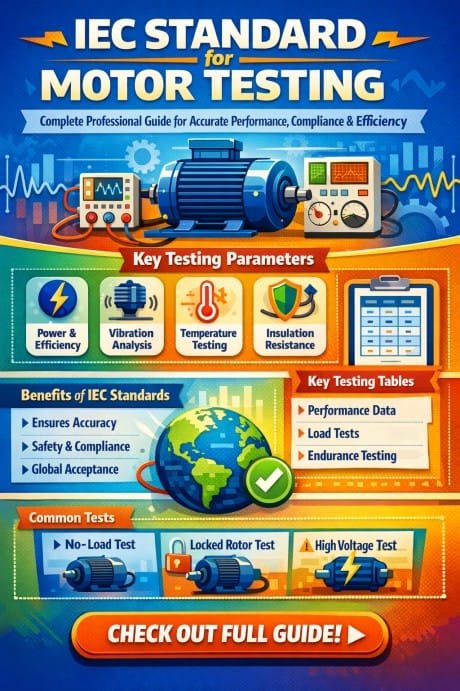
Table of Contents
What is IEC Standard for Motor Testing?
The iec standard for motor testing refers to a set of internationally recognized guidelines developed by the International Electrotechnical Commission (IEC). These standards define the procedures, tolerances, and methods used to evaluate motor performance.
IEC 60034 is the most widely used series related to rotating electrical machines. It covers various testing parameters such as efficiency, temperature rise, insulation resistance, and mechanical performance.
These standards ensure consistency across industries and countries, allowing manufacturers and users to rely on uniform testing benchmarks.
Access our powerful online calculator now star delta motor cable size calculator
Importance of IEC Standard for Motor Testing
Using the iec standard for motor testing is not just about compliance. It directly impacts operational efficiency and long-term cost savings.
Key benefits include:
- Accurate measurement of motor efficiency and losses
- Improved equipment reliability and lifespan
- Compliance with international regulations
- Enhanced safety during operation
- Better energy management and reduced consumption
Industries such as manufacturing, oil and gas, power generation, and construction rely heavily on standardized motor testing to avoid costly failures.
Use our online tool for free Wire Size Calculator for Motors – Accurate Motor Cable Sizing Tool for Electric Loads
Key IEC Standards for Motor Testing
Several IEC standards fall under the umbrella of motor testing. The table below summarizes the most relevant ones:
| IEC Standard | Description | Application |
|---|---|---|
| IEC 60034-1 | Rating and performance | General motor specifications |
| IEC 60034-2-1 | Efficiency testing methods | Determines motor efficiency |
| IEC 60034-5 | Degree of protection (IP code) | Environmental protection |
| IEC 60034-6 | Cooling methods | Heat dissipation |
| IEC 60034-14 | Mechanical vibration | Vibration limits |
| IEC 60034-18 | Insulation systems | Insulation evaluation |
Each of these contributes to a complete iec standard for motor testing framework.
Types of Motor Tests Under IEC Standards
The iec standard for motor testing defines multiple types of tests to ensure comprehensive evaluation.
Know more about Top 15 Motor Control Center Manufacturers in Malaysia – Trusted MCC Brands for Industrial Power
Routine Tests
Routine tests are conducted on every motor before delivery. These include:
- Insulation resistance test
- No-load current measurement
- Winding resistance
- High voltage test
These tests ensure that the motor meets basic operational requirements.
Type Tests
Type tests are more detailed and are performed on sample motors. They include:
- Temperature rise test
- Efficiency measurement
- Locked rotor test
- Speed-torque characteristics
These tests validate the design and performance of the motor.
Learn more about difference between servo motor and induction motor
Special Tests
Special tests are conducted based on specific customer requirements. These may include:
- Noise level measurement
- Shaft voltage analysis
- Partial discharge testing
The iec standard for motor testing allows flexibility for such customized evaluations.
Testing Parameters and Measurement Criteria
Accurate testing depends on well-defined parameters. The iec standard for motor testing specifies key performance indicators that must be measured.
| Parameter | Description | Importance |
|---|---|---|
| Efficiency | Output vs input power | Energy savings |
| Power factor | Electrical efficiency | System stability |
| Temperature rise | Heat generation | Insulation life |
| Vibration | Mechanical stability | Equipment safety |
| Noise | Acoustic performance | Workplace comfort |
Maintaining these parameters within IEC limits ensures optimal motor operation.
Know more about VFD vs Soft Starter: Key Differences You Must Know for Motor Control
Efficiency Classes and Compliance
The iec standard for motor testing also defines efficiency classes known as IE codes:
- IE1: Standard efficiency
- IE2: High efficiency
- IE3: Premium efficiency
- IE4: Super premium efficiency
Motors must undergo strict efficiency testing procedures to qualify for these classes. Many countries now mandate IE3 or higher for industrial applications.
Adhering to the iec standard for motor testing helps organizations meet energy regulations and sustainability goals.
Testing Equipment and Setup
To comply with the iec standard for motor testing, proper equipment and setup are essential.
Common testing equipment includes:
- Power analyzers
- Dynamometers
- Insulation testers
- Temperature sensors
- Vibration analyzers
A controlled testing environment is equally important. Factors such as ambient temperature, humidity, and supply voltage must be carefully managed.
Know more about Motor Starter Size Chart: 7 Essential Insights for Better Selection
Step-by-Step Motor Testing Process
Following a structured process ensures consistency and accuracy when applying the iec standard for motor testing.
- Visual inspection of motor components
- Measurement of winding resistance
- Insulation resistance testing
- No-load test execution
- Load testing using dynamometer
- Recording efficiency and losses
- Temperature rise monitoring
- Final performance evaluation
Each step must be documented to maintain traceability and compliance.
Common Challenges in Motor Testing
Even with established standards, applying the iec standard for motor testing can present challenges.
Some common issues include:
- Inaccurate instrumentation calibration
- Environmental variations affecting results
- Improper load conditions
- Human error during data recording
Addressing these challenges requires proper training and regular calibration of testing equipment.
Know more about Motor Starter Types: A Powerful Guide with 7 Key Options You’ll Appreciate
Best Practices for Accurate Motor Testing
To achieve reliable results, consider the following best practices:
- Always calibrate instruments before testing
- Maintain stable environmental conditions
- Use standardized test procedures
- Train personnel on IEC requirements
- Document all test results thoroughly
Implementing these practices strengthens compliance with the iec standard for motor testing and improves overall testing quality.
Role of IEC Standards in Industrial Efficiency
The iec standard for motor testing is closely linked to energy efficiency and operational excellence. Motors account for a significant portion of industrial energy consumption.
By following IEC testing standards:
- Energy losses are minimized
- Maintenance costs are reduced
- Equipment downtime is lowered
- Productivity is enhanced
This makes IEC compliance a strategic advantage for modern industries.
Know more about How does the star delta starter reduce starting current? Important Concepts
Future Trends in Motor Testing
As technology evolves, the iec standard for motor testing continues to adapt. Emerging trends include:
- Digital testing systems and automation
- IoT-based motor monitoring
- AI-driven performance analysis
- Advanced efficiency measurement techniques
These innovations are making motor testing more accurate, faster, and data-driven.
Conclusion
The iec standard for motor testing serves as a foundation for ensuring motor performance, safety, and efficiency across industries. By understanding its principles and applying proper testing methods, organizations can achieve consistent results and meet global compliance requirements.
Know more about Difference Between Star Delta and DOL Starter: A Comprehensive Guide
From routine inspections to advanced efficiency testing, every aspect of motor evaluation is covered under these standards. Adopting the iec standard for motor testing not only ensures regulatory compliance but also drives long-term operational success and energy optimization.
Follow Us on Social:
Subscribe our Newsletter on Electrical Insights for latest updates from Electrical Engineering Hub
#IECStandardForMotorTesting, #MotorTestingStandards, #ElectricalTesting, #IECMotors, #MotorEfficiency, #IndustrialTesting, #ElectricalEngineering, #ComplianceStandards, #MotorPerformance, #TestingProcedures