Electrical Testing Sequence UK: 7 Proven Steps for Safer, Reliable Compliance
The electrical testing sequence UK process plays a vital role in keeping buildings safe, compliant, and functional. Every installation needs a clear and structured approach to ensure risks stay low and electrical systems operate as intended. When this sequence is followed correctly, faults become easier to detect, equipment stays protected, and property owners meet their legal duties under British Standards and UK regulations.
A well-managed electrical testing sequence delivers accurate results. It also provides peace of mind for asset managers, homeowners, facility teams, and engineers. Below is a complete, easy-to-follow guide on the standard steps used across the United Kingdom.
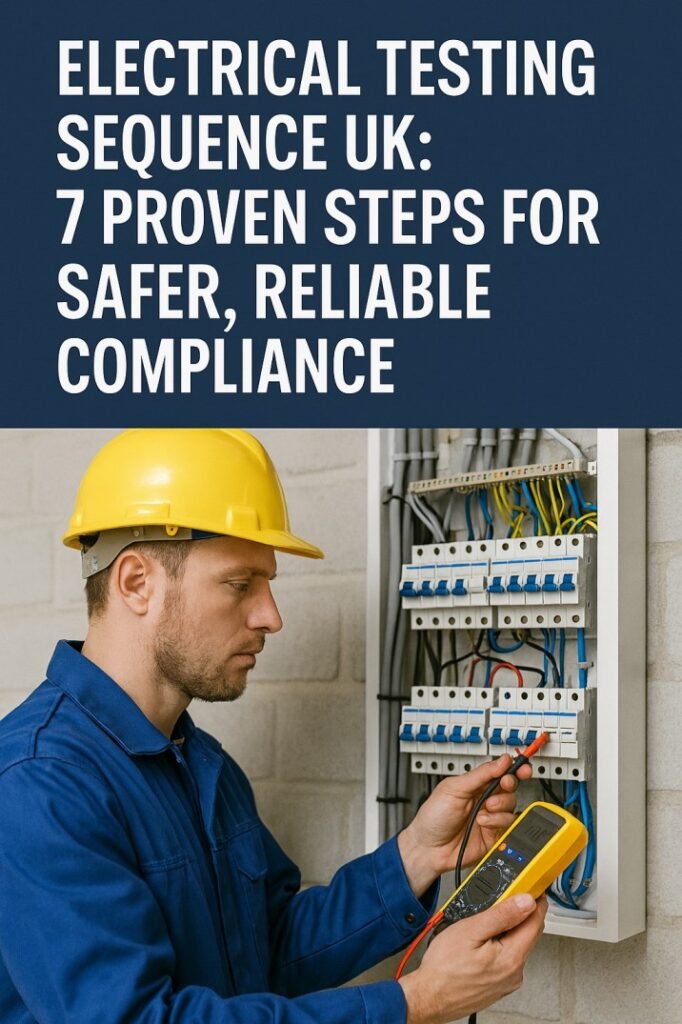
Table of Contents
This article explains the seven essential steps in the electrical testing sequence UK process and how each contributes to safer and more reliable installations.
What Is the Electrical Testing Sequence UK?
The electrical testing sequence UK outlines the order in which tests must be performed on electrical installations. It is part of BS 7671 requirements and ensures that every test result is valid and does not interfere with the next step.
Following the correct order prevents damage to equipment and ensures the safety of the engineer carrying out the inspection. It also ensures that all results reflect the true condition of the system.
Know more about IEC Standards for Transformer Testing – Complete Guide to IEC 60076 and Testing Procedures
Why Following the Correct Sequence Matters
A structured approach helps identify hidden problems early. It improves reliability and reduces electrical hazards such as shocks, short circuits, cable overheating, or insulation failure.
It also produces accurate records for Electrical Installation Condition Reports (EICR), periodic inspections, and new installation certifications. Engineers rely on this sequence to maintain quality control and deliver consistent results.
Below are the seven proven steps that form the backbone of the electrical testing sequence UK process.
Step 1: Initial Visual Inspection
The first step in the electrical testing sequence UK is the visual inspection. No tools are required at this stage. It focuses purely on visual clues that highlight potential risks or non-compliance.
Inspectors look for:
- Damaged cables
- Incorrect routing
- Missing labels
- Loose fixings
- Signs of overheating
- Incorrect protective devices
- Poor connections
This step prevents unnecessary testing on faulty circuits. It also ensures that every part of the installation is ready for further testing.
Know more about IEC Standard for XLPE Cables – Complete Guide to IEC 60502 and Electrical Cable Specifications
Table: Key Items Checked During Visual Inspection
| Item Checked | Purpose | Typical Issue Found |
|---|---|---|
| Cable condition | Safety and stability | Cracks, cuts, exposed copper |
| Consumer unit layout | Compliance | Wrong MCB sizes |
| Bonding and earthing | Fault prevention | Missing earth clamp |
| Socket and switch faceplates | Load capability | Burn marks, looseness |
| Circuit identification | Clear documentation | Wrong labels |
Step 2: Continuity of Protective Conductors
After the visual check, continuity testing begins. It verifies that every protective conductor, including the CPC (earth wire), is properly connected throughout the circuit.
This step ensures there is a clear and complete path for fault current. Without this, protective devices would not operate fast enough in a fault.
Methods include:
- End-to-end continuity testing
- R1 + R2 testing
- R2 testing only
These results confirm the integrity of the earth path in each circuit.
Step 3: Ring Final Circuit Continuity
Ring circuits are common in the UK, especially in domestic properties. The electrical testing sequence UK requires dedicated ring circuit testing to confirm the loop is complete.
Engineers test:
- Line conductor continuity
- Neutral conductor continuity
- CPC continuity
The cross-connection method is used to confirm equal resistance throughout the ring. This ensures the ring is electrically sound and capable of carrying its designed load.
Know more about IEC Standard for Relay Coordination – Complete Guide to Protection and Coordination Studies
Table: Typical Ring Continuity Values
| Conductor | Expected Resistance | Result Meaning |
|---|---|---|
| Line (R1) | Low, stable | Ring complete |
| Neutral (Rn) | Matches R1 | No breaks |
| CPC (R2) | Slightly higher | Earth continuity present |
Step 4: Insulation Resistance Testing
This test checks whether the cables have adequate insulation. Insulation protects against short circuits, earth faults, and electric shocks.
The electrical testing sequence UK requires the insulation test before energising the installation. A megohmmeter is used to apply a test voltage, usually 500 V DC for most circuits.
The test ensures:
- No breakdown of insulation
- Cables remain safe under normal operation
- Moisture or damage has not compromised insulation
Any reading below the acceptable limit indicates possible faults that must be corrected before continuing.
Step 5: Polarity Verification
Polarity testing confirms that connections are correctly wired. It verifies that:
- Line and neutral are in the correct terminals
- Switches control line conductors only
- Protective devices receive correct polarity
Polarity mistakes can create severe safety hazards. For example, a reversed polarity can energise metal parts or leave appliances unsafe. This step ensures the installation will operate correctly when powered.
This is also the stage where sockets, switches, and accessories receive detailed checks.
Know more about IEC Standard for Vibration Testing – IEC 60068 Explained with Procedures and Requirements
Step 6: Earth Fault Loop Impedance Testing (Zs Test)
Earth fault loop impedance testing measures the total impedance of the earth fault loop. It determines whether a protective device will disconnect quickly enough in the event of a fault.
The electrical testing sequence UK requires Zs testing after insulation and polarity checks. It confirms the correct operation of:
- MCBs
- RCBOs
- Fuses
If the Zs values exceed the limit set by BS 7671, the protective devices may not trip within the required time. This step is vital for fire safety and personal protection.
Table: Example Zs Limit Values for MCBs
| MCB Type | Rating | Max Zs (Ω) |
|---|---|---|
| B-type | 6A | 7.67 |
| B-type | 32A | 1.44 |
| C-type | 6A | 3.83 |
| C-type | 32A | 0.72 |
These values ensure fast disconnection to reduce electric shock risks.
Step 7: RCD Testing
The final step in the electrical testing sequence UK involves RCD testing. Residual current devices protect against electric shock by disconnecting the supply within milliseconds.
Tests performed include:
- RCD trip time test
- RCD ramp test
- Half-rated and full-rated current tests
This ensures that RCDs activate quickly when a fault occurs.
RCD testing helps verify:
- Proper sensitivity
- Accurate operating time
- Reliable mechanical operation
When all RCDs pass, the installation is considered safe to energise.
Know more about IEC Standard for Vacuum Circuit Breaker – IEC 62271 Guidelines, Ratings & Testing Explained
Final Documentation and Reporting
Once all seven steps are complete, the engineer compiles the report. The results form part of an EICR or installation certificate.
Accurate documentation includes:
- Test results
- Observations
- Non-compliance issues
- Corrective recommendations
This final stage confirms compliance with UK regulations and ensures a clear record for future inspections.
Conclusion
Following the electrical testing sequence UK method guarantees a safe, compliant, and reliable electrical system. Each step plays a critical role in identifying faults early and ensuring the installation remains fit for use.
When carried out properly, the seven steps reduce risks, improve system performance, and support long-term safety. Buildings of all sizes depend on this process to maintain high operational standards and meet British legal requirements.
Follow Us on Social:
Subscribe our Newsletter on Electrical Insights for latest updates from Electrical Engineering Hub
#ElectricalTestingSequenceUK, #ElectricalInspection, #EICRTesting, #UKElectricalSafety, #ComplianceTesting, #InstallationTesting, #DomesticElectricalTesting, #CommercialElectricalTesting, #PATTestingUK, #SafetyStandardsUK

Nice post. I learn something totally new and challenging on websites
For the reason that the admin of this site is working, no uncertainty very quickly it will be renowned, due to its quality contents.
I truly appreciate your technique of writing a blog. I added it to my bookmark site list and will