Electrical Testing Sequence Australia: 7 Proven Steps for Safer, Reliable Compliance
Electrical safety is a priority for every business in Australia. The country follows strict rules to ensure electrical systems remain safe, reliable, and compliant with national standards. This is why understanding the electrical testing sequence Australia is essential for contractors, facility managers, business owners, and anyone responsible for workplace electrical safety. A clear testing sequence helps reduce risks, prevent faults, and maintain long-term reliability across all installations.
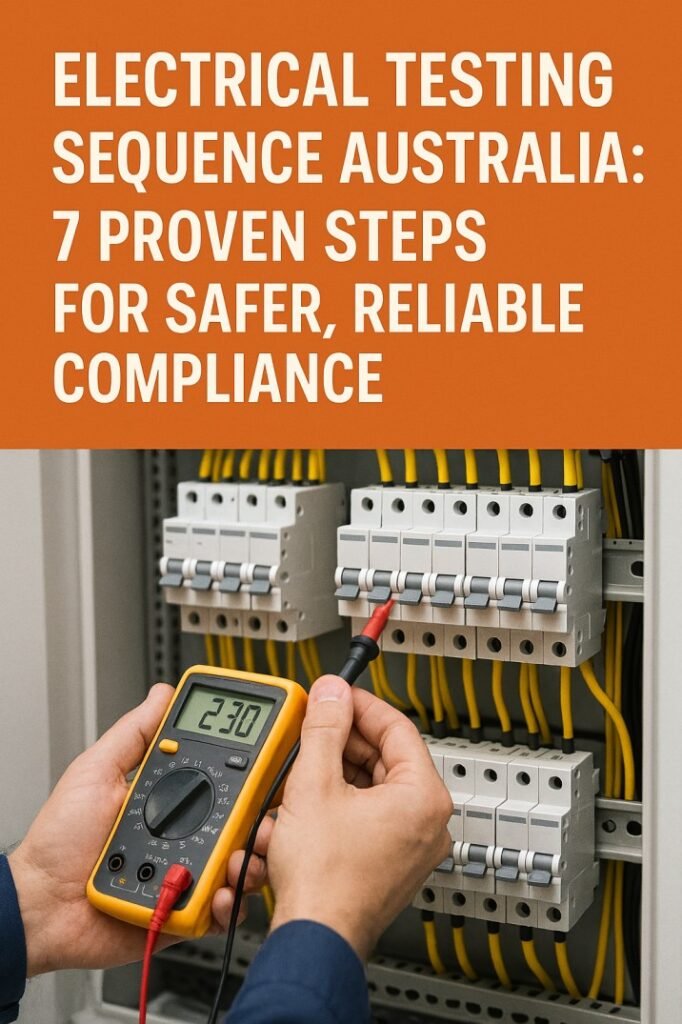
Table of Contents
Many incidents occur because electrical systems are not tested on time or not tested correctly. A structured and consistent testing sequence prevents these issues. It ensures every step aligns with Australian regulations such as AS/NZS 3017, AS/NZS 3000, and workplace safety requirements. When followed properly, this sequence offers long-term protection, better system performance, and peace of mind.
Below are the 7 proven steps that form the foundation of a safe and compliant electrical testing process used across Australia. Each step is straightforward, reliable, and designed to maintain electrical safety in every environment, from industrial operations to commercial buildings and residential systems.
Know more about Working Principle of an Earth Fault Relay: How It Protects Electrical Systems
Visual Inspection
Visual inspection is the first step in the electrical testing sequence Australia. It ensures the installation is free from obvious hazards before any live or instrument testing begins. This simple step prevents early failures and helps detect issues that are easy to miss during installation.
Inspectors check cable routes, fixtures, switchboards, protective devices, and terminations. They look for burns, loose connections, cracked insulation, or signs of overheating. They also confirm that wiring methods follow Australian rules for electrical safety.
A visual inspection is essential because it identifies faults long before they become dangerous. It sets the foundation for the next steps.
Polarity Testing
Polarity testing confirms active, neutral, and earth conductors are connected to the correct terminals. This is another critical part of the electrical testing sequence Australia because incorrect polarity can cause electric shock, appliance failure, and unexpected energisation.
Polarity tests are performed across outlets, switches, light points, and distribution boards. A simple error during installation can lead to major safety hazards. Correct polarity ensures power flows as designed, devices operate safely, and circuits remain stable.
In Australia, polarity testing is required before energising any new installation or modification. It is a fast but important test in the overall sequence.
Know more about IEC Standards for Transformer Testing – Complete Guide to IEC 60076 and Testing Procedures
Earth Continuity Testing
The earth continuity test confirms that all exposed conductive parts are connected to the earthing system. A continuous earthing path is vital for safety because it allows fault currents to flow back to the source and activate protective devices.
A strong and unbroken earth path prevents electric shock during a fault. It also ensures metal parts do not become accidentally energised. This step in the electrical testing sequence Australia is essential for ensuring installations comply with AS/NZS standards.
Earth continuity tests measure resistance values to make sure they meet required limits. Poor earth connections are a leading cause of electrical accidents, so this step must never be skipped.
Insulation Resistance Testing
Insulation resistance ensures conductors are properly insulated from each other and from earth. This step protects against short circuits, equipment damage, and fire hazards.
The test applies a high DC voltage across conductors to check insulation quality. It detects deterioration due to age, moisture, heat, or physical damage. In the electrical testing sequence Australia, insulation resistance testing is a mandatory requirement before energisation.
If insulation resistance values are too low, immediate correction is needed. This protects workers, equipment, and the entire installation from major electrical faults.
Know more about IEC Standard for XLPE Cables – Complete Guide to IEC 60502 and Electrical Cable Specifications
RCD Testing
Residual Current Devices are essential for preventing electric shock. RCD testing is performed to confirm that these devices trip within the required time and at the correct current level. This protects users from dangerous leakage currents.
RCDs are a major part of electrical safety in Australia. They must function flawlessly to protect people from accidental contact with live parts. That is why RCD testing is a key part of the electrical testing sequence Australia.
The test measures trip time, trip current, and correct functioning. A faulty RCD is extremely dangerous and must be replaced immediately. Regular RCD testing ensures workplaces and homes remain safe.
Loop Impedance Testing
Loop impedance testing checks how quickly protective devices can operate during a fault. It ensures enough fault current can flow to trip breakers or blow fuses in time.
This test verifies the fault loop path, including the active conductor, the earth conductor, and the source transformer. A high loop impedance means slower fault clearing, which can risk electric shock and fire.
In the electrical testing sequence Australia, loop impedance testing is required for all circuits. It is one of the most accurate ways to measure overall installation health.
Know more about IEC Standard for Relay Coordination – Complete Guide to Protection and Coordination Studies
Functional Testing
Functional testing checks that all electrical equipment and controls operate as designed. This includes lighting circuits, switches, safety devices, controls, protection systems, motors, and automation components.
Functional testing also includes emergency systems, communication equipment, and energy-saving devices. This final step ensures the installation is ready for reliable service.
This stage of the electrical testing sequence Australia verifies the system is safe, stable, and performing as expected. Once functional testing is complete, the sequence ends, and compliance documentation can be prepared.
Table: Overview of Electrical Testing Sequence Australia
| Step Number | Test Type | Purpose | Required Standard |
|---|---|---|---|
| 1 | Visual Inspection | Detect physical hazards and installation issues | AS/NZS 3000 |
| 2 | Polarity Test | Confirm correct conductor connections | AS/NZS 3017 |
| 3 | Earth Continuity | Verify earthing path integrity | AS/NZS 3000 |
| 4 | Insulation Resistance | Check insulation quality of conductors | AS/NZS 3017 |
| 5 | RCD Test | Ensure RCD trip times meet safety limits | AS/NZS 3760 |
| 6 | Loop Impedance | Confirm fault-clearing performance | AS/NZS 3000 |
| 7 | Functional Testing | Test system operation and reliability | AS/NZS 3017 |
Table: Common Issues Found During Testing
| Issue Type | Cause | Risk Level | Typical Solution |
|---|---|---|---|
| Incorrect polarity | Wrong terminal connections | High | Re-terminate conductors |
| Poor insulation | Heat, age, moisture | High | Replace damaged wiring |
| Weak earth path | Loose or broken earth conductors | Very High | Restore earth continuity |
| RCD failure | Mechanical wear or internal fault | Critical | Replace RCD immediately |
| High loop impedance | Long circuit length or poor connections | Medium | Improve conductor size or fix terminations |
Know more about IEC Standard for Vibration Testing – IEC 60068 Explained with Procedures and Requirements
Final Thoughts
Understanding the electrical testing sequence Australia is vital for maintaining safe and compliant installations. Each step in the sequence builds on the previous one. Together, they create a strong foundation for electrical safety in any environment.
A proper testing sequence prevents failures, improves reliability, and protects people from electrical hazards. Regular testing is essential, not optional, and should be carried out by skilled professionals who follow Australian standards.
Following these seven proven steps ensures every system is safe, durable, and ready for long-term performance. It is the most effective way to stay compliant and maintain electrical safety across workplaces, homes, and industrial sites.
Follow Us on Social:
Subscribe our Newsletter on Electrical Insights for latest updates from Electrical Engineering Hub
#ElectricalTestingSequenceAustralia, #ElectricalSafetyChecks, #ComplianceTesting, #AustralianStandards, #SafetyInspection, #ElectricalCompliance, #WorkplaceSafetyAU, #TestAndTagAustralia, #ElectricalAudit, #SafeWorkAustralia