Top 15 Electrical Engineering Universities in Pakistan | Best Accredited Engineering Institutes Guide
Choosing among the leading electrical engineering universities in Pakistan is a major decision for students planning a career in power systems, electronics, telecommunications, or renewable energy. The country has developed a strong academic base supported by accreditation bodies, modern laboratories, and industry collaboration. From public sector institutions with decades of academic excellence to private institutes focused on innovation, electrical engineering universities in Pakistan offer diverse study environments and career pathways.
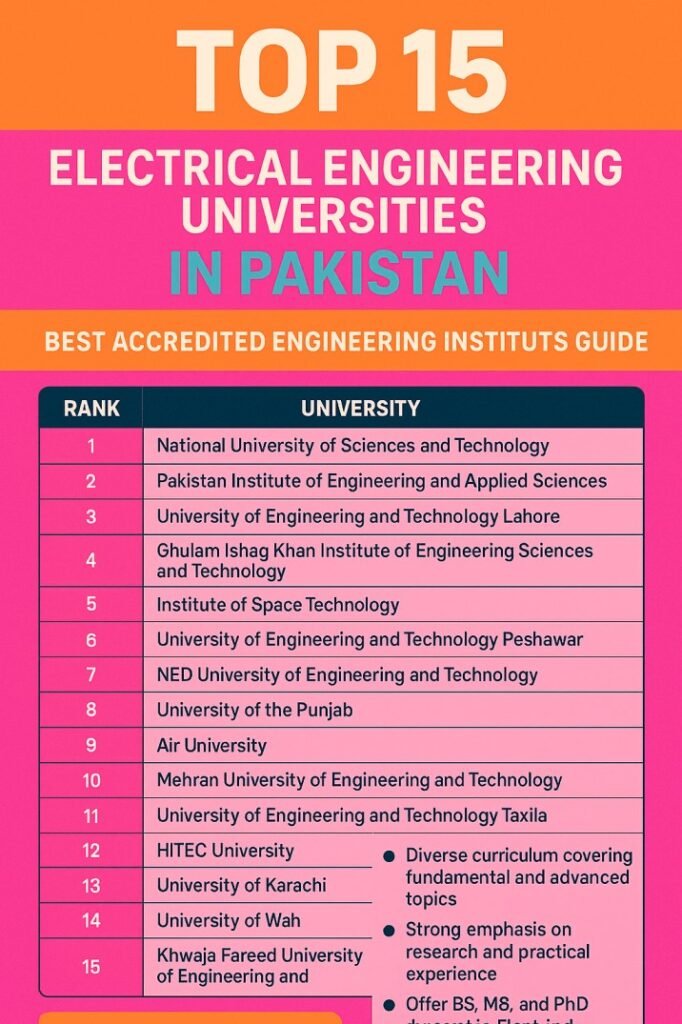
Table of Contents
This guide presents a detailed overview of recognized institutions, admission considerations, and program strengths. It is written to help prospective students and professionals evaluate electrical engineering universities in Pakistan based on reputation, facilities, research activity, and graduate outcomes.
Why Study in Electrical Engineering Universities in Pakistan
Electrical engineering universities in Pakistan maintain structured curricula aligned with international engineering education standards. Most programs are accredited by the Pakistan Engineering Council, ensuring graduates meet professional competency requirements. Students gain exposure to circuit design, control systems, energy management, industrial automation, and embedded technologies.
Know more about PLC Programming Salary 2026 – Experience-Wise Pay, Country Comparison & Skills That Boost Income
Laboratories equipped with simulation software, testing instruments, and renewable energy setups allow hands-on learning. Collaboration with industry partners also provides internships and field training. Graduates from electrical engineering universities in Pakistan often secure roles in utilities, EPC projects, manufacturing plants, telecommunications, and consulting firms.
Selection Criteria for Ranking Institutions
To shortlist the top electrical engineering universities in Pakistan, several evaluation factors were considered. These include accreditation status, faculty qualifications, research funding, graduate employability, campus infrastructure, and industry engagement. Institutional heritage and consistent academic performance also influence recognition among employers.
The table below summarizes major comparison parameters relevant when reviewing electrical engineering universities in Pakistan.
| Evaluation Factor | What It Indicates | Why It Matters |
|---|---|---|
| Accreditation | Approval by professional councils | Ensures degree recognition |
| Faculty Expertise | Academic and industry experience | Improves teaching quality |
| Research Output | Publications and funded projects | Strengthens innovation |
| Lab Facilities | Equipment and software access | Supports practical training |
| Industry Linkages | Internship and placement support | Enhances employability |
| Alumni Success | Career achievements | Reflects program credibility |
Know more about Electrical Engineer Salary in USA 2026 – State-Wise Pay, Experience Levels & Top Paying Industries
Top 15 Electrical Engineering Universities in Pakistan
Electrical engineering universities in Pakistan are distributed across multiple provinces, giving students regional choices without compromising educational quality. The following list highlights institutions known for consistent engineering education standards.
| Rank | University | City | Key Program Strength |
|---|---|---|---|
| 1 | National University of Sciences and Technology | Islamabad | Power engineering and robotics |
| 2 | University of Engineering and Technology Lahore | Lahore | Industrial systems and grid studies |
| 3 | GIKI Institute of Engineering Sciences and Technology | Topi | Electronics and innovation research |
| 4 | Lahore University of Management Sciences | Lahore | Interdisciplinary engineering |
| 5 | FAST National University | Multiple Campuses | Embedded systems focus |
| 6 | PIEAS | Islamabad | Nuclear and energy engineering |
| 7 | NED University of Engineering and Technology | Karachi | Urban infrastructure solutions |
| 8 | Mehran University of Engineering and Technology | Jamshoro | Power distribution research |
| 9 | UET Taxila | Taxila | Control systems development |
| 10 | COMSATS University | Multiple Campuses | Communication engineering |
| 11 | University of the Punjab | Lahore | Foundational engineering sciences |
| 12 | Air University | Islamabad | Avionics and signal processing |
| 13 | Bahria University | Karachi and Islamabad | Applied electronics |
| 14 | Dawood University of Engineering and Technology | Karachi | Industrial engineering labs |
| 15 | Balochistan University of Information Technology Engineering and Management Sciences | Quetta | Emerging technology programs |
These institutions demonstrate the geographic and academic diversity present among electrical engineering universities in Pakistan. Each maintains distinctive teaching styles and specialization opportunities.
Find all about Electrical Engineer Salary in Botswana: Latest Pay Scale, Benefits, and Career Outlook (2026)
Academic Structure and Curriculum Focus
Electrical engineering universities in Pakistan typically follow a four-year undergraduate model divided into foundational sciences and advanced engineering courses. Early semesters include mathematics, physics, programming, and circuit theory. Later semesters introduce specialized subjects such as digital signal processing, renewable energy integration, instrumentation, and high voltage engineering.
Practical coursework remains a defining aspect of electrical engineering universities in Pakistan. Students conduct experiments in machine labs, microcontroller workshops, and power system simulation sessions. Capstone design projects further enhance analytical and problem solving capabilities. These experiences prepare graduates for technical challenges in industrial environments.
Admission Requirements and Eligibility
Entry into electrical engineering universities in Pakistan generally requires strong performance in mathematics and science at the higher secondary level. Institutions evaluate applicants through merit calculations combining academic marks and entrance tests. Some universities administer their own assessments, while others accept national standardized testing results.
Explore details on Boeing Electrical Engineer Salary: Complete Guide to Pay, Benefits & Career Growth
Prospective students should compare admission processes across electrical engineering universities in Pakistan before applying. The table below outlines common requirements.
| Requirement | Description | Typical Expectation |
|---|---|---|
| Academic Record | Science stream background | High percentage in math and physics |
| Entry Test | University or national test | Competitive score |
| Documentation | Certificates and ID records | Verified copies |
| Interview | Program evaluation | Conducted by some institutions |
Understanding these expectations allows applicants to plan effectively and select suitable electrical engineering universities in Pakistan based on eligibility.
Career Outcomes After Graduation
Graduates from electrical engineering universities in Pakistan contribute to infrastructure growth and technological advancement. Opportunities exist in energy production, automation design, electronics manufacturing, and research organizations. Employers value practical training and accredited degrees when hiring from electrical engineering universities in Pakistan.
Know more about DEWA Electrical Engineer Salary
Typical employment sectors include power utilities, telecom providers, renewable energy firms, engineering consultancies, and public development authorities. Entrepreneurial graduates also establish startups focused on hardware design or smart technology solutions.
| Career Sector | Role Examples | Industry Demand |
|---|---|---|
| Power and Energy | Grid engineer, maintenance specialist | High |
| Telecommunications | Network planner, RF engineer | Steady |
| Manufacturing | Automation engineer | Growing |
| Renewable Projects | Solar system designer | Expanding |
| Research and Academia | Lecturer, analyst | Continuous |
Tips for Choosing the Right Institution
Selecting among electrical engineering universities in Pakistan requires personal assessment of academic goals and learning style. Campus visits, alumni feedback, and faculty interaction can reveal insights beyond rankings. Students should also consider location, tuition costs, and availability of scholarships.
Find about Electrical Engineer Salary in Germany
Comparing laboratory resources, internship pathways, and specialization tracks helps narrow options among electrical engineering universities in Pakistan. A well informed decision improves both academic satisfaction and career readiness.
Final Thoughts
The landscape of electrical engineering universities in Pakistan continues to evolve as institutions invest in research facilities and international partnerships. Students entering these programs gain exposure to modern engineering tools and structured learning systems. By evaluating accreditation, curriculum depth, and industry links, applicants can confidently identify electrical engineering universities in Pakistan aligned with their ambitions.
Pursuing studies at reputable electrical engineering universities in Pakistan not only develops technical expertise but also positions graduates to contribute to infrastructure development, sustainable energy solutions, and digital innovation. With careful planning and commitment, selecting the right institution becomes the first step toward a productive engineering career.
Know more about Electrical Engineer Salary in Ghana
Follow Us on Social:
Subscribe our Newsletter on Electrical Insights for latest updates from Electrical Engineering Hub
#ElectricalEngineeringUniversities, #EngineeringUniversitiesPakistan, #StudyElectricalEngineering, #PakistanEducation, #EngineeringStudents, #TopUniversitiesPK, #EngineeringAdmission, #UniversityRankingPakistan, #STEMEducation, #FutureEngineers