DIY Electric Motor Repair: 8 Quick Solutions You Can Try Now
Electric motors are at the heart of countless appliances and machines. When they malfunction, it can disrupt work and increase costs. However, with the right approach, DIY electric motor repair is possible and can save you both time and money. In this guide, we will explore eight quick solutions that you can try immediately to bring your motor back to life. These techniques are practical, safe, and suitable for beginners and experienced hobbyists alike.
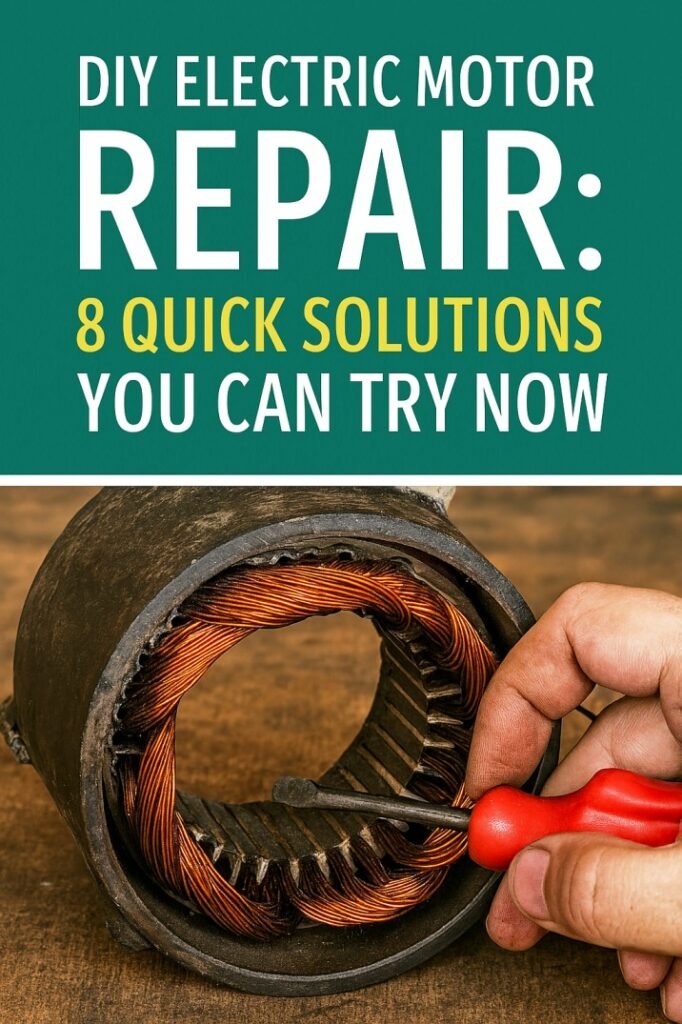
Table of Contents
Understanding Electric Motor Problems
Before attempting DIY electric motor repair, it is crucial to identify the problem. Motors can fail for various reasons including electrical faults, mechanical wear, or environmental damage. Common symptoms include unusual noises, overheating, vibrations, and reduced performance. Recognizing these signs early allows for faster repairs and prevents permanent damage.
Know more about MCC Panel Design Guide – IEC Standards, Wiring Diagram, Cost, and Sizing Calculations (Excel Template)
DIY Electric Motor Repair
1. Cleaning the Motor Thoroughly
One of the simplest DIY electric motor repair solutions is a thorough cleaning. Dust, dirt, and debris can accumulate on the motor over time, affecting its performance.
Steps for Cleaning:
- Disconnect the motor from the power source.
- Remove the casing carefully.
- Use a soft brush or compressed air to remove dust.
- Wipe surfaces with a clean, dry cloth.
Regular cleaning prevents overheating and ensures smooth operation. This solution is particularly effective for motors exposed to harsh environments.
Know more about Electric Motor Noise Troubleshooting: 10 Easy Fixes You Can Try Today
2. Inspecting and Replacing Brushes
Brushes conduct electricity between stationary wires and the rotating part of the motor. Worn-out brushes are a common cause of motor failure.
Steps to Inspect and Replace Brushes:
- Open the motor casing.
- Examine the brushes for wear.
- Replace brushes if they are shorter than the manufacturer’s recommended length.
- Reassemble the motor and test.
Replacing brushes is a quick and inexpensive DIY electric motor repair step that restores motor efficiency.
Use our online tool Motor Overload Setting Calculator for Single and Three Phase Motors
3. Lubricating Bearings
Motor bearings reduce friction between moving parts. Dry or worn-out bearings can cause noise and overheating.
Lubrication Guide:
| Task | Tools | Procedure |
|---|---|---|
| Remove old grease | Wrench, rag | Open bearing housing and clean old grease |
| Apply new grease | Bearing grease | Apply manufacturer-recommended grease evenly |
| Test motor | Power source | Ensure smooth rotation without noise |
Lubrication extends motor life and enhances performance.
Know more about Electric Motor Problems and Solutions
4. Checking the Power Supply
Sometimes, the problem isn’t the motor itself but the power supply. Voltage irregularities or loose connections can reduce motor efficiency.
Steps:
- Use a multimeter to check voltage consistency.
- Inspect wires and terminals for corrosion or loose connections.
- Tighten or replace damaged wires.
This basic step is part of any effective DIY electric motor repair process and can quickly solve operational issues.
5. Testing the Windings
Motor windings can burn out or short-circuit over time. Testing them ensures the motor can operate safely.
Testing Process:
- Disconnect the motor from the power source.
- Use a multimeter to measure resistance across windings.
- Compare readings with the manufacturer’s specifications.
- Replace or rewind damaged coils if necessary.
Testing windings prevents further damage and avoids costly replacements.
Know more about Best Industrial Electric Motor Manufacturers Near Virginia
6. Replacing Faulty Capacitors
Some motors use capacitors for starting or running. A faulty capacitor can prevent the motor from functioning properly.
DIY Electric Motor Repair Tips for Capacitors:
- Identify capacitor type and rating.
- Discharge the capacitor safely.
- Test using a multimeter with a capacitance setting.
- Replace defective capacitors with matching specifications.
Replacing capacitors is a straightforward repair that can restore motor operation immediately.
7. Realigning the Rotor
Misaligned rotors cause vibrations and uneven operation. Correcting alignment improves performance and reduces wear.
Steps for Realignment:
- Remove motor casing.
- Check rotor alignment visually.
- Adjust using appropriate tools without forcing components.
- Rotate the rotor manually to ensure smooth movement.
Proper rotor alignment is a critical part of DIY electric motor repair and extends motor lifespan.
Know more about Industrial Electric Motor Manufacturers Near Washington, DC
8. Tightening Loose Components
Loose screws, bolts, or mounting brackets can cause rattling or misoperation. Regular inspection and tightening help maintain motor stability.
Checklist for Tightening Components:
| Component | Tool | Action |
|---|---|---|
| Motor casing screws | Screwdriver | Tighten securely |
| Mounting bolts | Wrench | Check torque |
| Terminal connections | Pliers | Ensure firm contact |
This small but essential step ensures safety and consistent performance.
Safety Precautions
While DIY electric motor repair is manageable, safety is paramount. Always disconnect power before working on a motor. Use insulated tools, wear gloves, and avoid moisture. Follow manufacturer guidelines to prevent injuries and equipment damage.
When to Seek Professional Help
Some issues, such as severe winding damage, burnt components, or complex electronic controllers, may require professional intervention. Attempting repairs beyond your skill level can worsen the problem. Knowing your limits is part of responsible DIY electric motor repair.
Know more about Top 10 Electric Motor Manufacturers in the World
Conclusion
DIY electric motor repair is achievable with the right approach. Cleaning, replacing brushes, lubricating bearings, checking power supply, testing windings, replacing capacitors, realigning rotors, and tightening components are eight practical solutions you can try now. Regular maintenance and timely repairs ensure your motor runs efficiently and lasts longer. By following these steps, you can save money, reduce downtime, and gain confidence in handling electric motor issues.
Follow Us on Social:
Subscribe our Newsletter on Electrical Insights for latest updates from Electrical Engineering Hub
#DIYElectricMotorRepair, #MotorFix, #ElectricMotorDIY, #MotorMaintenance, #DIYRepairTips, #MotorTroubleshooting, #HomeElectricRepair, #MotorHacks, #RepairLikeAPro, #MotorRepairGuide