
Issues and Challenges in Rechargeable Lithium Batteries
Rechargeable lithium batteries have become a cornerstone of modern technology, powering everything from smartphones and laptops to electric vehicles and renewable energy storage systems. Their high energy density, lightweight design, and long cycle life make them ideal for many applications.
However, despite their widespread use, there are several issues and challenges in rechargeable lithium batteries that limit their performance, safety, and longevity. Understanding these challenges is crucial for both manufacturers and users to optimize usage and develop next-generation battery technologies.
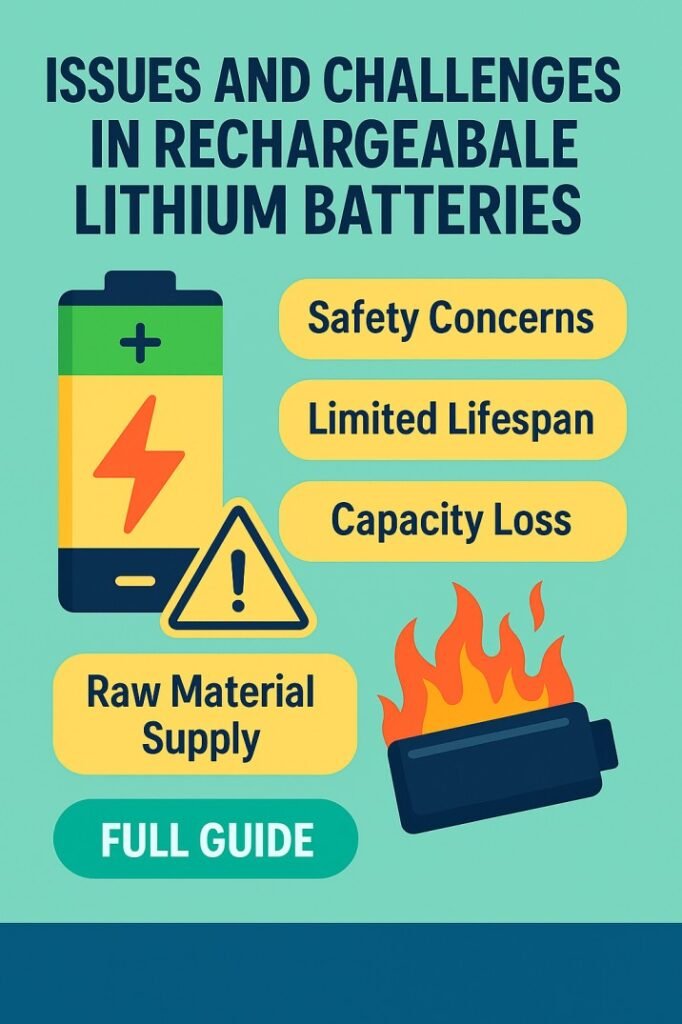
Table of Contents
Safety Concerns
One of the primary issues and challenges in rechargeable lithium batteries is safety. Lithium-ion batteries are prone to thermal runaway, a condition where the battery overheats uncontrollably, potentially causing fires or explosions. This risk is exacerbated by physical damage, overcharging, manufacturing defects, or exposure to high temperatures. Even minor punctures can lead to internal short circuits, making safety a critical consideration in both design and handling.
Key safety challenges include:
- Overcharging and over-discharging: Can damage the battery’s internal structure and increase fire risk.
- Short circuits: Often caused by manufacturing defects or internal degradation.
- Thermal management: Maintaining optimal operating temperatures is essential to prevent overheating.
Advanced battery management systems (BMS) are essential for monitoring voltage, temperature, and current to mitigate these risks. Still, safety remains a pressing issue for widespread adoption in high-energy applications like electric vehicles.
Know more about The Rise of LFP Batteries: Are They the Future of EVs?
Limited Lifespan and Degradation
Rechargeable lithium batteries degrade over time, which is another significant challenge. Each charge-discharge cycle slowly reduces capacity, resulting in shorter runtimes and eventually requiring replacement. Factors that accelerate degradation include high operating temperatures, deep discharge cycles, and fast charging.
Some notable factors affecting battery life include:
- Cycle life limitations: Most lithium-ion batteries last between 500 and 1500 cycles before capacity drops below 80%.
- Capacity fade: Loss of active lithium ions reduces the energy storage potential over time.
- Calendar aging: Even unused batteries degrade gradually due to chemical reactions within the cells.
Manufacturers are continuously researching new materials and electrode designs to extend battery lifespan, but degradation remains a natural limitation of lithium-ion technology.
Discover everything about How to Recycle Lithium Ion Batteries: 7 Powerful Steps for a Cleaner Future
Charging Speed and Infrastructure
Fast charging has become a key demand for consumer electronics and electric vehicles. However, one of the pressing issues and challenges in rechargeable lithium batteries is balancing fast charging with longevity and safety. High charging currents can increase internal temperatures, accelerate degradation, and trigger safety risks.
Key challenges in this area include:
- Battery heat management: Faster charging generates more heat, requiring efficient cooling systems.
- Infrastructure limitations: Charging networks need to support higher currents without compromising safety.
- Compatibility issues: Not all batteries or chargers are optimized for rapid charging, potentially leading to uneven performance.
Developing batteries that can tolerate rapid charging without significant capacity loss is a major focus for researchers worldwide.
Use our online tool for free Battery Cable Size Calculator – Instantly Find the Right Wire Gauge for Any Battery Setup
Environmental Impact and Recycling
Lithium batteries have a notable environmental footprint, both during production and disposal. Mining lithium and other metals like cobalt and nickel causes environmental degradation, water scarcity, and pollution. Recycling lithium batteries is challenging due to the complex chemistry and potential hazards, which adds to the sustainability concerns.
Environmental challenges include:
- Resource extraction: Mining for lithium, cobalt, and nickel is energy-intensive and environmentally harmful.
- Battery disposal: Improper disposal can release toxic chemicals into the environment.
- Recycling efficiency: Current recycling technologies recover only a fraction of materials, limiting circular economy potential.
Innovations in recycling methods and the development of more sustainable battery chemistries are essential to address these environmental challenges. Here is a quick guide where you can find Best Batteries for Solar Panels in UK (2025) – Top Solar Storage Options for Homes
Performance Limitations in Extreme Conditions
Another challenge facing rechargeable lithium batteries is their sensitivity to temperature extremes. Performance and capacity degrade significantly in very cold or hot conditions. In cold climates, batteries lose efficiency, reducing the usable range of electric vehicles. In hot climates, excessive heat can accelerate aging and increase safety risks.
Factors affecting performance include:
- Low temperatures: Reduce ion mobility, leading to slower charge/discharge rates.
- High temperatures: Increase self-discharge rates and accelerate chemical degradation.
- Thermal runaway risk: Extreme heat can trigger fires or explosions.
Effective thermal management systems and new electrolyte formulations are being explored to mitigate these issues, but challenges remain.
Cost and Supply Chain Issues
The high cost of lithium-ion batteries is another barrier to their widespread adoption. The reliance on critical raw materials such as lithium, cobalt, and nickel contributes to price volatility. Supply chain disruptions can also impact production, leading to shortages and increased costs for end-users.
Economic challenges include:
- Raw material scarcity: Limited availability of cobalt and lithium can drive up costs.
- Geopolitical risks: Many resources are concentrated in specific regions, making supply chains vulnerable.
- Manufacturing complexity: High precision in production is required, adding to overall costs.
Researchers are investigating alternative materials and chemistries to reduce dependence on scarce resources and lower costs without compromising performance.
Know everything about Best Solar Batteries for Tesla Powerwall Alternatives
Table: Key Issues and Challenges in Rechargeable Lithium Batteries
| Challenge | Description | Impact on Performance | Mitigation Strategies |
|---|---|---|---|
| Safety | Thermal runaway, overcharging, short circuits | Fire risk, device damage | Battery management systems, protective casings |
| Lifespan & Degradation | Capacity fade, limited cycle life | Shorter battery life, reduced efficiency | Advanced materials, improved electrode design |
| Charging Speed | Rapid charging leads to heat generation | Degrades battery faster, safety concerns | Optimized charging protocols, cooling systems |
| Environmental Impact & Recycling | Mining impact, recycling difficulty | Pollution, limited circular economy | Sustainable materials, efficient recycling |
| Extreme Temperature Performance | Poor performance in cold/hot environments | Reduced efficiency, faster degradation | Thermal management, new electrolytes |
| Cost & Supply Chain | Expensive materials, supply chain volatility | Higher consumer prices, limited availability | Alternative chemistries, strategic sourcing |
Know more about IEC Standard for VRLA Battery – Complete Guide to Design, Testing, and Performance
Technological Innovations to Address Challenges
Despite these challenges, research and innovation in battery technology continue to make progress. Emerging solutions include solid-state batteries, lithium-sulfur batteries, and enhanced lithium-ion chemistries that promise higher safety, energy density, and cycle life. Improvements in electrode materials, electrolyte formulations, and battery management systems also aim to overcome the current limitations.
- Solid-state batteries: Replace liquid electrolytes with solid ones, reducing the risk of leakage and thermal runaway.
- Lithium-sulfur batteries: Offer higher energy density and lower environmental impact.
- Advanced BMS technologies: Enable precise monitoring to prevent overcharging, over-discharging, and overheating.
Adopting these innovations could significantly mitigate the issues and challenges in rechargeable lithium batteries, paving the way for safer and longer-lasting energy storage solutions.
Know more about Why Are Lithium Batteries Dangerous: 7 Hidden Risks You Must Know
Conclusion
Rechargeable lithium batteries have revolutionized modern electronics and transportation, but they are not without limitations. Safety risks, limited lifespan, environmental impact, performance challenges in extreme conditions, and high costs are all significant issues and challenges in rechargeable lithium batteries. Continuous research, innovative designs, and sustainable practices are essential to address these concerns. As the demand for energy storage solutions grows, overcoming these challenges will be crucial for advancing technology while ensuring safety, efficiency, and environmental responsibility.
By understanding these challenges, manufacturers, researchers, and consumers can make informed decisions to optimize performance and longevity. Addressing these issues is not only critical for the future of consumer electronics and electric vehicles but also for achieving a sustainable and energy-efficient world.
Follow Us on Social:
Subscribe our Newsletter on Electrical Insights for latest updates from Electrical Engineering Hub
#RechargeableLithiumBatteries, #BatteryChallenges, #LithiumBatteryIssues, #EnergyStorageProblems, #BatterySafety, #BatteryLifeConcerns, #LithiumTech, #BatteryInnovation, #SustainableEnergy, #PowerStorage