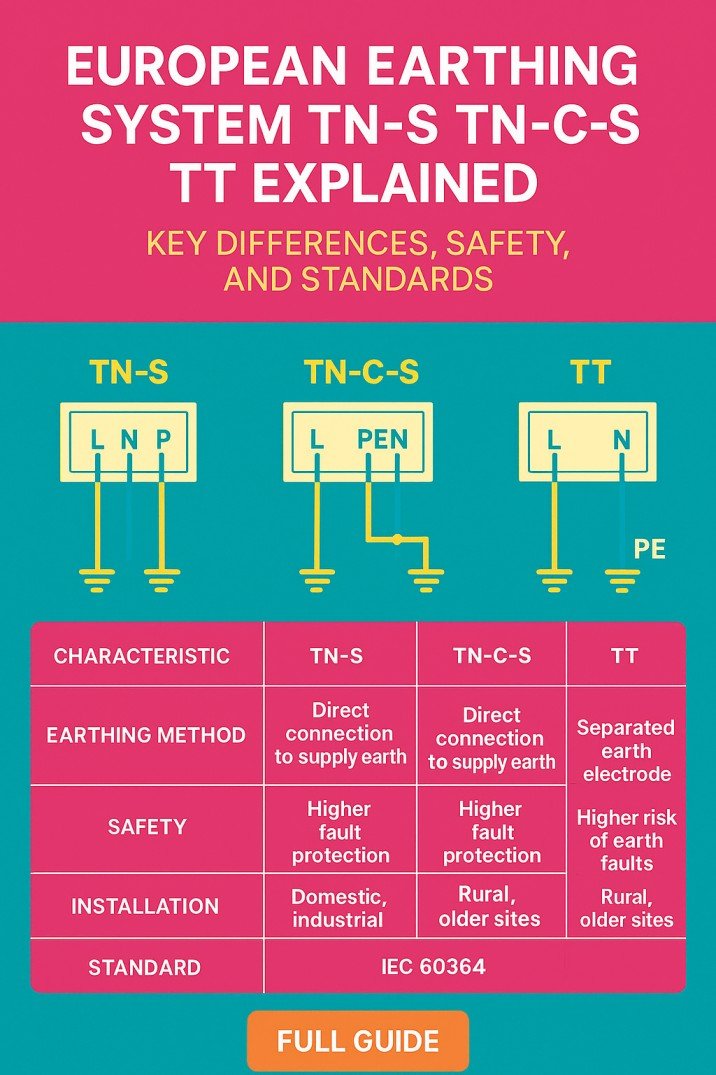
Buck and Boost Transformer Sizing: Complete Calculation Guide for Accurate Voltage Correction
Voltage variation is a common challenge in industrial plants, commercial buildings, and utility distribution systems. Motors overheat, contactors chatter, and electronic equipment fails prematurely when supply voltage is too high or too low. This is where buck and boost transformer sizing becomes critical. Proper buck and boost transformer sizing ensures accurate voltage correction without replacing the entire transformer system, saving both capital cost and downtime.
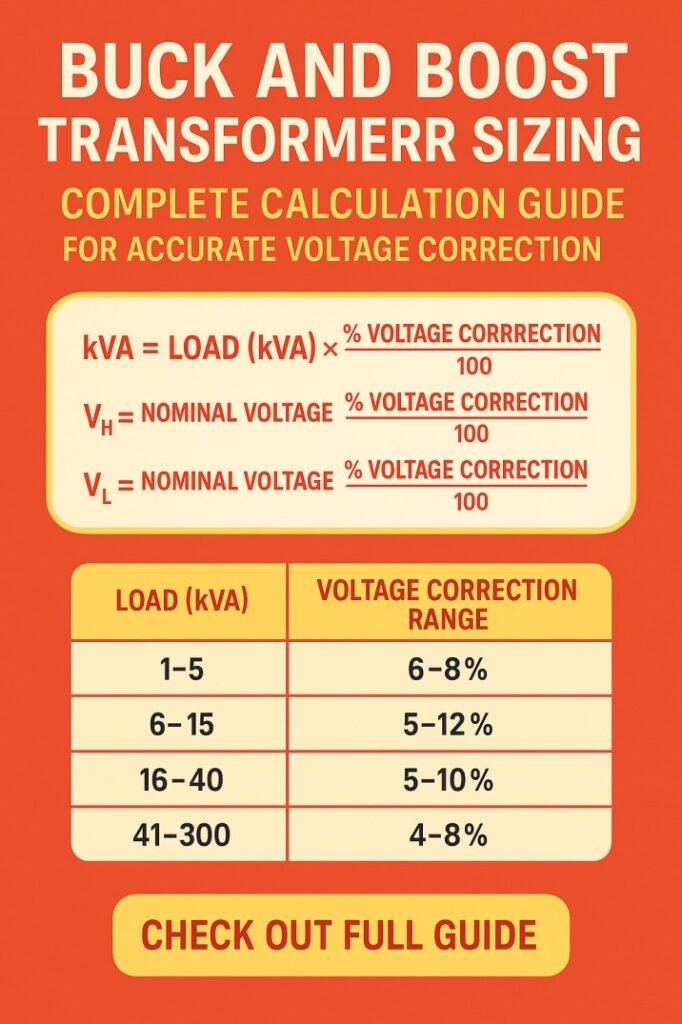
Table of Contents
A buck and boost transformer is a small single-phase transformer connected as an autotransformer to either reduce (buck) or increase (boost) the supply voltage. Instead of handling the full load kVA like a standard isolation transformer, it only handles the voltage difference. That is why buck and boost transformer sizing is different from conventional transformer sizing methods.
Understanding how to calculate the required kVA, current, and voltage correction is essential for electrical engineers, technicians, and project managers who deal with voltage drop problems.
Find all about Transformer Disconnect Sizing
What Is a Buck and Boost Transformer?
A buck and boost transformer is designed to correct minor voltage deviations, typically within ±5% to ±20% of nominal voltage. It is widely used in HVAC systems, CNC machines, data centers, motor control centers, and sensitive industrial loads.
When connected properly:
- Boost connection increases output voltage
- Buck connection decreases output voltage
- Transformer operates as an autotransformer
- Only the correction voltage passes through transformer windings
Because of this operating principle, buck and boost transformer sizing depends on the correction voltage, not the total system voltage.
Why Proper Buck and Boost Transformer Sizing Matters
Incorrect sizing can lead to:
- Overheating of transformer windings
- Insufficient voltage correction
- Nuisance tripping of breakers
- Reduced equipment life
- Higher energy losses
Know more about Transformers Earthspark Size Chart
Accurate buck and boost transformer sizing ensures thermal stability, proper voltage regulation, and compliance with electrical standards.
Step-by-Step Buck and Boost Transformer Sizing Procedure
The sizing process follows a logical calculation sequence. Each step must be performed carefully to ensure correct selection.
Step 1: Determine Required Voltage Correction
Identify:
- Supply voltage
- Required load voltage
Voltage correction = Required Voltage – Supply Voltage
Example:
- Supply voltage = 208V
- Required voltage = 230V
Voltage correction = 230 – 208 = 22V (Boost)
Know all about Transformer Sizing for EV Charger
Step 2: Calculate Load Current
For single-phase systems:
Load Current (A) = kVA × 1000 ÷ Voltage
For three-phase systems:
Load Current (A) = kVA × 1000 ÷ (1.732 × Voltage)
Example:
- Load = 15 kVA at 230V
- Current = 15000 ÷ 230 = 65.2A
Step 3: Calculate Required Transformer kVA
This is the most important part of buck and boost transformer sizing.
Transformer kVA = (Voltage Correction × Load Current) ÷ 1000
Using previous example:
- kVA = (22 × 65.2) ÷ 1000
- kVA = 1.43 kVA
Notice that although the load is 15 kVA, the transformer requirement is only 1.43 kVA. This is the advantage of buck and boost transformer sizing.
Explore all about Transformer Bond Sizing
Practical Calculation Table
Below is a simplified example table to understand the relationship between load, correction voltage, and required transformer kVA.
| Supply Voltage | Required Voltage | Load kVA | Load Current (A) | Correction Voltage (V) | Required Transformer kVA |
|---|---|---|---|---|---|
| 208V | 230V | 15 | 65.2 | 22 | 1.43 |
| 240V | 208V | 20 | 83.3 | 32 | 2.66 |
| 380V | 400V | 30 | 43.3 (3Φ) | 20 | 0.87 |
| 415V | 380V | 25 | 34.8 (3Φ) | 35 | 1.22 |
This table clearly shows how buck and boost transformer sizing depends primarily on correction voltage and current. Find more Transformer calculators here
Single Phase vs Three Phase Buck and Boost Transformer Sizing
Single-phase systems are straightforward. Three-phase systems require careful attention to connection methods such as open delta or wye configuration.
Key considerations:
- For three-phase correction, two or three single-phase transformers may be used
- Ensure phase balance
- Confirm compatibility with system grounding
- Verify line-to-line or line-to-neutral correction requirements
In three-phase buck and boost transformer sizing, always calculate current using 1.732 multiplier.
Standard Transformer Ratings
Buck and boost transformers are commonly available in standard ratings. Selection should be equal to or higher than calculated kVA.
| Standard kVA Ratings |
|---|
| 0.25 kVA |
| 0.50 kVA |
| 0.75 kVA |
| 1.0 kVA |
| 1.5 kVA |
| 2.0 kVA |
| 3.0 kVA |
| 5.0 kVA |
| 7.5 kVA |
| 10 kVA |
Always choose the next higher standard size if calculated value falls between two ratings.
Know more about Transformer Cooling Methods: ONAN, ONAF, OFAF & More
Important Design Considerations
When performing buck and boost transformer sizing, do not rely only on mathematical results. Consider these practical factors:
Load Type
Motor loads draw high inrush current. Consider 125% capacity for motors.
Ambient Temperature
High temperature environments reduce transformer life.
Continuous vs Intermittent Load
For continuous operation, size conservatively.
Voltage Regulation
Confirm output voltage after correction remains within ±5% tolerance.
Overcurrent Protection
Primary and secondary protection must comply with NEC or local electrical code.
Example: Complete Three-Phase Buck and Boost Transformer Sizing
Given:
- Supply Voltage = 380V
- Required Voltage = 400V
- Load = 50 kVA
Step 1: Voltage Correction
400 – 380 = 20V
Step 2: Load Current
- Current = 50000 ÷ (1.732 × 400)
- Current = 72.2A
Know more about Transformer Sizing for Residential Building
Step 3: Transformer kVA
- kVA = (20 × 72.2) ÷ 1000
- kVA = 1.44 kVA
Select 1.5 kVA standard transformer per phase if using three units.
This example demonstrates accurate buck and boost transformer sizing in real field conditions.
Common Mistakes in Buck and Boost Transformer Sizing
Even experienced engineers sometimes make calculation errors. Avoid these mistakes:
- Using full load kVA instead of correction kVA
- Ignoring three-phase current formula
- Selecting exact calculated rating without margin
- Incorrect series connection
- Overlooking grounding method
Correct buck and boost transformer sizing prevents overheating and insulation failure.
Advantages of Proper Buck and Boost Transformer Sizing
When performed correctly, buck and boost transformer sizing provides:
- Low installation cost
- Compact footprint
- High efficiency
- Improved equipment performance
- Stable motor operation
- Extended equipment life
It is often more economical than replacing large power transformers or utility upgrades.
Find all about Top 10 Pole Mounted Transformer Manufacturers in Dubai
Quick Reference Formula Table
| Parameter | Formula |
|---|---|
| Voltage Correction | Required Voltage – Supply Voltage |
| Single Phase Current | kVA × 1000 ÷ Voltage |
| Three Phase Current | kVA × 1000 ÷ (1.732 × Voltage) |
| Transformer kVA | (Correction Voltage × Load Current) ÷ 1000 |
Keep this table available during project planning or site commissioning.
When Not to Use Buck and Boost Transformers
Buck and boost transformer sizing is suitable for minor corrections only. Avoid using them when:
- Voltage deviation exceeds 20%
- Large load fluctuations exist
- Harmonic distortion is severe
- Isolation is required
- Long-term grid instability exists
In such cases, consider automatic voltage regulators or tap-changing transformers.
Read in detail about types of transformer protection relays
Field Installation Tips
After performing buck and boost transformer sizing, proper installation is essential.
- Verify polarity markings
- Check phase sequence
- Tighten all terminals to recommended torque
- Measure output voltage before energizing load
- Record commissioning data
Field verification ensures calculated buck and boost transformer sizing matches actual performance.
Final Thoughts on Buck and Boost Transformer Sizing
Accurate buck and boost transformer sizing is a practical skill every electrical engineer should master. It provides an efficient and economical solution for voltage correction in industrial and commercial applications. By calculating correction voltage, determining load current, and selecting the appropriate transformer kVA, you can ensure stable voltage delivery and protect valuable electrical equipment.
Find more about Best Medium Voltage Transformers for Solar Plants
The key principle is simple: size the transformer based on voltage difference, not total load capacity. When applied correctly, buck and boost transformer sizing delivers reliable voltage regulation, reduces downtime, and improves system efficiency without major infrastructure changes.
Follow Us on Social:
Subscribe our Newsletter on Electrical Insights for latest updates from Electrical Engineering Hub
#BuckAndBoostTransformerSizing, #TransformerSizingGuide, #VoltageCorrection, #ElectricalDesign, #PowerDistribution, #kVACalculation, #ElectricalEngineers, #LowVoltageSystems, #IndustrialElectrical, #TransformerSelection