
Best SCADA Systems Manufacturing: Top Solutions to Boost Industrial Efficiency in 2026
In the modern industrial landscape, efficiency, reliability, and real-time monitoring have become essential for manufacturers to stay competitive. Implementing the best SCADA systems manufacturing solutions allows industries to optimize operations, reduce downtime, and enhance decision-making through accurate data analytics. SCADA, which stands for Supervisory Control and Data Acquisition, is no longer a luxury but a necessity for factories, plants, and production lines aiming for digital transformation.
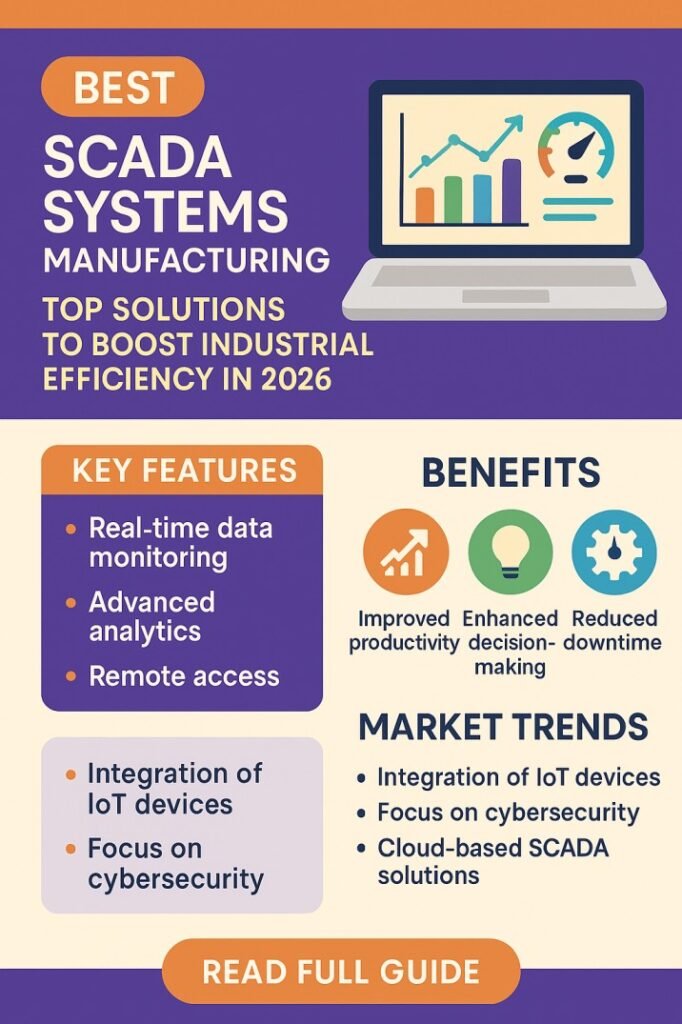
Table of Contents
Choosing the right SCADA system is crucial because it directly impacts productivity, operational costs, and safety. With the rapid technological advancements in 2026, manufacturers have a wide array of SCADA solutions designed to meet varying industrial needs. From small-scale operations to large industrial plants, the right SCADA system ensures seamless monitoring, efficient process control, and data-driven insights.
Why SCADA Systems Are Vital in Manufacturing
SCADA systems in manufacturing are designed to gather real-time data from sensors, machinery, and production equipment. This data is then processed to provide actionable insights, which help in:
- Monitoring equipment performance
- Predictive maintenance to reduce unplanned downtime
- Optimizing energy usage
- Automating complex industrial processes
- Ensuring compliance with safety and environmental standards
Investing in the best SCADA systems manufacturing solutions not only streamlines operations but also enhances decision-making. The integration of modern SCADA platforms with IoT devices, cloud computing, and AI-driven analytics is reshaping industrial efficiency.
Know more about Top SCADA Software Platforms for Energy Sector
Key Features to Look for in SCADA Systems
When selecting a SCADA system for manufacturing, consider the following features to maximize ROI:
- Real-Time Monitoring: Access to live data and alerts for immediate intervention.
- Scalability: Ability to expand as the production facility grows.
- User-Friendly Interface: Intuitive dashboards that simplify complex processes.
- Remote Access: Secure remote monitoring through web and mobile applications.
- Integration Capability: Compatibility with existing PLCs, MES, ERP, and IoT devices.
- Data Logging & Reporting: Advanced analytics to identify trends and optimize operations.
These features ensure that the SCADA system provides tangible benefits to manufacturers, driving productivity and cost efficiency.
Know more about Remote Monitoring with PLC and IoT Integration
Top SCADA Systems Manufacturing Brands in 2026
The market for SCADA systems is highly competitive, with several leading brands offering innovative solutions. The following table highlights the top SCADA systems manufacturing solutions, their key features, and suitability:
| Brand | Key Features | Best For | Deployment Type |
|---|---|---|---|
| Siemens WinCC | Advanced visualization, HMI integration, predictive analytics | Large-scale manufacturing, automotive, process industries | On-premises / Cloud |
| Schneider Electric EcoStruxure | IoT-enabled, energy optimization, modular design | Energy-intensive plants, chemical manufacturing | On-premises / Cloud |
| Rockwell Automation FactoryTalk | Seamless PLC integration, real-time reporting, secure access | Discrete manufacturing, packaging, electronics | On-premises / Hybrid |
| GE Digital iFIX | Powerful data historian, customizable dashboards, event management | Oil & gas, water treatment, industrial automation | On-premises |
| AVEVA SCADA | Cloud-ready, multi-site management, AI analytics | Heavy industry, process manufacturing | Cloud / On-premises |
| Honeywell Experion | Process optimization, cybersecurity features, advanced alarms | Petrochemical, refining, large-scale plants | On-premises |
These SCADA platforms are recognized globally for their reliability, flexibility, and cutting-edge features. Each solution provides unique advantages based on the type of manufacturing operation and industrial requirements.
Know more about HMI vs SCADA: Which System Should You Choose?
Advantages of Implementing the Best SCADA Systems in Manufacturing
Manufacturers implementing top-tier SCADA systems experience several tangible benefits:
- Improved Operational Efficiency: Automated control and real-time data reduce human error and optimize resource usage.
- Reduced Downtime: Predictive maintenance and instant alerts prevent costly equipment failures.
- Enhanced Decision-Making: Data-driven insights allow managers to make strategic production and investment choices.
- Cost Optimization: Efficient energy management and resource tracking reduce operational expenses.
- Compliance and Safety: SCADA systems help in monitoring critical parameters to meet regulatory standards.
By integrating the best SCADA systems manufacturing solutions, companies gain a competitive edge in a market increasingly driven by automation and smart manufacturing technologies.
Know more about Industrial IoT Sensors in Automation: Cost and Integration
Comparing SCADA Systems: Feature-Based Insights
To help manufacturers make an informed decision, here is a comparison of the leading SCADA systems based on critical evaluation parameters:
| Feature | Siemens WinCC | Schneider EcoStruxure | Rockwell FactoryTalk | GE iFIX | AVEVA SCADA | Honeywell Experion |
|---|---|---|---|---|---|---|
| Real-Time Monitoring | Excellent | Very Good | Excellent | Good | Excellent | Very Good |
| Ease of Integration | Very Good | Excellent | Excellent | Good | Good | Very Good |
| Cloud Compatibility | Yes | Yes | Partial | No | Yes | No |
| Predictive Maintenance | Yes | Yes | Yes | Limited | Yes | Yes |
| Cybersecurity | High | High | High | Medium | High | High |
| Scalability | Excellent | Excellent | Very Good | Good | Excellent | Very Good |
This comparison shows that each SCADA system has specific strengths, and choosing the right platform depends on operational requirements, budget, and future scalability.
Know more about OPC UA vs MQTT: Protocol Comparison for Industrial Control
Best Practices for SCADA Implementation in Manufacturing
Implementing the best SCADA systems manufacturing solutions requires careful planning and execution. Here are some best practices:
- Assess Current Operations: Identify critical processes, data requirements, and bottlenecks.
- Select the Right SCADA System: Match the system’s capabilities with industrial needs.
- Prioritize Cybersecurity: Implement secure communication protocols, firewalls, and user authentication.
- Train Personnel: Ensure operators and engineers are proficient in using the SCADA system.
- Integrate with Existing Systems: Connect SCADA with PLCs, MES, ERP, and IoT devices for seamless data flow.
- Regular Maintenance and Updates: Keep software and hardware updated to leverage new features and maintain security.
Following these steps ensures that manufacturers can maximize the benefits of SCADA solutions while minimizing operational risks.
Future Trends in SCADA Systems for Manufacturing
The evolution of SCADA technology continues in 2026, and manufacturers should anticipate the following trends:
- IoT and Edge Computing: SCADA systems will increasingly leverage edge devices for faster data processing.
- Cloud-Based SCADA: Remote monitoring, multi-site management, and scalable deployment are becoming standard.
- AI and Machine Learning: Predictive analytics and anomaly detection enhance decision-making and efficiency.
- Enhanced Cybersecurity: With digital transformation, SCADA systems will adopt advanced encryption and threat detection.
- Mobile Accessibility: Operators can access real-time data and control processes from anywhere via smartphones and tablets.
Know more about Modbus Communication Protocol: Master-Slave Explained
Adopting these advancements ensures that manufacturers remain competitive and prepared for Industry 4.0 challenges.
Conclusion
The best SCADA systems manufacturing solutions in 2026 are more advanced than ever, offering real-time monitoring, automation, predictive maintenance, and data-driven decision-making. Leading brands such as Siemens, Schneider Electric, Rockwell Automation, GE Digital, AVEVA, and Honeywell provide platforms tailored to a wide range of industrial requirements.
Investing in a high-quality SCADA system not only improves operational efficiency but also reduces downtime, optimizes costs, and enhances workplace safety. By carefully evaluating features, integration capabilities, and future scalability, manufacturers can select the SCADA system that best aligns with their operational goals.
Know more about PLC Programming Salary 2026 – Experience-Wise Pay, Country Comparison & Skills That Boost Income
With the integration of AI, cloud computing, and IoT, SCADA systems are no longer just a monitoring tool—they have become a central pillar of industrial efficiency. For manufacturers looking to stay ahead in a competitive market, adopting the best SCADA systems manufacturing solutions is essential to achieving long-term growth, reliability, and productivity.
Follow Us on Social:
Subscribe our Newsletter on Electrical Insights for latest updates from Electrical Engineering Hub