AC vs DC Hipot Testing: Complete Guide to High Voltage Insulation Testing, Differences, Methods & Safety Standards
High-voltage insulation testing is a critical step in ensuring the reliability and safety of electrical equipment. Among the most widely used techniques, AC vs DC Hipot testing plays a key role in detecting insulation weaknesses before equipment is energized in real-world conditions. This testing method helps manufacturers, engineers, and maintenance teams identify potential breakdown risks, ensuring operational safety and long-term performance of electrical systems.
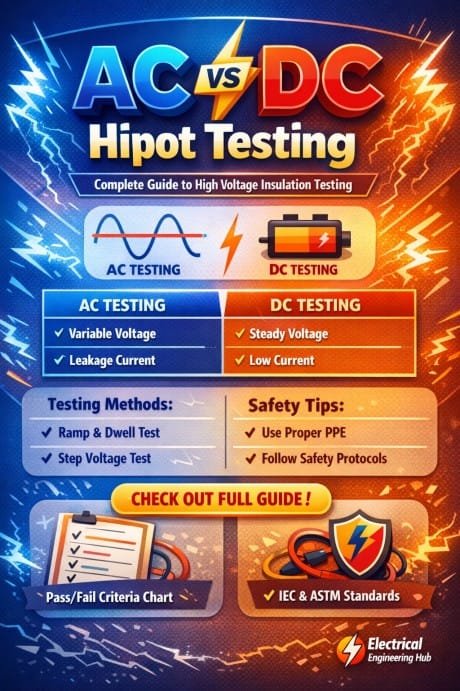
Table of Contents
In modern electrical engineering, hipot testing is applied across transformers, cables, switchgear, motors, and other high-voltage components. Understanding how AC vs DC Hipot testing works is essential for selecting the right method for accurate insulation assessment and compliance with industry safety standards.
What is Hipot Testing in Electrical Systems
Hipot testing, short for high potential testing, is used to verify the strength of electrical insulation by applying voltage significantly higher than normal operating levels. The goal is to ensure that no unintended current leakage occurs between conductors and grounding systems.
In the context of AC vs DC Hipot testing, the fundamental principle remains the same: stress the insulation and observe its behavior under high voltage conditions. However, the type of voltage applied changes the response of the insulation material, making each method suitable for different applications and equipment types.
Know more about Top 20 Electrical Testing Tools Which You Must Have
Importance of Insulation Testing in Electrical Equipment
Electrical insulation degrades over time due to heat, moisture, mechanical stress, and contamination. Without proper testing, this degradation can lead to electrical faults, equipment failure, or even hazardous accidents.
AC vs DC Hipot testing is widely used to prevent such risks by identifying weak insulation before it becomes a failure point. It is commonly performed during manufacturing, commissioning, and preventive maintenance cycles.
Key benefits of insulation testing include:
- Early detection of insulation breakdown
- Improved equipment lifespan
- Enhanced workplace safety
- Compliance with IEC, IEEE, and UL standards
- Reduced downtime and maintenance costs
AC Hipot Testing Method and Working Principle
AC Hipot testing applies alternating current voltage to the insulation system. Since AC voltage continuously changes polarity, it closely simulates real operating conditions in power systems.
In AC vs DC Hipot testing, AC testing is often preferred for equipment that operates under alternating current conditions such as transformers and switchgear. It allows engineers to evaluate both capacitive and resistive leakage currents simultaneously.
Explore all about How to Test a 3 Phase Motor With a Megger
AC testing is particularly effective for detecting defects such as surface contamination, moisture ingress, and partial discharge activity.
DC Hipot Testing Method and Working Principle
DC Hipot testing uses a constant direct voltage applied to insulation. This method is widely used for long cable systems and high-capacitance equipment.
When comparing AC vs DC Hipot testing, DC testing is known for its lower power requirement and ability to detect insulation resistance over time. It allows leakage current to stabilize, making it easier to identify gradual insulation weaknesses.
However, DC testing may not reveal certain defects that become visible only under alternating stress conditions.
Key Differences Between AC vs DC Hipot Testing
Understanding the differences between AC vs DC Hipot testing helps in selecting the appropriate method based on equipment type and testing objectives.
| Feature | AC Hipot Testing | DC Hipot Testing |
|---|---|---|
| Voltage Type | Alternating current | Direct current |
| Power Requirement | High | Low |
| Test Accuracy | Closer to real operating conditions | Better for insulation resistance measurement |
| Cable Testing | Less preferred for long cables | Highly preferred |
| Detection Type | Surface and dynamic defects | Leakage current and insulation resistance |
| Equipment Stress | Higher stress on insulation | Lower stress compared to AC |
In practical applications, engineers often choose AC vs DC Hipot testing based on system design, insulation type, and testing standards requirements.
Know more about Difference Between VLF and Megger
Industrial Applications of Hipot Testing
Hipot testing is used across multiple industries where electrical safety is critical. The choice between AC vs DC Hipot testing depends on the equipment and operational environment.
Common applications include:
- Power transmission and distribution systems
- Electrical cable manufacturing
- Motor and generator testing
- Transformer insulation verification
- Railway electrification systems
- Renewable energy installations like solar inverters and wind turbines
Each application requires careful selection of test voltage and method to ensure accurate insulation assessment.
Safety Standards and Compliance Requirements
Electrical testing must follow strict safety standards to ensure both operator protection and equipment reliability. International standards guide the proper execution of AC vs DC Hipot testing in industrial environments.
Common standards include:
- IEC 60243 (Electrical strength of insulating materials)
- IEEE 400 (Guide for field testing of cables)
- UL 1446 (Systems of insulation materials)
- ISO safety guidelines for high-voltage testing
Explore all about How to Use Megger BM5200 Insulation Tester 5kV
Safety practices during testing include proper grounding, use of insulated gloves, controlled test environments, and automatic discharge systems after testing.
Advantages and Limitations of Hipot Testing Methods
Both AC vs DC Hipot testing methods offer unique advantages and limitations depending on the application.
| Aspect | AC Hipot Testing | DC Hipot Testing |
|---|---|---|
| Advantages | Realistic stress simulation, effective defect detection | Low power usage, easier measurement of leakage current |
| Limitations | High power demand, complex equipment | May not detect all insulation defects |
AC testing provides a more realistic representation of operational stress, while DC testing offers practical benefits for field testing and long cable systems.
How to Choose Between AC vs DC Hipot Testing
Selecting the correct testing method depends on multiple technical and operational factors. Engineers must consider equipment type, insulation material, and testing environment before deciding.
AC vs DC Hipot testing selection criteria include:
- Type of electrical equipment being tested
- Length and capacitance of cables
- Required accuracy level
- Available testing equipment
- Compliance with applicable standards
In many modern systems, a combination of both methods is used to achieve a comprehensive insulation assessment.
Conclusion
High-voltage insulation testing remains a cornerstone of electrical safety and system reliability. The role of AC vs DC Hipot testing is essential in identifying insulation weaknesses and ensuring equipment performance under demanding conditions. While AC testing provides a realistic simulation of operational stress, DC testing offers efficient insulation resistance evaluation for long cable systems and field applications.
Know more about Insulation Resistance Testing: Step-by-Step Process
Choosing the right method depends on the nature of the equipment and the level of diagnostic detail required. With proper execution and adherence to safety standards, hipot testing continues to be a reliable method for preventing electrical failures and enhancing system longevity.
Get new guides in your feed. Follow Electrical Insights on LinkedIn for new electrical standards guides, calculators and design tips from Azad Circuit Hub.
#ACHipotTesting, #DCHipotTesting, #HighVoltageTesting, #InsulationTesting, #DielectricTesting, #ElectricalSafety, #HipotTestEquipment, #PowerSystemsTesting, #ACvsDCTesting, #ElectricalEngineering
