
ComEd Rate Per kWh 2026 – Current Residential Electricity Price Explained
Electricity prices continue to be one of the biggest concerns for homeowners across Illinois. Whether you are trying to reduce your monthly utility bill, compare supplier options, or estimate future energy costs, understanding the ComEd Rate Per kWh 2026 is essential.
Commonwealth Edison (ComEd) serves millions of residential customers throughout northern Illinois. The rate you pay per kilowatt-hour (kWh) directly affects your monthly electricity bill, especially if you use air conditioning, electric heating, appliances, or electric vehicle charging equipment.
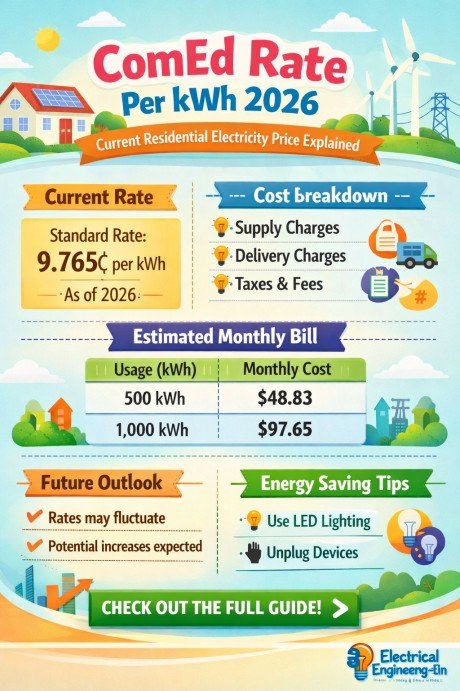
Table of Contents
This guide explains the current residential electricity pricing structure, factors affecting electricity rates, bill calculation methods, and practical ways to lower your energy costs in 2026.
Calculate accurate Comed Average Bill by Address
What Is the ComEd Rate Per kWh 2026?
The ComEd Rate Per kWh 2026 refers to the amount residential customers pay for each kilowatt-hour of electricity consumed. A kilowatt-hour is a unit of energy equal to using 1,000 watts of power for one hour.
For example:
| Appliance | Power Rating | Usage Time | Energy Consumed |
|---|---|---|---|
| LED TV | 100 Watts | 10 Hours | 1 kWh |
| Microwave | 1,000 Watts | 1 Hour | 1 kWh |
| Air Conditioner | 2,000 Watts | 5 Hours | 10 kWh |
Residential electricity rates are made up of several components, including energy supply charges, transmission costs, distribution charges, and state-approved fees.
While rates can change during the year due to market conditions and regulatory adjustments, most homeowners monitor the average cents-per-kWh rate to estimate their monthly expenses.
Current Residential Electricity Pricing Overview
Residential electricity bills generally include both supply and delivery charges.
The supply portion covers the cost of generating or purchasing electricity, while delivery charges cover the infrastructure required to transport electricity to homes.
| Bill Component | Purpose |
|---|---|
| Supply Charges | Electricity generation and procurement |
| Delivery Charges | Power line maintenance and distribution |
| Transmission Charges | High-voltage grid transportation |
| Taxes and Fees | Government and regulatory charges |
| Energy Efficiency Programs | Funding conservation initiatives |
Understanding these components helps consumers better analyze changes in their monthly bills.
Accurately estimate electricity cost with Georgia Power Bill Calculator
How ComEd Residential Rates Are Calculated
Your monthly electricity bill depends on the number of kilowatt-hours consumed during the billing cycle.
The basic formula is:
Monthly Electricity Cost = Total kWh Used × Rate Per kWh
For example:
| Monthly Usage | Rate Per kWh | Estimated Cost |
|---|---|---|
| 500 kWh | $0.15 | $75 |
| 750 kWh | $0.15 | $112.50 |
| 1,000 kWh | $0.15 | $150 |
| 1,500 kWh | $0.15 | $225 |
Actual bills may vary because of fixed charges, taxes, and seasonal adjustments.
To estimate your bill more accurately, Plug your usage into our ComEd Bill Calculator for an accurate monthly estimate.
Factors That Affect Electricity Rates in Illinois
Several factors influence residential electricity pricing throughout the year.
Wholesale Energy Market Prices
Electricity suppliers purchase power from wholesale energy markets. When wholesale prices increase due to higher demand or fuel costs, residential rates may also rise.
Seasonal Demand
Summer cooling and winter heating can significantly increase electricity demand. Peak demand periods often place upward pressure on energy costs.
Natural Gas Prices
Natural gas remains a major fuel source for electricity generation. Changes in natural gas prices can affect residential electricity rates.
Infrastructure Investments
Utility companies continuously invest in transmission lines, substations, and grid modernization projects. These investments can influence delivery charges.
Estimate Your Monthly Energy Costs with our Con Edison Bill Calculator
Regulatory Changes
State utility commissions regularly review and approve various utility charges and programs, which may affect customer bills.
Average Household Electricity Consumption
Knowing how much electricity your home uses can help you estimate monthly expenses more accurately.
| Home Size | Average Monthly Usage |
|---|---|
| Small Apartment | 400–600 kWh |
| Medium Home | 700–1,000 kWh |
| Large Home | 1,200–2,000 kWh |
| Home with EV Charging | 1,500–3,000 kWh |
Consumption varies based on family size, appliance efficiency, weather conditions, and lifestyle habits.
Time-of-Use and Hourly Pricing Options
Many Illinois residents are exploring alternative billing plans to save money.
Standard Fixed Pricing
Most customers pay a standard rate regardless of the time of day electricity is used.
Hourly Pricing Programs
Some customers choose hourly pricing programs where rates fluctuate based on wholesale market conditions.
Potential advantages include:
- Lower costs during off-peak periods
- Greater control over electricity spending
- Savings for flexible energy users
Use this online tool PG&E Bill Calculator
Potential disadvantages include:
- Exposure to price spikes
- Greater bill variability
- Need for usage monitoring
Consumers should evaluate their energy usage patterns before selecting an alternative pricing plan.
How to Reduce Your Monthly Electricity Bill
Lowering energy consumption can significantly reduce monthly expenses.
Upgrade to LED Lighting
LED bulbs use substantially less electricity than traditional incandescent bulbs while lasting much longer.
Adjust Thermostat Settings
Raising the air conditioner setting by a few degrees during summer can reduce electricity usage.
Use Smart Power Strips
Many electronics consume standby power even when not actively used. Smart power strips help eliminate unnecessary energy consumption.
Replace Old Appliances
ENERGY STAR-certified appliances often consume significantly less electricity than older models.
Explore this free online tool FPL Bill Calculator
Improve Home Insulation
Better insulation reduces heating and cooling requirements throughout the year.
Run Major Appliances During Off-Peak Hours
Using dishwashers, washing machines, and EV chargers during lower-demand periods may help reduce costs under certain pricing plans.
Comparing Electricity Usage Costs
The table below shows how different usage levels can impact monthly electricity expenses.
| Monthly Usage (kWh) | Estimated Monthly Cost at $0.15/kWh |
|---|---|
| 400 | $60 |
| 600 | $90 |
| 800 | $120 |
| 1,000 | $150 |
| 1,500 | $225 |
| 2,000 | $300 |
These figures are examples and do not include all applicable charges or taxes.
Use this online tool for free Duke Energy Florida Bill Calculator
Understanding Your Electricity Bill
Many homeowners only look at the total amount due each month. However, reviewing individual bill sections can reveal opportunities for savings.
Key areas to monitor include:
- Total kWh consumed
- Supply charges
- Delivery charges
- Taxes and regulatory fees
- Monthly usage trends
Tracking usage over time can help identify seasonal increases and energy-saving opportunities.
Future Outlook for Residential Electricity Rates
Electricity pricing in Illinois continues to evolve due to changes in energy generation, transmission infrastructure, renewable energy adoption, and market conditions.
Several factors that may influence future rates include:
- Expansion of renewable energy resources
- Grid modernization projects
- Electric vehicle adoption
- Fuel market fluctuations
- Energy efficiency initiatives
Homeowners who actively monitor their energy consumption and utility rates are generally better positioned to manage future electricity expenses.
Use this online tool for free to estimate energy costs ComEd Bill Calculator
Conclusion
Understanding the ComEd Rate Per kWh 2026 is important for estimating electricity costs, managing household budgets, and identifying opportunities to reduce energy expenses. Since electricity bills are influenced by multiple factors including supply costs, delivery charges, seasonal demand, and infrastructure investments, consumers should review their bills regularly and monitor their monthly usage.
By improving energy efficiency, using modern appliances, and tracking consumption trends, homeowners can better control electricity costs throughout 2026 and beyond.
Frequently Asked Questions
What is the ComEd Rate Per kWh 2026 for residential customers?
The residential electricity rate varies depending on supply costs, delivery charges, and regulatory adjustments. Customers should review current utility statements for the most accurate pricing information.
How do I calculate my monthly ComEd electricity bill?
Multiply your total monthly kWh usage by the applicable electricity rate and then add any delivery charges, taxes, and fees listed on your bill.
Why does my electricity bill change every month?
Monthly bills can vary due to seasonal energy usage, weather conditions, rate adjustments, and changes in household electricity consumption.
Can I lower my electricity bill without reducing comfort?
Yes. Using energy-efficient appliances, improving insulation, upgrading lighting, and adjusting thermostat settings can reduce costs while maintaining comfort.
Does ComEd offer alternative pricing programs?
Yes. Eligible customers may have access to hourly pricing or other utility programs that provide different rate structures based on electricity market conditions.
Follow Us on Social:
Subscribe our Newsletter on Electrical Insights for latest updates from Electrical Engineering Hub
#ComEdRates,#ComEdElectricityPrice,#ComEdRatePerkWh,#ElectricityRates2026,#ResidentialElectricity,#EnergyCosts,#UtilityBills,#ComEdCustomers,#PowerRates,#ElectricityPriceGuide