What is a Motor Control Center (MCC): Complete Guide to Industrial Power Control Systems
A Motor Control Center is a centralized electrical system used in industrial environments to control, protect, and manage electric motors efficiently. In modern manufacturing plants, processing units, and heavy industries, a Motor Control Center plays a critical role in ensuring smooth operation and safe distribution of electrical power. Understanding how a Motor Control Center works helps engineers, technicians, and plant managers improve reliability and reduce downtime in industrial operations.
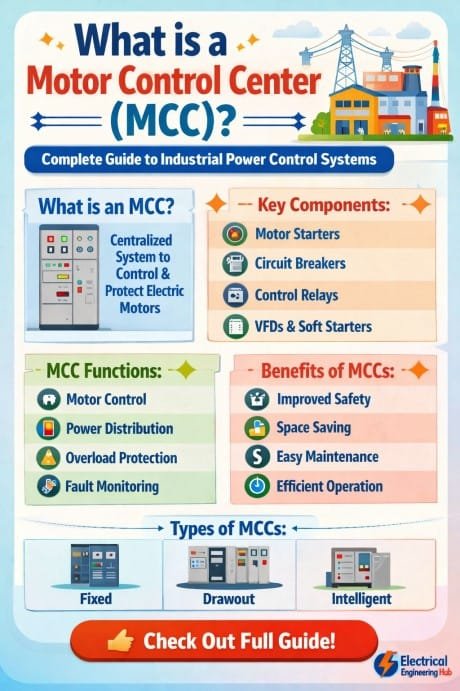
Table of Contents
A Motor Control Center is designed to house motor starters, circuit breakers, overload relays, and control devices in a single structured assembly. It allows operators to control multiple motors from one location, improving safety and operational efficiency. In large facilities where dozens or even hundreds of motors run simultaneously, a Motor Control Panel becomes an essential part of the electrical infrastructure.
Know more about mcc panel design software
Basic Concept and Structure of Motor Control Center
A Motor Control Center is essentially a modular assembly of metal-enclosed sections that contain motor control units. Each section is called a bucket or compartment and can operate independently. These compartments typically include a combination of protection devices and control equipment.
The primary purpose of a Motor Control Center is to simplify motor operation while ensuring maximum protection against electrical faults such as overloads, short circuits, and phase failures. It also supports automation integration through PLC systems and SCADA monitoring in advanced industrial setups.
Key Components Used in Motor Control Center
A Motor Control Center is built using several electrical and mechanical components that ensure proper motor control and protection. These components are selected based on load requirements and application type.
| Component | Function |
|---|---|
| Circuit Breaker (MCCB/ACB) | Protects against short circuits and overload conditions |
| Motor Starter | Controls motor starting and stopping operations |
| Overload Relay | Prevents motor damage due to excessive current |
| Contactor | Acts as an electrically controlled switch |
| Busbar System | Distributes power to different sections |
| Control Transformer | Provides low-voltage supply for control circuits |
| Variable Frequency Drive (VFD) | Controls motor speed and energy efficiency |
Each Motor Control Panel is designed with these components arranged in a structured and safe layout to ensure easy maintenance and fault isolation.
Find out the mcc panel design guide pdf in detail here.
Working Principle of Motor Control Center
The working of a Motor Control Panel is based on centralized control and distribution of electrical power. Power enters the system through the main incomer panel and is distributed via busbars to different motor feeders.
When an operator starts a motor, the control circuit activates the contactor, allowing current to flow to the motor. Protection devices continuously monitor the current flow. If any abnormal condition is detected, such as overload or short circuit, the system immediately disconnects the motor to prevent damage.
In automated industries, a Motor Control Center is often integrated with PLC-based systems, allowing remote monitoring and automatic control of motor operations. This improves efficiency and reduces manual intervention.
Types of Motor Control Center
Different industrial applications require different configurations of Motor Control Center systems. The main types are based on construction, voltage level, and functionality.
| Type | Description |
|---|---|
| Fixed MCC | Motor starters are permanently mounted and not removable |
| Withdrawable MCC | Motor units can be removed for maintenance without shutting down the entire system |
| Intelligent MCC | Equipped with smart monitoring and communication systems |
| Low Voltage MCC | Used for motors operating below 1000V |
| Medium Voltage MCC | Designed for heavy industrial motors above 1000V |
Each Motor Control Panel type is selected based on operational requirements, safety standards, and maintenance flexibility.
Explore everything about electrical control panel design training
Industrial Applications of Motor Control Panel
A Motor Control Center is widely used across multiple industries where motor-driven systems are essential. It ensures reliable performance in demanding environments.
| Industry | Application |
|---|---|
| Manufacturing Plants | Conveyor systems, assembly lines |
| Water Treatment Plants | Pump control and distribution systems |
| Oil and Gas Industry | Compressor and drilling equipment control |
| Cement Industry | Crushers, kilns, and grinding mills |
| HVAC Systems | Large-scale cooling and ventilation systems |
In all these applications, a Motor Control Center ensures stable operation and reduces the risk of unexpected shutdowns.
Advantages of Using Motor Control Center
A Motor Control Panel offers several benefits that make it a preferred choice in industrial power management systems.
- Centralized control of multiple motors
- Improved safety with advanced protection devices
- Easy fault detection and isolation
- Reduced wiring complexity
- Better energy management using VFD integration
- Enhanced system reliability and uptime
These advantages make a Motor Control Center an essential investment for industries aiming for operational efficiency and long-term cost savings.
Find out the mcc panel design guide pdf in detail here.
Selection Considerations for Motor Control Panel
Choosing the right Motor Control Center requires careful analysis of electrical load, environment, and operational needs. Engineers consider several factors before finalizing a design.
| Factor | Importance |
|---|---|
| Load Capacity | Determines size and rating of MCC |
| Environment | Dust, humidity, and temperature conditions |
| Automation Level | PLC or SCADA integration requirements |
| Safety Standards | Compliance with IEC or IEEE standards |
| Expandability | Future expansion possibilities |
A properly selected Motor Control Panel ensures long-term performance and reduces maintenance costs significantly.
Maintenance and Safety Practices in Motor Control Panel
Regular maintenance is essential for ensuring the reliability of a Motor Control Center. Industrial environments often expose electrical systems to dust, heat, and vibration, making preventive maintenance critical.
Routine inspection includes checking busbar tightness, cleaning compartments, testing overload relays, and verifying control circuit operation. Thermal imaging is also used in advanced facilities to detect overheating issues before they become critical.
Know more about GIS vs AIS Switchgear
Safety practices such as lockout-tagout procedures, proper grounding, and periodic testing help ensure safe operation of a Motor Control Panel in industrial environments.
Conclusion
A Motor Control Center is a vital component in modern industrial power distribution and motor management systems. It provides centralized control, improved safety, and efficient energy usage across various applications. From manufacturing plants to water treatment facilities, a Motor Control Panel ensures smooth and reliable operation of motor-driven systems.
With advancements in automation and smart monitoring, the role of a Motor Control Center continues to evolve, making it an indispensable part of industrial electrical infrastructure.
Use our online tool for free Electrical Panel Upgrade Cost Calculator
Follow Us on Social:
Subscribe our Newsletter on Electrical Insights for latest updates from Electrical Engineering Hub
#MotorControlCenter,#MCC,#ElectricalEngineering,#IndustrialAutomation,#PowerDistribution,#ElectricalPanel,#MotorStarter,#ControlPanel,#Industry40,#ElectricalSystems