
Electric Motor Visual Inspection Checklist: Complete Preventive Maintenance Guide for Industrial Motor Safety & Performance
Industrial motors are the backbone of manufacturing plants, water treatment facilities, HVAC systems, agriculture equipment, and production lines. A small fault inside a motor can quickly lead to expensive downtime, reduced efficiency, and safety risks. That is why every maintenance team should follow a structured Electric Motor Visual Inspection Checklist to identify problems before they become critical failures.
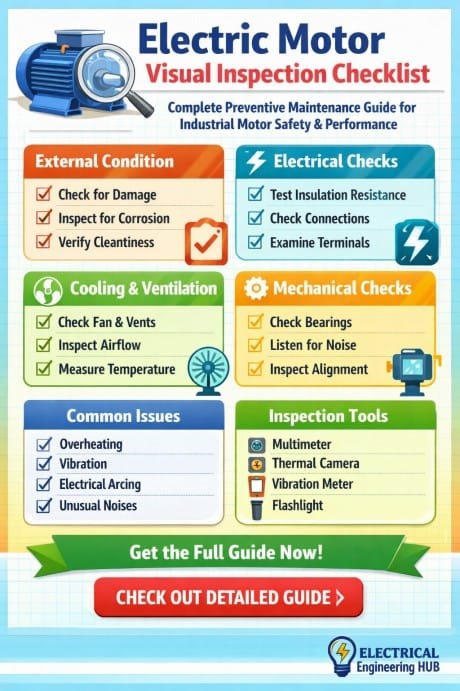
Table of Contents
A proper inspection process improves equipment reliability, increases motor lifespan, reduces maintenance costs, and supports workplace safety. Visual inspections are often the first line of defense against overheating, vibration, insulation damage, contamination, and alignment problems. When combined with preventive maintenance practices, they help industries maintain uninterrupted operations and avoid emergency shutdowns.
This guide explains how to perform a complete Electric Motor Visual Inspection Checklist, what areas to inspect, warning signs to monitor, and best practices for industrial motor maintenance.
Why Visual Inspection of Electric Motors Matters
Electric motors operate continuously in demanding environments that may include dust, moisture, chemicals, heat, and vibration. Over time, these conditions affect motor performance and efficiency.
Know more about How to Size a VFD for a Motor
A routine Electric Motor Visual Inspection Checklist helps maintenance technicians detect issues such as:
- Loose electrical connections
- Damaged insulation
- Bearing wear
- Cooling blockage
- Shaft misalignment
- Corrosion and contamination
- Overheating signs
- Lubrication leakage
Early detection prevents unplanned downtime and improves operational safety. It also helps businesses reduce repair expenses and maintain energy efficiency.
Key Benefits of an Electric Motor Visual Inspection Checklist
| Benefit | Description |
|---|---|
| Improved Reliability | Detects faults before major breakdowns occur |
| Reduced Downtime | Prevents unexpected motor failure |
| Better Safety | Minimizes electrical and mechanical hazards |
| Increased Efficiency | Maintains optimal motor performance |
| Extended Motor Life | Prevents excessive wear and overheating |
| Lower Maintenance Cost | Reduces emergency repair expenses |
Explore the key standards related to VFDs here IEC Standards for Variable Frequency Drives
Pre-Inspection Safety Procedures
Before starting any motor inspection, safety procedures must always be followed. Industrial motors can expose technicians to electrical shock, rotating components, and hot surfaces.
Essential Safety Steps
- Turn off motor power supply
- Apply lockout/tagout procedures
- Wear proper PPE
- Verify zero voltage condition
- Allow motor to cool before inspection
- Secure surrounding work area
Ignoring safety measures during maintenance can result in serious injury and equipment damage.
External Motor Condition Inspection
The first stage of an Electric Motor Visual Inspection Checklist focuses on the motor exterior. External conditions often reveal early warning signs of internal problems.
Check for Physical Damage
Inspect the motor housing carefully for:
- Cracks
- Dents
- Broken covers
- Missing bolts
- Loose mounting hardware
Mechanical damage may indicate vibration issues, impact damage, or poor installation practices.
Know more about low cost servomotors
Inspect Paint and Corrosion
Rust and paint deterioration can indicate moisture exposure or chemical contamination. Corrosion around terminals and mounting areas should never be ignored.
Verify Motor Nameplate Condition
Ensure the motor nameplate remains readable and securely attached. The nameplate contains critical details such as:
- Voltage rating
- Current rating
- RPM
- Frequency
- Power factor
- Insulation class
Unreadable nameplates create maintenance and troubleshooting difficulties.
Cooling System Inspection
Motor overheating is one of the leading causes of insulation failure and reduced motor life. A proper cooling inspection is essential in every Electric Motor Visual Inspection Checklist.
Learn more about difference between servo motor and induction motor
Inspect Cooling Fins and Air Passages
Check for blocked airflow caused by:
- Dust buildup
- Grease accumulation
- Dirt contamination
- Foreign objects
Restricted airflow reduces heat dissipation and increases operating temperature.
Examine Cooling Fan Condition
Inspect the fan for:
- Cracks
- Broken blades
- Loose attachment
- Excessive dirt
A damaged cooling fan can quickly lead to overheating.
Electrical Connection Inspection
Electrical faults are common causes of motor failure. Visual inspection of wiring and terminals helps prevent dangerous electrical conditions.
Inspect Terminal Box
Open the terminal box and check for:
- Loose wires
- Burn marks
- Moisture entry
- Carbon deposits
- Corrosion
Any sign of overheating may indicate excessive current or poor electrical contact.
Know more about VFD vs Soft Starter
Check Cable Condition
Inspect power cables for:
- Frayed insulation
- Cuts
- Abrasion
- Discoloration
- Improper routing
Damaged cables increase the risk of short circuits and electrical hazards.
Bearing and Lubrication Inspection
Bearings play a critical role in smooth motor operation. Bearing failure can lead to severe mechanical damage and production downtime.
Visual Bearing Checks
During the Electric Motor Visual Inspection Checklist, look for:
- Grease leakage
- Excessive dirt around bearings
- Unusual discoloration
- Loose bearing housings
These symptoms may indicate lubrication problems or excessive wear.
Inspect Lubrication Condition
Ensure proper lubrication practices are followed. Over-greasing and under-greasing can both damage bearings.
| Bearing Inspection Point | Warning Sign |
|---|---|
| Grease Color | Dark or burnt grease |
| Leakage | Excess grease around seals |
| Temperature | Overheated bearing housing |
| Noise | Grinding or abnormal sound |
| Vibration | Excessive shaft movement |
Know more about How does the star delta starter reduce starting current?
Motor Alignment and Mounting Inspection
Improper alignment creates excessive vibration and mechanical stress. A detailed Electric Motor Visual Inspection Checklist should always include alignment checks.
Inspect Mounting Bolts
Loose mounting bolts can cause:
- Increased vibration
- Shaft misalignment
- Coupling damage
- Bearing wear
Ensure all bolts are tightened to recommended torque values.
Check Coupling Condition
Inspect couplings for:
- Cracks
- Wear
- Misalignment
- Damaged inserts
Coupling issues reduce motor efficiency and increase stress on rotating components. Know more about Thermal Overload Relay
Vibration and Noise Inspection
Abnormal vibration is often an early sign of mechanical or electrical problems.
Common Causes of Motor Vibration
- Imbalance
- Bearing wear
- Shaft misalignment
- Loose components
- Rotor defects
Maintenance teams should monitor changes in vibration patterns during routine inspections.
Listen for Unusual Noise
Grinding, humming, rattling, or squealing sounds may indicate internal motor damage. Noise analysis can help identify developing issues before catastrophic failure occurs.
Insulation and Winding Condition Inspection
Motor windings are highly sensitive to heat, contamination, and moisture.
Signs of Insulation Damage
Inspect for:
- Burn marks
- Insulation cracks
- Discoloration
- Moisture contamination
- Carbon tracking
Damaged insulation increases the risk of winding failure and short circuits.
Know more about What Are Different Types of Overcurrent Relays?
Moisture Inspection
Motors operating in humid environments are vulnerable to condensation buildup. Moisture can reduce insulation resistance and create electrical faults.
Environmental Condition Assessment
The surrounding environment directly affects motor performance and lifespan.
Evaluate Operating Area
Check for:
- Excessive dust
- Water leakage
- Oil contamination
- Chemical exposure
- Poor ventilation
Environmental hazards should be corrected immediately to protect the motor.
Recommended Inspection Frequency
The frequency of inspection depends on motor usage, environment, and criticality.
| Motor Application | Recommended Inspection Frequency |
|---|---|
| Critical Production Motors | Weekly |
| Standard Industrial Motors | Monthly |
| Outdoor Motors | Monthly |
| Dusty Environments | Weekly |
| Backup Motors | Quarterly |
High-load motors and motors operating in harsh conditions require more frequent inspections.
Use our online tool Motor Overload Setting Calculator
Common Problems Found During Motor Inspection
A structured Electric Motor Visual Inspection Checklist often identifies recurring maintenance issues.
Most Common Motor Problems
- Overheating
- Loose electrical terminals
- Bearing failure
- Dirt contamination
- Cooling blockage
- Shaft misalignment
- Moisture ingress
- Insulation deterioration
Addressing these problems early improves motor reliability and reduces operational losses.
Best Practices for Industrial Motor Preventive Maintenance
A successful preventive maintenance strategy involves more than simple visual checks.
Maintenance Best Practices
- Maintain detailed inspection records
- Schedule routine inspections
- Train maintenance personnel regularly
- Keep motors clean
- Use proper lubrication methods
- Monitor operating temperature
- Perform vibration analysis
- Replace worn components promptly
Know everything about 3 Phase Motor Overload Relay Setting
Digital maintenance management systems can also help track inspection history and maintenance schedules efficiently.
Final Thoughts
A well-structured Electric Motor Visual Inspection Checklist is essential for maintaining industrial motor safety, efficiency, and long-term performance. Regular inspections help identify warning signs before they lead to equipment failure, production losses, or workplace hazards.
Industrial facilities that prioritize preventive maintenance experience fewer breakdowns, lower operating costs, and improved equipment reliability. From cooling systems and electrical connections to bearings and environmental conditions, every inspection point plays an important role in protecting motor health.
By implementing a consistent inspection routine and following preventive maintenance best practices, businesses can maximize motor lifespan and ensure smooth industrial operations for years to come.
Know more about 28BYJ-48 Stepper Motor with the A4988 Stepper Driver
Follow Us on Social:
Subscribe our Newsletter on Electrical Insights for latest updates from Electrical Engineering Hub
#ElectricMotorVisualInspectionChecklist,#MotorInspection,#IndustrialMaintenance,#ElectricMotorTesting,#PreventiveMaintenance,#MotorDiagnostics,#ElectricalInspection,#MotorMaintenance,#IndustrialSafety,#MaintenanceChecklist
