AC Hipot Test Procedure: Step-by-Step High Voltage Testing Guide for Electrical Safety, Compliance & Equipment Reliability
AC hipot test procedure is one of the most important methods used to verify the insulation strength of electrical equipment, cables, switchgear, transformers, motors, and control panels. This test helps ensure that insulation can safely withstand overvoltage conditions during operation and reduces the risk of electrical failure, shock hazards, and equipment damage.
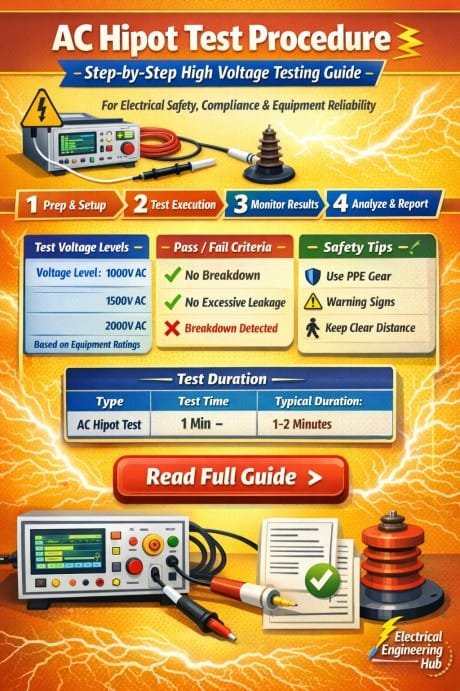
Table of Contents
In industrial maintenance, manufacturing, and compliance inspections, following the correct AC hipot test procedure is essential for electrical safety, regulatory compliance, and long-term equipment reliability. A properly performed test identifies weak insulation before it causes breakdowns in service.
What Is an AC Hipot Test?
An AC hipot test, also known as an AC high potential test, is a dielectric withstand test performed by applying a high alternating voltage between conductors and ground for a specified period. The purpose is to confirm that the insulation system can withstand voltages higher than normal operating conditions.
This test is widely used during:
- Factory acceptance testing
- Preventive maintenance inspections
- Commissioning of new installations
- Routine safety compliance checks
- Post-repair verification
The test voltage is intentionally higher than the rated operating voltage to simulate stress conditions and reveal insulation weaknesses.
Explore details on Electrical Compliance Testing – Safety Regulations | Best Electrical Services in USA
Why AC Hipot Testing Is Important
Electrical insulation naturally degrades over time due to heat, moisture, contamination, aging, and mechanical stress. The AC hipot test procedure helps detect these issues early.
Key benefits include:
- Improved personnel safety
- Reduced risk of insulation failure
- Better equipment life expectancy
- Compliance with IEC, IEEE, and local standards
- Lower downtime and maintenance cost
The table below highlights the key objectives.
| Purpose | Benefit |
|---|---|
| Insulation verification | Confirms dielectric strength |
| Fault detection | Identifies weak spots and leakage |
| Compliance testing | Meets electrical safety standards |
| Reliability assurance | Prevents unexpected breakdowns |
Know more about IEC Standard for MV Cable Testing: Complete Acceptance, Routine & Type Test Guide
Equipment Required for AC Hipot Testing
Before starting the AC hipot test procedure, make sure all testing instruments are available and calibrated.
Required Tools
- AC hipot tester
- Insulated test leads
- Grounding cable
- Safety gloves and PPE
- Warning signs and barricades
- Voltage detector
- Test record sheet
Using a calibrated high voltage tester ensures accurate leakage current and breakdown readings.
AC Hipot Test Procedure Step by Step
Step 1: Review Equipment Specifications
Start by reviewing the equipment nameplate and manufacturer’s testing guidelines. Confirm:
- Rated voltage
- Maximum allowable test voltage
- Test duration
- Insulation class
Many manufacturers specify the exact dielectric test voltage.
A common formula is:
Test Voltage = (2 × Rated Voltage) + 1000 V
Find all about IEC Standard for Relay Testing: Best Guide
For example:
| Rated Voltage | Test Voltage |
|---|---|
| 230 V | 1460 V |
| 415 V | 1830 V |
| 11 kV | As per standard/manufacturer |
Step 2: Perform Visual Inspection
Before applying high voltage, inspect the equipment carefully.
Check for:
- Dust or moisture
- Damaged insulation
- Loose terminals
- Burn marks
- Cracked cable jackets
- Signs of overheating
Testing damaged equipment without inspection can produce misleading results.
Step 3: Isolate the Equipment
Proper isolation is a critical part of the AC hipot test procedure.
Disconnect the equipment from:
- Incoming power supply
- Control circuits
- Sensitive electronics
- Surge protection devices
- Connected loads
Use lockout and tagout procedures to prevent accidental energization.
Step 4: Connect the Test Leads
Connect the high voltage lead to the conductor under test and the return lead to ground or the equipment body.
Typical connection arrangement:
| Connection Point | Lead Type |
|---|---|
| Phase conductor | High voltage lead |
| Equipment frame/earth | Ground lead |
Ensure leads are properly insulated and securely attached.
Step 5: Set Test Voltage and Time
Set the required test voltage on the AC hipot tester according to the standard or equipment rating.
The typical test duration is:
- 60 seconds for routine testing
- 1 to 5 minutes for acceptance testing
Do not apply full voltage instantly. Increase the voltage gradually to avoid sudden stress.
Know more about Types of Circuit Breaker Testing
Step 6: Apply High Voltage
Now begin the actual AC hipot test procedure by slowly raising the voltage to the target value.
Observe the following during the test:
- Leakage current reading
- Sudden current rise
- Audible discharge sound
- Flashover or arcing
- Equipment heating
A stable leakage current usually indicates healthy insulation.
Step 7: Monitor Leakage Current
Leakage current is one of the most important parameters in AC high voltage testing.
A sudden increase may indicate:
- Insulation weakness
- Moisture ingress
- Surface contamination
- Internal dielectric breakdown
The acceptable leakage current limit depends on the equipment type and standard.
| Equipment Type | Typical Leakage Current |
|---|---|
| Control cable | Low mA range |
| Motor winding | Moderate mA range |
| Switchgear panel | As per OEM limits |
Know more about Earth Fault Relay Testing Procedure
Step 8: Complete the Test and Discharge
After the specified duration, reduce the voltage gradually to zero.
Do not disconnect immediately.
Properly discharge the equipment to ground to remove any stored capacitive charge. This is extremely important for cables, transformers, and motors.
Step 9: Record the Results
Document the results in a professional format.
Suggested test record table:
| Parameter | Value |
|---|---|
| Equipment ID | Panel-01 |
| Rated Voltage | 415 V |
| Test Voltage | 1830 V |
| Test Duration | 60 sec |
| Leakage Current | 2.1 mA |
| Result | Pass |
Maintaining records helps in trend analysis and predictive maintenance.
Know more about Earth Fault Relay Testing Procedure
Pass and Fail Criteria
The AC hipot test procedure is considered successful if:
- No insulation breakdown occurs
- Leakage current remains within limits
- No flashover or arcing is observed
- Equipment remains stable during the full test period
The test fails if:
- Current spikes suddenly
- Protective trip activates
- Arcing occurs
- Voltage cannot be maintained
Safety Precautions During AC Hipot Testing
High voltage testing can be hazardous if not handled correctly.
Follow these safety practices:
- Use PPE at all times
- Keep unauthorized persons away
- Use warning labels and barriers
- Verify grounding before and after testing
- Never touch leads during testing
- Use insulated flooring when possible
Know more about Top 20 Electrical Testing Tools Which You Must Have
Safety compliance should always be the top priority.
Standards and Compliance Requirements
The AC hipot test procedure is often performed in accordance with recognized standards such as:
- IEC 60243
- IEEE 95
- IEC 60060
- NETA ATS
- OSHA electrical safety guidelines
Following these standards improves audit readiness and regulatory compliance.
Common Applications of AC Hipot Testing
This testing method is commonly used for:
- Power cables
- Distribution panels
- Motors and generators
- Transformers
- Circuit breakers
- Industrial machinery
- Solar power systems
It is especially useful during commissioning and annual maintenance.
Know more about How to Use Megger Insulation Tester 1000V
Conclusion
A properly executed AC hipot test procedure is essential for verifying insulation integrity, ensuring electrical safety, and improving equipment reliability. By following each step carefully, from visual inspection to final documentation, maintenance teams can prevent costly failures and maintain compliance with industry standards.
For industries where uninterrupted power and operational safety matter, AC high voltage testing remains one of the most trusted diagnostic procedures available. Know more about Difference Between VLF and Megger
Follow Us on Social:
Subscribe our Newsletter on Electrical Insights for latest updates from Electrical Engineering Hub
#achipottestprocedure, #hipottest, #electricaltesting, #hvtesting, #insulationtesting, #electricalsafety, #dielectricwithstandtest, #powertesting, #electricalmaintenance, #substationtesting