IEEE Standard for Grounding Transformer: Design, Selection & Compliance Guide
Grounding transformers play a critical role in modern power systems, especially where a neutral point is not readily available. Understanding the ieee standard for grounding transformer is essential for engineers, consultants, and project managers who aim to ensure system safety, fault protection, and regulatory compliance. This guide explains the design principles, selection criteria, and compliance requirements in a practical and readable way.
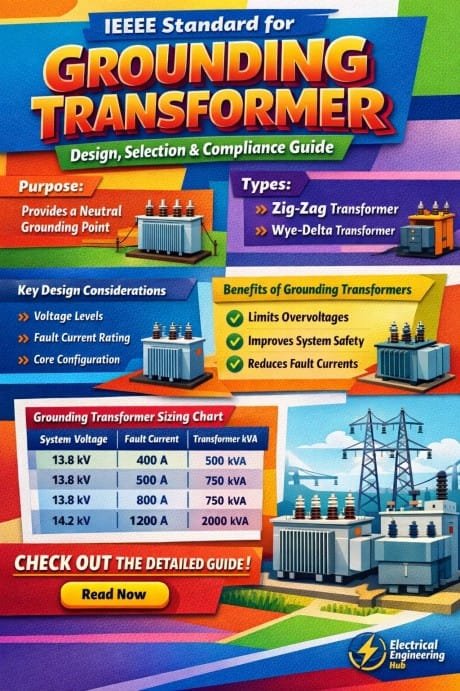
Table of Contents
What is a Grounding Transformer?
A grounding transformer is used to provide a neutral point in ungrounded or delta-connected systems. It allows the system to be grounded for protection and stability without changing the existing network configuration.
In many industrial and utility setups, grounding transformers are essential for:
- Limiting overvoltages during faults
- Providing a return path for ground fault currents
- Improving system stability and protection coordination
The ieee standard for grounding transformer defines how these transformers should be designed and applied to ensure reliable performance under fault conditions.
Learn more about uk transformer manufacturers
Importance of IEEE Standards in Grounding Systems
IEEE standards provide globally accepted engineering practices. When it comes to grounding transformers, following the ieee standard for grounding transformer ensures that:
- Equipment operates safely during fault conditions
- Ground fault current is properly controlled
- Protection systems function accurately
- System insulation is not overstressed
Key related standards include IEEE C57 series and IEEE 32, which cover transformer requirements, grounding methods, and testing procedures.
Types of Grounding Transformers
Different system configurations require different types of grounding transformers. The selection depends on system voltage, fault levels, and grounding philosophy.
Common Types
| Type | Configuration | Typical Use Case |
|---|---|---|
| Zig-Zag Transformer | Interconnected windings | Most common for grounding applications |
| Wye-Delta Transformer | Star-Delta connection | Used where auxiliary power is needed |
| Earthing Transformer with Resistor | Zig-Zag + NGR | Controlled fault current systems |
The ieee standard for grounding transformer recommends selecting the type based on system fault characteristics and operational needs.
Explore details on largest transformer manufacturer in usa
Design Considerations
Designing a grounding transformer is not just about voltage and power rating. It requires a deep understanding of system behavior during faults.
Key Design Parameters
- Voltage Rating
The transformer must match the system voltage and insulation level. - Fault Current Rating
It should withstand ground fault current for a specified duration, typically 10 seconds or 1 minute. - Thermal Capacity
The transformer must handle heat generated during fault conditions without damage. - Impedance
Impedance is critical for limiting fault current. It is often combined with a neutral grounding resistor (NGR). - Insulation Coordination
Proper insulation ensures long-term reliability under transient conditions.
The ieee standard for grounding transformer emphasizes thermal and mechanical strength during fault conditions as a primary design factor.
Selection Guide for Engineers
Selecting the right grounding transformer requires balancing safety, cost, and performance.
Step-by-Step Selection Approach
- Identify system configuration (delta, ungrounded, etc.)
- Determine maximum ground fault current
- Decide grounding method (solid, resistance, or reactance grounding)
- Choose transformer type (zig-zag or wye-delta)
- Calculate required impedance
- Verify thermal rating and fault duration
Learn more about best power transformer manufacturer in south africa
Sample Selection Table
| Parameter | Typical Value Range | Selection Basis |
|---|---|---|
| System Voltage | 400V to 33kV+ | Network rating |
| Fault Current | 100A to 2000A | Protection coordination |
| Fault Duration | 10 sec / 60 sec | System protection scheme |
| Impedance | 5% to 15% | Current limitation requirement |
| Cooling Type | ONAN / Dry Type | Installation environment |
Using the ieee standard for grounding transformer, engineers can ensure that all parameters are aligned with safety and operational requirements.
Role of Neutral Grounding Resistor (NGR)
In many systems, a grounding transformer is paired with a Neutral Grounding Resistor. This combination limits fault current to a safe level.
Dive deeper into transformer manufacturers in france
Benefits of Using NGR
- Reduces equipment damage during faults
- Minimizes arc flash hazards
- Improves system reliability
The ieee standard for grounding transformer provides guidelines on integrating resistors with grounding transformers to achieve controlled grounding.
Compliance Requirements
Compliance is not optional when dealing with electrical systems. Following the ieee standard for grounding transformer ensures that installations meet international best practices.
Key Compliance Areas
- Electrical insulation levels
- Temperature rise limits
- Short-circuit withstand capability
- Testing and certification
Testing Requirements
| Test Type | Purpose |
|---|---|
| Routine Tests | Verify manufacturing quality |
| Type Tests | Validate design performance |
| Temperature Rise Test | Ensure thermal limits |
| Short Circuit Test | Confirm fault withstand capacity |
These tests ensure that the transformer performs reliably under real-world conditions.
Read in detail about transformer manufacturers in egypt
Installation Best Practices
Even the best-designed transformer can fail if installed incorrectly. Proper installation is crucial.
Installation Guidelines
- Ensure proper grounding connections
- Install adequate protection devices
- Maintain ventilation and cooling
- Follow manufacturer recommendations
The ieee standard for grounding transformer highlights the importance of correct installation to maintain system integrity.
Maintenance and Monitoring
Regular maintenance extends the life of grounding transformers and ensures safe operation.
Maintenance Checklist
- Inspect connections and terminals
- Check insulation resistance
- Monitor temperature and load conditions
- Test grounding resistance periodically
Know more about Top Dry Type Transformer Manufacturers in the USA
Monitoring Tools
- Thermal sensors
- Fault current monitoring devices
- Insulation monitoring systems
Adhering to the ieee standard for grounding transformer helps in creating an effective maintenance schedule.
Common Mistakes to Avoid
Many system failures occur due to avoidable mistakes.
Frequent Issues
- Undersizing the transformer
- Ignoring fault duration ratings
- Incorrect impedance selection
- Poor grounding connections
Avoiding these mistakes ensures compliance with the ieee standard for grounding transformer and improves system reliability.
Uncover insights on motor generator transformer manufacturers
Practical Applications
Grounding transformers are widely used across industries.
Key Applications
- Industrial plants with delta systems
- Renewable energy systems
- Data centers and critical infrastructure
- Utility substations
In each of these applications, following the ieee standard for grounding transformer ensures safe and efficient operation.
Final Thoughts
A grounding transformer is a small component with a major impact on system safety and performance. From design to installation and maintenance, every step must align with established standards.
By following the ieee standard for grounding transformer, engineers can ensure:
- Safe fault current management
- Reliable protection system operation
- Long-term equipment durability
Find all about Transformer Disconnect Sizing
A well-designed grounding system is not just about compliance; it is about protecting assets, ensuring uptime, and maintaining operational excellence.
Follow Us on Social:
Subscribe our Newsletter on Electrical Insights for latest updates from Electrical Engineering Hub
IEEEGroundingTransformer, #GroundingTransformerStandard, #PowerSystemGrounding, #ElectricalEngineering, #IEEEStandards, #TransformerDesign, #PowerSystemSafety, #SubstationEngineering, #ElectricalStandards, #GridReliability