Electric Motor Failure Symptoms: 12 Critical Warning Signs Every Engineer Must Identify Early
Electric motors are the backbone of countless industrial and commercial operations, from manufacturing plants to HVAC systems. Unexpected motor failures can halt production, damage equipment, and lead to costly downtime. Recognizing electric motor failure symptoms early is essential for engineers and maintenance teams to prevent severe damage and ensure operational efficiency. This article outlines 12 critical warning signs that every engineer must identify and act upon promptly.
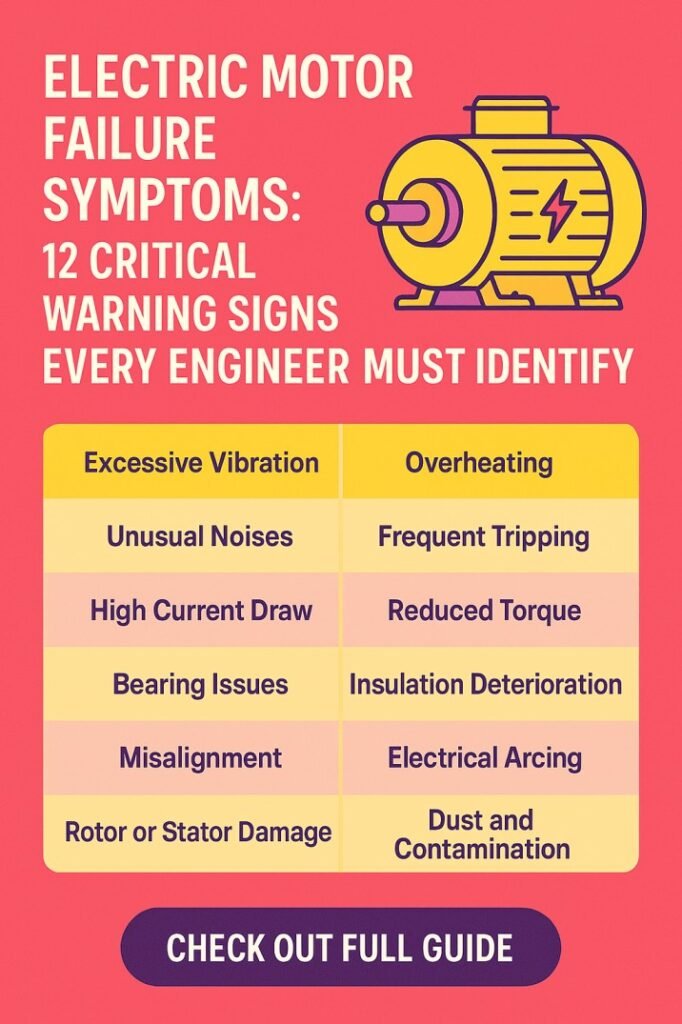
Table of Contents
Electric Motor Failure Symptoms
1. Unusual Noise During Operation
One of the most common electric motor failure symptoms is abnormal noise. While all motors produce some operational sound, grinding, squealing, or humming beyond normal levels can indicate mechanical or electrical issues. Bearings, misaligned shafts, or rotor problems often cause such noise. Early detection allows timely lubrication, alignment, or component replacement, preventing further deterioration.
Know more about How does the star delta starter reduce starting current? Important Concepts
| Noise Type | Possible Cause | Recommended Action |
|---|---|---|
| Grinding | Bearing wear or contamination | Inspect and replace bearings |
| Squealing | Misaligned or loose components | Realign and tighten |
| Humming | Electrical imbalance | Check voltage and windings |
2. Excessive Heat Generation
Overheating is a red flag in electric motors. Temperature rises beyond the rated specification can damage insulation and shorten the motor’s lifespan. Causes may include overloading, poor ventilation, or electrical faults. Regular temperature monitoring and thermal imaging can help detect this electric motor failure symptom before it escalates.
3. Frequent Tripping of Circuit Breakers
If a motor repeatedly trips its breaker, it may indicate overcurrent, short circuits, or grounding issues. Recurrent tripping is a critical electric motor failure symptom that should not be ignored, as it can escalate to motor burnouts or fire hazards. Engineers must inspect wiring, connections, and protective devices to pinpoint the cause.
Know more about Motor Starter Types: A Powerful Guide with 7 Key Options You’ll Appreciate
4. Unusual Vibrations
Vibrations are another key indicator of motor distress. While minor vibrations are normal, excessive or irregular vibrations can signify misalignment, unbalanced loads, or rotor defects. Detecting and addressing these vibrations early prevents bearing failure and structural damage to the motor assembly.
| Vibration Pattern | Likely Cause | Recommended Action |
|---|---|---|
| Axial vibration | Shaft misalignment | Realign shafts |
| Lateral vibration | Unbalanced rotor | Rebalance rotor |
| Random vibration | Worn bearings or loose components | Replace bearings, tighten components |
5. Reduced Motor Performance
A noticeable drop in motor efficiency, speed, or torque is a clear electric motor failure symptom. This may result from winding insulation breakdown, rotor bar damage, or mechanical wear. Monitoring output parameters against specifications can help detect performance degradation early.
Know more about Motor Starter Size Chart: 7 Essential Insights for Better Selection
6. Burning Smell or Smoke
Any unusual burning odor or visible smoke should be treated as an immediate warning. This electric motor failure symptom often signals insulation failure, overheating, or short circuits. Promptly stopping the motor and inspecting for damage is crucial to prevent catastrophic failure.
7. High Energy Consumption
A sudden increase in electricity usage is an often-overlooked symptom of motor failure. Electrical inefficiencies caused by winding faults or overloading increase energy draw, signaling potential damage. Monitoring power consumption trends helps engineers detect abnormal patterns before physical failure occurs.
8. Frequent Motor Restart Issues
Difficulty in starting or frequent motor stalls is a critical electric motor failure symptom. Causes can include low voltage supply, capacitor failure in single-phase motors, or mechanical obstruction. Proper troubleshooting ensures that motor operation resumes safely without causing damage.
Know more about Electric Motor Troubleshooting Chart
9. Shaft Misalignment or Wobbling
Shaft misalignment leads to increased wear and tear on bearings, couplings, and connected equipment. Wobbling shafts are a visible electric motor failure symptom. Regular alignment checks using dial indicators or laser tools can mitigate long-term damage and operational disruptions.
10. Insulation Breakdown
Degraded insulation is a silent but severe electric motor failure symptom. Insulation failure can result from overheating, moisture ingress, or chemical exposure. Testing insulation resistance with a megohmmeter allows engineers to identify deterioration before it leads to short circuits or complete motor failure.
| Insulation Issue | Detection Method | Preventive Measure |
|---|---|---|
| Moisture absorption | Insulation resistance test | Ensure proper sealing, dry motor |
| Thermal degradation | Infrared thermography | Improve cooling, reduce load |
| Chemical damage | Visual inspection | Replace affected components |
11. Frequent Bearing Failures
Bearings are often the first mechanical component to fail. Signs include noise, vibration, and overheating localized near the bearing housing. Frequent bearing failure is a classic electric motor failure symptom, often caused by poor lubrication, misalignment, or contamination. Implementing predictive maintenance schedules can significantly reduce bearing-related downtime.
Know more about Best Universities for Electrical Engineering in Ontario
12. Unexpected Motor Shutdowns
Sudden and unexplained motor stoppages indicate serious underlying issues. This final electric motor failure symptom could stem from electrical faults, overloading, or mechanical binding. Immediate inspection is necessary to prevent further damage to the motor and connected systems.
Preventive Measures and Best Practices
Identifying electric motor failure symptoms early is only part of the solution. Engineers should adopt preventive maintenance strategies to extend motor life and ensure reliability:
- Conduct regular visual inspections and thermal imaging.
- Monitor vibration, noise, and temperature trends.
- Implement predictive maintenance using sensors and IoT devices.
- Maintain proper lubrication schedules and alignment procedures.
- Keep motors clean and free from moisture or contaminants.
- Record operational data to identify subtle signs of degradation.
| Maintenance Task | Recommended Frequency | Benefit |
|---|---|---|
| Thermal inspection | Monthly | Detect overheating |
| Vibration analysis | Quarterly | Identify imbalance or misalignment |
| Insulation testing | Annually | Prevent short circuits |
| Bearing lubrication | Weekly/Monthly | Extend bearing life |
| Load monitoring | Continuous | Optimize efficiency |
Know more about Components of HVDC Transmission System
Conclusion
Understanding and recognizing electric motor failure symptoms is essential for engineers and maintenance professionals. Timely detection of these 12 critical warning signs—ranging from unusual noise and vibrations to insulation breakdown and unexpected shutdowns—can prevent catastrophic failures, reduce downtime, and save costs.
Integrating routine monitoring, predictive maintenance, and proper operational practices ensures motors operate reliably and efficiently over their lifespan. Every engineer should prioritize early detection to maintain industrial performance and safety standards. Learn more about difference between servo motor and induction motor
Follow Us on Social:
Subscribe our Newsletter on Electrical Insights for latest updates from Electrical Engineering Hub
#ElectricMotorFailureSymptoms, #MotorTroubleshooting, #IndustrialMaintenance, #MotorOverheating, #ElectricalFaults, #MotorDiagnostics, #PredictiveMaintenance, #PowerSystemReliability, #MaintenanceEngineering, #MotorRepairGuide