Best Medium Voltage Transformers for Solar Plants — Professional Selection Guide for High-Efficiency Power Integration
Medium voltage transformers play a critical role in solar power plants, ensuring that energy generated by solar panels is efficiently stepped up and delivered to the grid. Choosing the right medium voltage transformers for solar plants is essential for maximizing energy efficiency, reducing losses, and maintaining long-term operational reliability. With solar plants becoming larger and more complex, transformer selection requires careful consideration of electrical parameters, environmental conditions, and long-term performance.
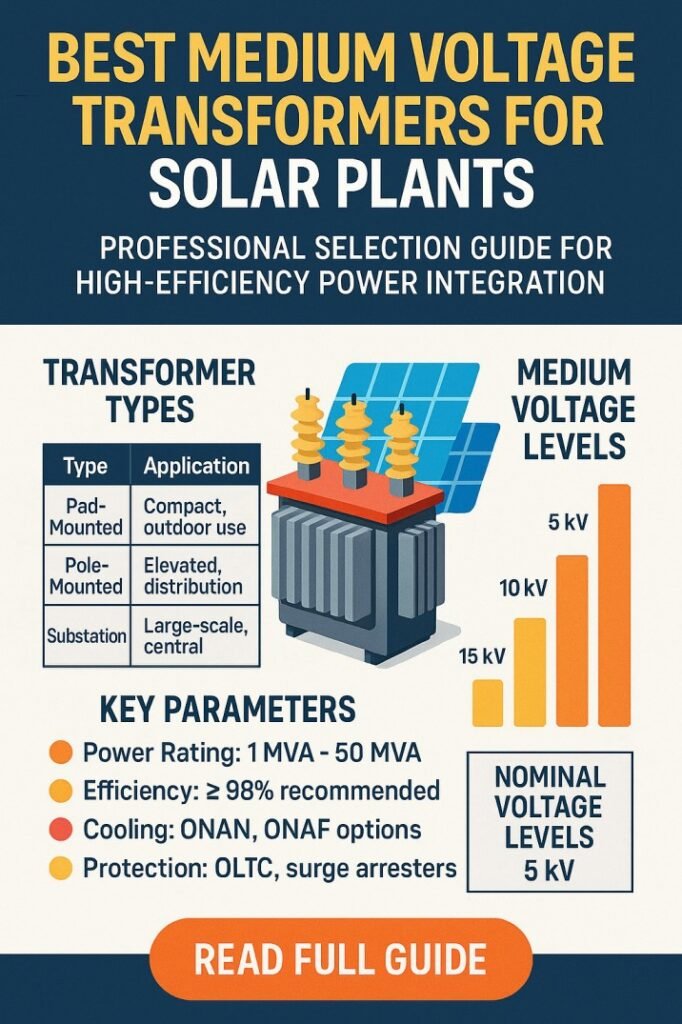
Table of Contents
Importance of Medium Voltage Transformers in Solar Plants
In a solar plant, electricity is generated at low voltage from solar inverters and needs to be stepped up to medium voltage levels, typically between 11 kV and 33 kV, before it is transmitted to the grid. Medium voltage transformers for solar plants perform this critical function while maintaining voltage stability, minimizing energy loss, and protecting the system from overloads or short circuits. Using high-quality transformers also ensures that maintenance requirements are reduced and plant downtime is minimized.
Use our online tool for free Solar Panels kWh Calculator UK: Instantly Estimate Output, Savings & Payback
Investing in reliable medium voltage transformers can significantly enhance the return on investment of a solar project. Transformers with low losses reduce the overall operational cost, while robust insulation and cooling systems extend the transformer’s life, even under harsh environmental conditions like extreme heat or high humidity.
Key Features to Look for in Medium Voltage Transformers for Solar Plants
When selecting medium voltage transformers for solar plants, engineers should consider the following key features:
- Efficiency: Transformers with low no-load and load losses reduce energy waste. Look for units with high-efficiency ratings compliant with IEC or IEEE standards.
- Cooling System: Solar plants in hot climates require transformers with advanced cooling systems like ONAN (Oil Natural Air Natural) or ONAF (Oil Natural Air Forced).
- Insulation: High-quality insulation materials, such as mineral oil or ester-based fluids, ensure long-term durability.
- Voltage Rating: Choose transformers with a voltage rating that matches the system’s medium voltage level, typically 11 kV, 22 kV, or 33 kV.
- Short-Circuit Withstand: Transformers should be capable of withstanding short-circuit currents, ensuring system safety and reliability.
- Monitoring and Protection: Integration with digital monitoring systems allows operators to track temperature, load, and oil condition for proactive maintenance.
Use our online tool for free Solar Panel Size Calculator by Load – Find the Right System for Your Power Needs
Types of Medium Voltage Transformers for Solar Plants
Solar plants may require different types of transformers depending on their configuration and size. The most common types include:
- Pad-Mounted Transformers: These compact, ground-mounted units are suitable for solar farms with limited space and are designed for easy installation and maintenance.
- Dry-Type Transformers: Ideal for indoor or environmentally sensitive areas, dry-type transformers use air instead of oil for cooling.
- Oil-Immersed Transformers: These transformers provide high efficiency and are commonly used in large solar plants. Their oil insulation provides excellent cooling and dielectric properties.
- Autotransformers: Used for stepping up voltage within the plant or for grid interconnection, autotransformers offer cost savings by reducing copper and iron losses.
Use our online tool for free Solar Panel Tilt Angle Calculator – Find the Perfect Angle for Maximum Solar Power
Top Brands and Models
Selecting the right brand can make a significant difference in performance and reliability. Some of the leading medium voltage transformers for solar plants include:
| Brand | Transformer Type | Voltage Rating | Cooling Method | Efficiency | Special Features |
|---|---|---|---|---|---|
| Siemens | Oil-Immersed | 11-33 kV | ONAN/ONAF | 99.5% | Integrated monitoring, low noise |
| ABB | Dry-Type | 11-22 kV | Air | 98.9% | Eco-friendly insulation, minimal maintenance |
| Schneider Electric | Pad-Mounted | 11-33 kV | Oil Natural | 99.2% | Compact design, surge protection |
| General Electric | Oil-Immersed | 22-33 kV | ONAN/ONAF | 99.6% | High short-circuit withstand, smart sensors |
| CG Power | Oil-Immersed | 11-33 kV | ONAN/ONAF | 99.4% | Low-loss core design, modular construction |
Use our online tool for free Solar Performance Ratio Calculator – Measure Solar System Efficiency Accurately
Efficiency Considerations
Efficiency is a major factor when choosing medium voltage transformers for solar plants, as losses directly impact the plant’s profitability. Both load losses, which occur when the transformer is supplying current, and no-load losses, which occur even when the transformer is idle, should be minimized. Modern transformers incorporate low-loss cores and high-grade copper windings to improve overall efficiency. A small percentage improvement in efficiency can translate into substantial energy savings over the transformer’s lifetime.
Installation and Maintenance
Proper installation and maintenance of medium voltage transformers for solar plants are crucial for long-term performance. Key steps include:
- Ensuring stable and level foundation for pad-mounted transformers.
- Installing proper lightning and surge protection.
- Regularly monitoring oil levels, temperature, and partial discharge.
- Performing periodic cleaning of air cooling fins and radiators.
- Checking and tightening electrical connections to avoid hot spots.
Know more about 11kV to 415V Transformer Design & Specification – Ratings, Losses, Cooling and Practical Selection Guide
A well-maintained transformer can easily last 25 years or more in a solar plant, reducing the need for frequent replacements.
Environmental and Safety Considerations
Transformers used in solar plants must comply with environmental and safety regulations. Oil-immersed transformers must use non-PCB and biodegradable oil to reduce environmental impact. Dry-type transformers are preferred in areas with strict fire safety requirements due to the absence of flammable liquids. Additionally, proper grounding, insulation coordination, and protective relays are essential to safeguard personnel and equipment.
Future Trends in Medium Voltage Transformers for Solar Plants
With the growth of renewable energy, the design of medium voltage transformers for solar plants is evolving to meet higher efficiency and digital integration demands. Smart transformers with online monitoring, predictive maintenance, and remote control are becoming standard. Integration with SCADA systems allows real-time data collection, improving plant management and reducing downtime. Advanced cooling systems and eco-friendly insulation materials are also gaining popularity, providing both sustainability and performance benefits.
Know more about Transformer Cooling Methods: ONAN, ONAF, OFAF & More
Transformer Selection Checklist
Before finalizing a transformer for a solar plant, consider this checklist:
| Parameter | Recommended Action |
|---|---|
| Voltage Rating | Match primary and secondary voltages with solar plant requirements |
| Capacity (kVA/MVA) | Ensure transformer can handle peak load plus 10-20% margin |
| Cooling Method | Choose ONAN, ONAF, or dry-type depending on environment |
| Efficiency | Select transformers with the highest efficiency rating available |
| Short-Circuit Rating | Verify short-circuit withstand capacity matches grid standards |
| Monitoring & Protection | Include online monitoring, temperature sensors, and protection relays |
| Environmental Compliance | Ensure oil type and insulation comply with local regulations |
Explore all about Transformer Bond Sizing
Conclusion
Selecting the best medium voltage transformers for solar plants is a decision that impacts plant performance, efficiency, and longevity. By considering efficiency, voltage rating, insulation type, cooling method, and monitoring capabilities, solar plant operators can ensure reliable energy transmission from the inverter to the grid.
Investing in high-quality transformers from reputable brands not only reduces operational costs but also enhances plant safety and sustainability. With evolving technology and digital integration, modern medium voltage transformers are becoming smarter, more efficient, and environmentally friendly, making them indispensable components of any solar energy project.
Find more Transformer calculators here
Follow Us on Social:
Subscribe our Newsletter on Electrical Insights for latest updates from Electrical Engineering Hub
#MediumVoltageTransformers, #SolarPlantDesign, #PowerDistribution, #RenewableEnergyEngineering, #SolarInfrastructure, #ElectricalEngineering, #TransformerSelection, #GridIntegration, #SolarPVSystems, #EnergyProfessionals