
Transformer Sizing for EV Charger : Accurate Load Calculation & Selection Guide
Electric vehicles (EVs) are transforming the way we think about mobility, and with their rising adoption, designing an efficient and reliable charging infrastructure has become essential. A critical component in this infrastructure is the transformer. Proper transformer sizing for EV charger installations ensures safe operation, optimal efficiency, and longevity of both the charger and the electrical system. Selecting the wrong transformer can lead to voltage drops, overheating, and energy losses, which may impact EV charging performance and reliability.
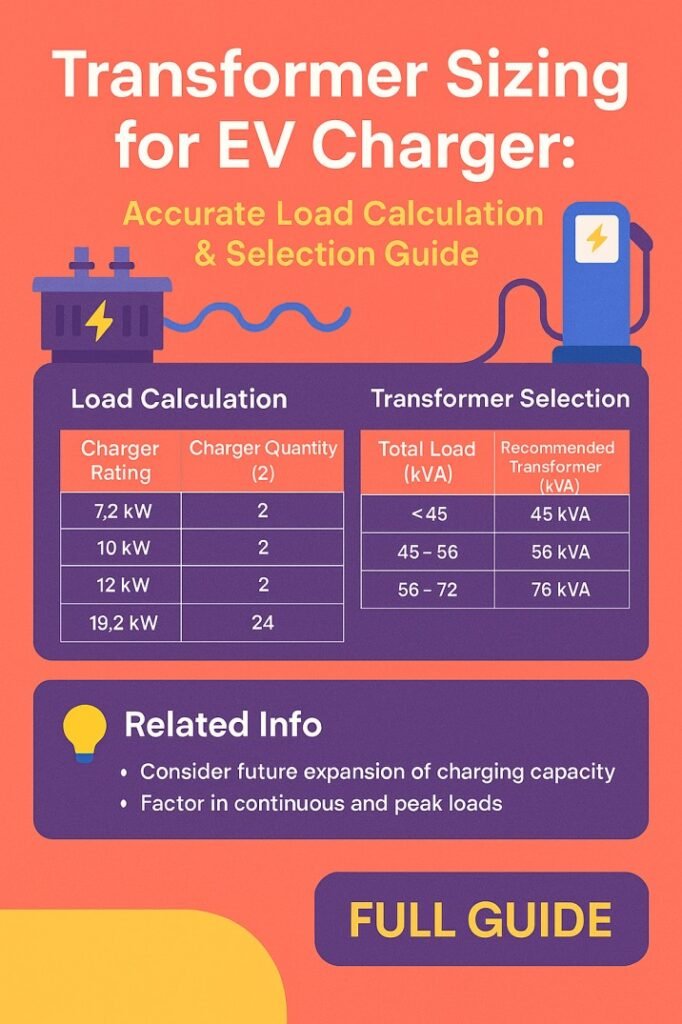
Table of Contents
Understanding Transformer Requirements for EV Chargers
Transformers are required to step down or step up voltage according to the EV charger specifications. Most EV chargers operate on low to medium voltage ranges, typically 230V single-phase for home chargers and 400V three-phase for commercial chargers. Knowing the type of charger, its power rating, and expected usage pattern is the first step in transformer sizing for EV charger applications.
Start using our online tool today — it’s free Transformer Short Circuit Calculator – Accurate Fault Current & Transformer Protection Tool
Key Factors Affecting Transformer Sizing
Several parameters influence the selection of the transformer for EV chargers. These include:
- Charger Power Rating: EV chargers range from 3.3 kW for home use to over 150 kW for fast DC chargers. The transformer must handle the maximum load without overheating.
- Number of Chargers: When multiple chargers are connected to a single transformer, their combined load must be considered.
- Load Diversity: Not all chargers may operate simultaneously. Applying a diversity factor reduces over-sizing and saves cost.
- Voltage Level: Matching the transformer voltage with the input requirements of the charger is critical to prevent inefficiency.
- Future Expansion: Allowing 10–20% additional capacity can accommodate future demand without immediate upgrades.
Step-by-Step Load Calculation
Accurate load calculation is the backbone of proper transformer sizing for EV charger installations. The process begins with identifying the total power requirement:
Test our online tool for free Transformer Full Load Current Calculator – Accurate Load & Current Calculation Tool for Transformers
Step 1: Determine Individual Charger Load
For example, a 22 kW AC charger requires a current based on its voltage and power rating:
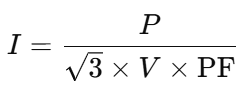
Where:
- (P) = Charger power in kW
- (V) = Voltage in volts
- PF = Power factor (typically 0.9 for EV chargers)
Step 2: Calculate Total Load
Multiply the individual load by the number of chargers. Apply a diversity factor if chargers will not operate simultaneously.
Step 3: Convert Load to Transformer Rating
Transformer rating should exceed the total calculated load by 10–20% for safety and future expansion. Use kilovolt-ampere (kVA) units for sizing:

Enjoy free access to our online tool Step-Down Transformer Calculator – Accurate Voltage & Power Conversion Tool
Sample Load Calculation Table
| Charger Type | Power (kW) | Quantity | Diversity Factor | Total Load (kW) | Transformer kVA |
|---|---|---|---|---|---|
| AC Level 2 | 22 | 4 | 0.8 | 70.4 | 78.2 |
| DC Fast | 50 | 2 | 1.0 | 100 | 111.1 |
| Combined | – | – | – | 170.4 | 189.3 |
This table demonstrates a combined EV charger installation. Selecting a transformer with a rating of 200 kVA would adequately cover the load with some margin.
Types of Transformers for EV Charging
Choosing the right type of transformer ensures operational efficiency:
- Dry-Type Transformers: Ideal for indoor EV charging stations due to lower fire risk and minimal maintenance.
- Oil-Filled Transformers: Suitable for outdoor installations and high-power fast-charging stations. They handle thermal stress better but require more maintenance.
- Pad-Mounted Transformers: Often used in commercial or public EV charging setups where space is limited and accessibility is important.
Use our online tool without paying anything Transformer Impedance Calculation Tool – Accurate Transformer Impedance Calculator for Engineers
Efficiency and Loss Considerations
Transformers should operate close to their rated load for maximum efficiency. Running a transformer significantly below capacity increases no-load losses, while frequent operation above capacity increases thermal stress and reduces lifespan. Selecting the right size ensures energy efficiency and reduces operational costs.
Voltage Regulation
Voltage drop is another important consideration. EV chargers require stable voltage to maintain charging efficiency. Overloading a transformer can lead to voltage fluctuations, causing slower charging or triggering protective devices. Proper sizing mitigates this risk.
Safety and Standards Compliance
Compliance with electrical standards is crucial. The transformer should meet IEC or local standards for insulation, protection, and environmental conditions. Proper grounding, protection relays, and short-circuit rating verification are part of the safety evaluation. Following standards not only ensures safety but also enhances reliability and reduces maintenance issues.
Get started with our free online tool Transformer Efficiency Calculator – Calculate Power, Losses & Performance Instantly
Future-Proofing EV Infrastructure
Transformer sizing for EV charger installations should consider future expansion. With EV adoption rising rapidly, designing for additional chargers or higher power units prevents costly upgrades later. Typically, a 10–20% buffer on top of the current load is recommended for medium-term expansion.
Practical Tips for Installation
- Place transformers near the charging stations to minimize cable runs and losses.
- Ensure adequate ventilation for dry-type transformers to avoid overheating.
- For multiple chargers, consider separate feeders for high-demand units to balance loads.
- Regularly monitor transformer load and temperature to maintain efficiency.
Use our tool online at no cost Transformer Losses Calculation Tool – Accurate & Easy Energy Loss Analysis
Conclusion
Proper transformer sizing for EV charger installations is critical for efficiency, safety, and reliability. Accurate load calculation, selecting the right transformer type, and planning for future expansion are essential steps in the design process. Using the sample calculation methods and tables provided, engineers can choose transformers that meet current and future EV infrastructure demands. Following best practices ensures a stable and sustainable charging network, supporting the growing EV ecosystem efficiently.
Use our online tool EV Charger Load Calculation Tool – Accurate Power Estimation for Home and Commercial EV Chargers
Follow Us on Social:
Subscribe our Newsletter on Electrical Insights for latest updates from Electrical Engineering Hub
#Transformersizing, #EVchargerDesign, #ElectricalEngineering, #PowerDistribution, #LoadCalculation, #EVInfrastructure, #TransformerSelection, #ChargingStation, #PowerSystemDesign, #EngineeringGuide