Best Schools for Electrical Engineering in Philippines | Top Universities & Program Guide
Choosing the best schools for electrical engineering in philippines is a critical step for students planning a strong technical career in power systems, electronics, and industrial automation. The country has built a solid reputation for engineering education, supported by accredited universities, modern laboratories, and links with energy and infrastructure industries. For students evaluating their options, understanding curriculum quality, board exam performance, facilities, and internship exposure helps in selecting the right institution.
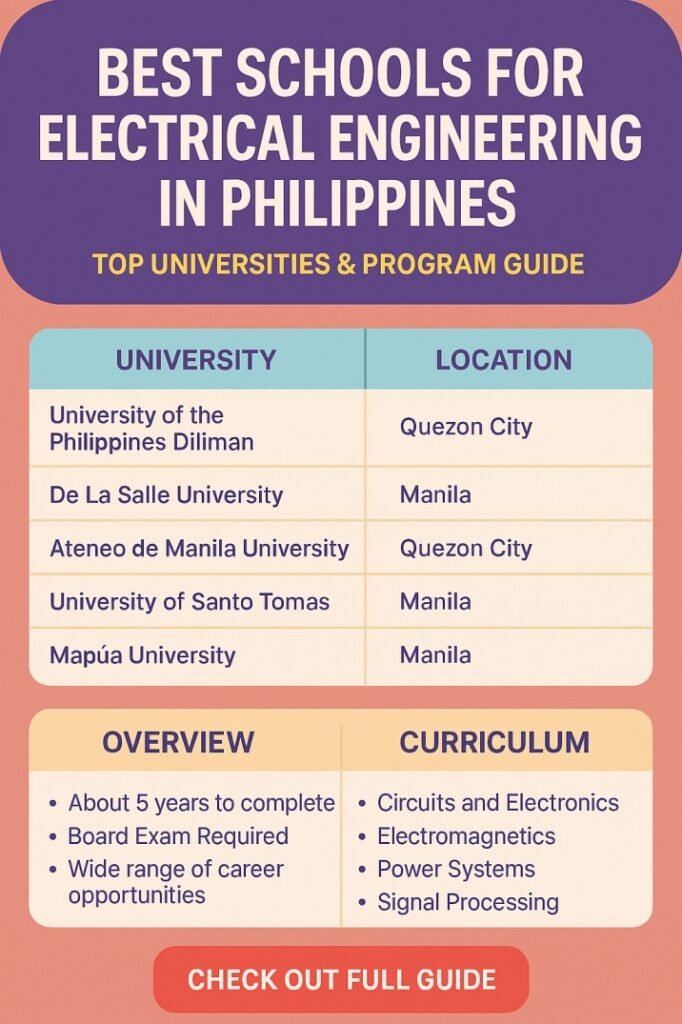
Table of Contents
This guide explains what makes the best schools for electrical engineering in philippines stand out. It also outlines program structure, admission factors, and career pathways so that prospective learners can align their decision with long-term professional goals. Electrical engineering programs in the Philippines generally combine theory, practical training, and licensure preparation, ensuring graduates remain competitive both locally and internationally.
Why Study Electrical Engineering in Philippines
Students looking at the best schools for electrical engineering in philippines often consider affordability, global recognition, and industry demand. Universities here follow standards monitored by national regulatory bodies, and many programs maintain partnerships with utilities, construction firms, and manufacturing companies. These connections improve employability and provide hands-on exposure.
Know more about PLC Programming Salary 2026 – Experience-Wise Pay, Country Comparison & Skills That Boost Income
Another advantage is the focus on core competencies such as circuit analysis, power generation, renewable energy integration, and instrumentation. Coursework balances classroom learning with laboratory experiments, preparing students for engineering board examinations and professional registration. For those comparing global options, the best schools for electrical engineering in philippines provide strong value while maintaining academic rigor.
Factors to Evaluate When Selecting a University
While searching for the best schools for electrical engineering in philippines, applicants should review measurable indicators rather than relying on reputation alone. Important criteria include accreditation, faculty experience, laboratory infrastructure, and graduate outcomes. Universities differ in specialization areas such as telecommunications, robotics, or power distribution, so aligning these with personal interests is essential.
Below is a summary table that highlights key selection parameters.
| Evaluation Factor | Why It Matters | What to Check |
|---|---|---|
| Accreditation | Confirms program meets quality standards | National recognition and engineering body approvals |
| Board Exam Results | Reflects teaching effectiveness | Historical passing rates |
| Faculty Expertise | Influences mentorship and research | Industry or research background |
| Laboratory Facilities | Supports practical learning | Equipment availability and upgrades |
| Industry Linkages | Helps internships and jobs | Partnerships with companies |
| Curriculum Coverage | Ensures balanced knowledge | Inclusion of emerging technologies |
Students who carefully compare these factors can shortlist the best schools for electrical engineering in philippines based on objective benchmarks rather than marketing claims.
Know more about Electrical Engineer Salary in USA 2026 – State-Wise Pay, Experience Levels & Top Paying Industries
Top Universities Offering Electrical Engineering Programs
Several institutions consistently appear when discussing the best schools for electrical engineering in philippines. These universities combine academic excellence with training aligned to industry needs. The list below does not rank them in strict order, but it reflects widely recognized choices among aspiring engineers.
| University | Location | Program Highlights | Notable Strength |
|---|---|---|---|
| University of the Philippines | Multiple campuses | Research-oriented curriculum | Strong innovation culture |
| De La Salle University | Manila | Modern laboratories | Industry collaboration |
| Mapúa University | Manila | Intensive technical focus | Board exam performance |
| Ateneo de Manila University | Quezon City | Balanced theory and practice | Holistic development |
| Technological Institute of the Philippines | Manila/Quezon | Applied engineering training | Facilities and workshops |
| University of Santo Tomas | Manila | Established engineering faculty | Long academic heritage |
Each entry contributes to the conversation about the best schools for electrical engineering in philippines by delivering a mix of theoretical depth and professional readiness. Prospective students should visit campuses or review course outlines to see which environment suits them best.
Find all about Electrical Engineer Salary in Botswana: Latest Pay Scale, Benefits, and Career Outlook (2026)
Typical Curriculum and Learning Path
Programs offered by the best schools for electrical engineering in the philippines generally span four to five years. The structure introduces foundational science and mathematics before progressing to specialized engineering subjects. Students develop analytical thinking and problem-solving abilities through lectures, projects, and laboratory sessions.
| Study Stage | Subjects Covered | Skills Developed |
|---|---|---|
| Year 1 | Mathematics, Physics, Programming | Analytical reasoning |
| Year 2 | Circuit Theory, Electronics | Technical fundamentals |
| Year 3 | Power Systems, Control Systems | Design capability |
| Year 4 | Renewable Energy, Projects | Integration of knowledge |
| Final Term | Internship or Thesis | Industry exposure |
This progression ensures that learners attending the best schools for electrical engineering in philippines graduate with both theoretical grounding and applied competence. Exposure to simulation software, hardware testing, and field assignments strengthens confidence before entering the workforce.
Admission Requirements and Preparation
Admission into the best schools for electrical engineering in philippines varies by institution, yet certain expectations remain common. Applicants should demonstrate proficiency in mathematics and science during secondary education. Entrance examinations often test analytical aptitude and reasoning, while some universities also conduct interviews.
Explore details on Boeing Electrical Engineer Salary: Complete Guide to Pay, Benefits & Career Growth
Preparation strategies include strengthening algebra and physics concepts, exploring basic electronics projects, and researching university expectations in advance. When candidates meet these requirements, the transition into the academic demands of the best schools for electrical engineering in philippines becomes smoother and less stressful.
Career Opportunities After Graduation
Graduating from the best schools for electrical engineering in philippines opens doors to diverse sectors. Electrical engineers remain essential to infrastructure development, manufacturing, and emerging renewable projects. With urban expansion and digital transformation underway, demand for technically skilled professionals continues to grow.
Common career pathways include:
| Career Role | Industry Area | Responsibilities |
|---|---|---|
| Power Engineer | Utilities | Grid analysis and maintenance |
| Design Engineer | Manufacturing | Equipment development |
| Automation Specialist | Industrial Plants | Process optimization |
| Renewable Energy Engineer | Solar and Wind | Sustainable system planning |
| Maintenance Engineer | Facilities | Operational reliability |
These roles illustrate how education from the best schools for electrical engineering in philippines leads to meaningful participation in technological advancement and economic development.
Know more about DEWA Electrical Engineer Salary
Tips for Choosing the Right Program
Students narrowing down the best schools for electrical engineering in philippines should consider campus culture, financial planning, and long-term career alignment. Visiting facilities, speaking with alumni, and reviewing internship pathways provides clarity beyond brochures. Comparing tuition structures and scholarship options also prevents financial surprises later.
Maintaining focus on learning environment quality ensures that enrollment in the best schools for electrical engineering in philippines becomes an investment rather than a gamble. A well-chosen program fosters technical mastery, networking, and confidence to tackle professional challenges.
Find about Electrical Engineer Salary in Germany
Conclusion
Selecting among the best schools for electrical engineering in philippines requires balanced evaluation of academic standards, resources, and future prospects. Universities across the country deliver strong engineering foundations supported by laboratories, industry connections, and structured curricula. Students who carefully assess accreditation, faculty capability, and careers outcomes position themselves for rewarding technical journeys.
Ultimately, success depends on commitment as much as institution choice. The best schools for electrical engineering in philippines provide tools and mentorship, but dedication to study, experimentation, and continuous improvement transforms opportunity into achievement. By using the insights in this guide, aspiring engineers can move forward with clarity and confidence while planning their educational path.
Find all about Electrical Engineering Salary in Georgia
Follow Us on Social:
Subscribe our Newsletter on Electrical Insights for latest updates from Electrical Engineering Hub
#BestSchoolsForElectricalEngineering, #ElectricalEngineeringPhilippines, #EngineeringCollegesPH, #StudyElectricalEngineering, #TopEngineeringUniversities, #EngineeringEducation, #PhilippinesUniversities, #EEStudents, #EngineeringCareer, #CollegeSelection