Lightning Protection System Design: Expert Guide to Safeguard Your Buildings Efficiently
Lightning strikes are one of the most underestimated threats to buildings, posing risks not only to structural integrity but also to the safety of occupants and sensitive equipment. Implementing a robust lightning protection system design is critical for modern structures, whether residential, commercial, or industrial. A well-planned design minimizes the probability of damage, reduces downtime, and ensures compliance with international electrical safety standards.
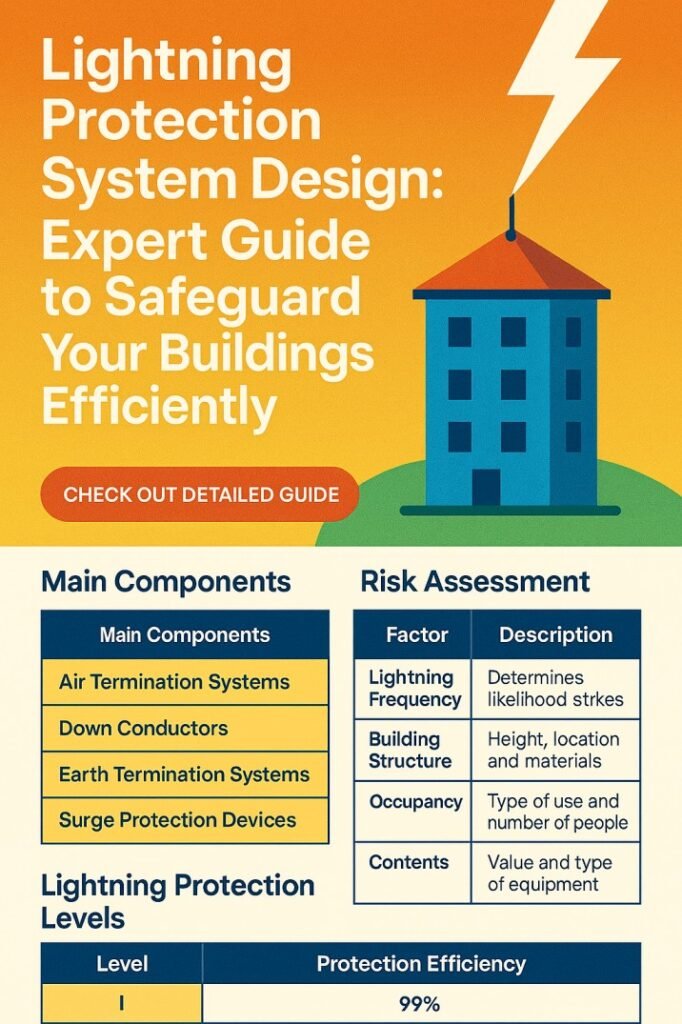
Table of Contents
Understanding the principles behind lightning protection system design requires careful consideration of building materials, structure height, location, and electrical grounding methods. Engineers and safety consultants often combine theoretical calculations with field-tested solutions to create efficient, reliable protection systems.
Know more about What Is Early Streamer Emission A Practical Guide for Engineers, Standards, and Lightning Protection Design
Importance of Lightning Protection System Design
Many people associate lightning protection merely with metal rods on rooftops. However, effective lightning protection system design is a comprehensive approach that considers the entire building and its surroundings. Lightning can induce voltages that damage electronic systems, ignite fires, or compromise structural safety. For industrial buildings and facilities with high-value equipment, the consequences can be catastrophic.
A professionally designed system ensures:
- Safe discharge of lightning energy to the ground.
- Minimal risk of fire caused by electrical surges.
- Protection of sensitive electronics and communication networks.
- Compliance with standards such as IEC 62305 and NFPA 780.
Ignoring these factors can lead to property loss, operational disruptions, and higher insurance premiums.
Know more about What Is Air Terminal in Lightning Protection? Function, Types & Installation Explained
Key Components of Lightning Protection System Design
An effective lightning protection system design typically includes several interconnected components. Each element plays a specific role in capturing, conducting, and safely dissipating lightning energy.
| Component | Function | Design Considerations |
|---|---|---|
| Air Terminals | Capture lightning strike | Height, placement, number of rods |
| Down Conductors | Conduct current to ground | Low-resistance path, material selection |
| Grounding System | Dissipate energy into earth | Soil resistivity, grounding rods or plates |
| Bonding & Equipotential | Prevent voltage differences | Integration with building electrical systems |
| Surge Protection Devices (SPDs) | Protect electronics | Location in distribution panels and critical equipment |
Using high-quality materials such as copper or aluminum for conductors and terminals is essential for long-term reliability. Proper bonding and grounding reduce the risk of side-flashes and step voltages that can harm occupants or equipment.
Step-by-Step Approach to Lightning Protection System Design
Designing a lightning protection system involves multiple steps, combining risk assessment with structural analysis. Engineers follow a systematic methodology to ensure optimal coverage and effectiveness.
1. Risk Assessment and Classification
The first step in lightning protection system design is evaluating the risk based on:
- Building height and structural complexity.
- Occupancy type and value of equipment inside.
- Geographic lightning frequency.
- Surrounding terrain and structures.
Buildings are classified into different protection levels (I, II, III, IV) depending on the risk and potential damage. Higher protection levels require more comprehensive systems.
Know more about Earth Cable Size for Lightning Protection
2. Selection of Air Terminals
Air terminals, commonly called lightning rods, intercept lightning strikes before they hit the structure. Placement is determined using one of the following methods:
- Rolling Sphere Method: Uses a hypothetical sphere to identify points of potential strike.
- Protective Angle Method: Defines cone-shaped zones around rods for coverage.
- Mesh or Grid Method: Often used for large roof surfaces to ensure uniform protection.
The number and height of terminals are calculated to provide full coverage without gaps.
3. Design of Down Conductors
Down conductors provide a safe path for the lightning current from the air terminal to the ground. Design considerations include:
- Shortest, straightest path possible.
- Avoiding sharp bends to reduce impedance.
- Adequate spacing to prevent electromagnetic induction in nearby cables.
The conductors must be bonded to structural metal components when necessary, maintaining equipotential surfaces to avoid dangerous voltage gradients.
Know more about Leakage Current in Lightning Arrester: Best Guide
4. Grounding System Design
Grounding is a critical component in lightning protection system design. The system dissipates energy into the earth, and its effectiveness depends on soil resistivity and electrode configuration. Common grounding techniques include:
- Vertical rods or pipes.
- Horizontal strips or plates.
- Chemical or conductive backfills to reduce resistance.
For optimal performance, the total grounding resistance should typically be below 10 ohms, though lower resistance values are preferred in high-risk buildings.
5. Surge Protection Devices
Lightning induces transient overvoltages that can damage electronics even without a direct strike. SPDs are installed at critical points in electrical distribution panels and near sensitive equipment. They act as fast switches, diverting surge currents safely to the ground.
6. System Testing and Maintenance
A lightning protection system design is only effective if tested and maintained regularly. Routine checks include:
- Continuity of down conductors.
- Ground resistance measurements.
- Inspection of air terminals for corrosion or damage.
- Verification of SPD functionality.
Proper documentation of inspections ensures compliance with safety regulations and prolongs system life.
Know more about IEC Standard for Lightning Protection: A Complete Technical Guide
Advanced Considerations in Lightning Protection System Design
Modern buildings often have complex geometries, high-rise structures, or integrated communication networks. Advanced design solutions address these challenges.
- Faraday Cage Integration: For critical data centers and control rooms, a full Faraday cage approach ensures internal protection from electromagnetic pulses.
- Roof-Mounted Equipment: HVAC units, antennas, and solar panels must be bonded to the protection system to prevent side flashes.
- Multiple Grounding Networks: Large industrial facilities may require interconnected grounding grids to handle distributed lightning currents effectively.
These considerations help minimize downtime, reduce maintenance costs, and protect high-value assets.
Cost and Material Considerations
Cost-effective lightning protection system design balances performance, safety, and budget. Material selection influences both upfront costs and long-term reliability. Copper is highly conductive and corrosion-resistant but more expensive than aluminum. Stainless steel provides structural strength but has higher resistance, requiring careful sizing.
Know more about IEC Standard for Lightning Arrester – IEC 60099 Guide for Surge and Overvoltage Protection
A detailed cost analysis table helps decision-makers choose the right materials and design strategies.
| Material | Conductivity | Corrosion Resistance | Approximate Cost |
|---|---|---|---|
| Copper | High | Excellent | High |
| Aluminum | Medium | Good | Medium |
| Stainless Steel | Low-Medium | Excellent | Medium-High |
Selecting appropriate materials ensures that the system remains functional for decades, reducing the need for frequent repairs or replacements.
Compliance with Standards
All lightning protection system design projects must follow recognized standards, such as:
- IEC 62305: International standard for lightning protection, covering risk assessment, structural protection, and SPDs.
- NFPA 780: National Fire Protection Association guideline for the installation of lightning protection systems.
- Local electrical codes: Vary by country and region, ensuring compatibility with building regulations.
Know more about Top 10 Lightning Protection Design Softwares: Best Guide
Adhering to these standards not only enhances safety but also simplifies insurance approvals and legal compliance.
Common Mistakes to Avoid
Even experienced designers sometimes make errors that compromise safety:
- Incorrect placement of air terminals leaving blind zones.
- Down conductors with sharp bends increasing impedance.
- Grounding systems with insufficient depth or poorly bonded rods.
- Neglecting surge protection for sensitive electronics.
- Lack of routine inspections and maintenance.
Avoiding these mistakes ensures that the lightning protection system design performs as intended under extreme weather conditions.
Conclusion
A well-executed lightning protection system design is more than a regulatory requirement—it is a critical investment in building safety and operational continuity. From risk assessment to component selection and maintenance, each step contributes to an efficient, reliable, and long-lasting system.
Know more about Types of Lightning Arrester Explained: Important Guide for Power Systems & Substations
Properly designed protection systems safeguard lives, preserve infrastructure, and protect high-value equipment from the devastating effects of lightning strikes. Prioritizing professional design, high-quality materials, and compliance with international standards ensures that your building remains secure under any storm.
Follow Us on Social:
Subscribe our Newsletter on Electrical Insights for latest updates from Electrical Engineering Hub
#LightningProtectionSystemDesign, #ElectricalSafety, #SurgeProtection, #LightningSafety, #BuildingProtection, #ElectricalEngineering, #PowerSystems, #LightningProtectionDesign, #SafetyStandards, #EngineeringSolutions