Cable Size Chart for Generator: Best NEC-Compliant Sizing Guide for Professionals
Selecting the correct cable size for a generator is critical to ensure safety, efficiency, and compliance with the National Electrical Code (NEC). Incorrect sizing can lead to voltage drops, overheating, equipment failure, or even fire hazards. Engineers, electricians, and industrial professionals often rely on a cable size chart for generator to streamline the selection process, but it’s essential to understand the principles behind these tables to make informed decisions. This guide provides a comprehensive, NEC-compliant approach for choosing the right generator cable sizes for various applications.
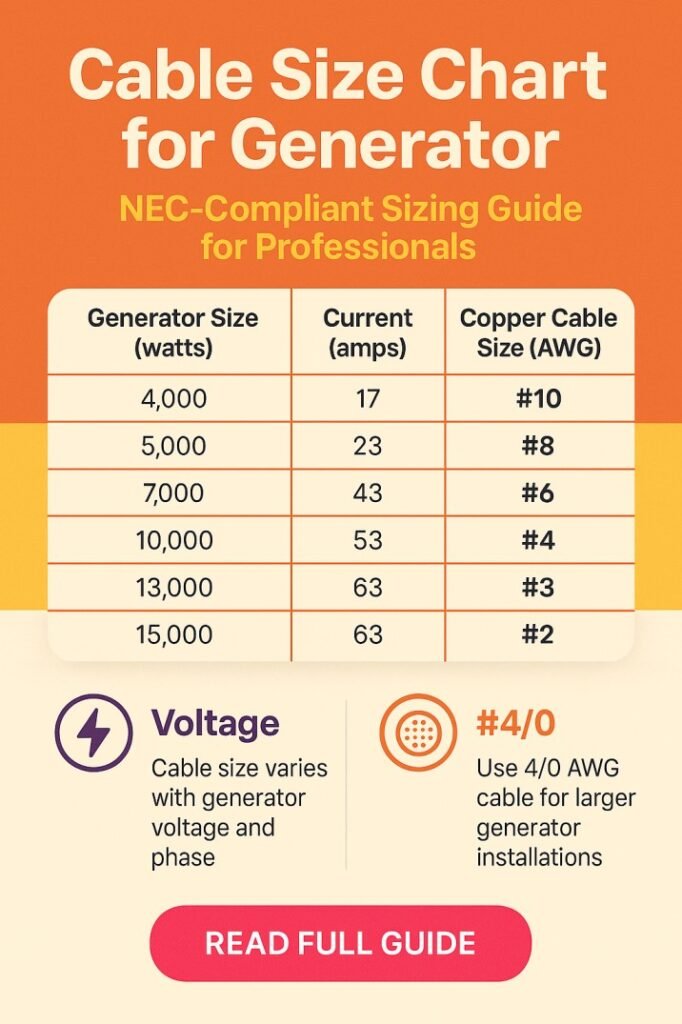
Table of Contents
Understanding Generator Cable Sizing
Cable sizing for generators depends on multiple factors including the generator’s output current, distance of the run, conductor material, insulation type, and acceptable voltage drop. The NEC provides standard ampacity tables that define the maximum current a conductor can safely carry. However, generators often have unique requirements due to starting currents, transient loads, and operational conditions. Therefore, using a cable size chart for generator tailored to NEC standards ensures both safety and optimal performance.
Use this tool if you are trying to calculate cable size for underground cables. Try here Underground Cable Size Calculator – Find Correct Wire Size for Long Distance Runs
Key Factors Affecting Generator Cable Size
- Generator Capacity (kW or kVA): Higher-capacity generators require thicker conductors to handle larger currents.
- Voltage Level: 120V, 208V, 240V, 480V, and higher voltages have different current ratings for the same conductor size.
- Distance: Longer cable runs increase voltage drop, which must be minimized to prevent equipment malfunction.
- Conductor Material: Copper is more efficient but costlier; aluminum requires a larger cross-sectional area for the same current.
- Insulation Type: Insulation rating affects the temperature tolerance of the cable, influencing ampacity.
- Ambient Temperature: High ambient temperatures reduce the cable’s current-carrying capacity.
Discover how this tool works and why it’s worth using NEC Wire Size Calculator – Voltage Drop Compliant Sizing for 120V & 240V Circuits
NEC-Compliant Cable Size Chart for Generators
The following table provides a general cable size chart for generator based on NEC ampacity guidelines. The table includes common copper conductors, assuming standard insulation (THHN/THWN) and 75°C rated terminals.
| Generator Output (kW) | Voltage (V) | Full Load Current (A) | Recommended Copper Cable Size (AWG/kcmil) | Aluminum Cable Size (AWG/kcmil) | Notes |
|---|---|---|---|---|---|
| 5 kW | 240 | 20 | 10 AWG | 8 AWG | Small residential generator |
| 10 kW | 240 | 40 | 6 AWG | 4 AWG | Backup power for home |
| 20 kW | 480 | 24 | 8 AWG | 6 AWG | Small commercial load |
| 30 kW | 480 | 36 | 6 AWG | 4 AWG | Light industrial equipment |
| 50 kW | 480 | 60 | 4 AWG | 2 AWG | Medium industrial generator |
| 100 kW | 480 | 120 | 1/0 AWG | 2/0 AWG | Large commercial setups |
| 200 kW | 480 | 240 | 3/0 AWG | 250 kcmil | Heavy-duty industrial load |
| 500 kW | 480 | 600 | 750 kcmil | 1000 kcmil | Large industrial generators |
This cable size chart for generator provides a practical reference but should be adjusted based on real installation conditions such as ambient temperature, conduit type, and voltage drop limits.
This tool is perfect for achieving better results in solar system design. Try here Wire Size Calculator for Solar Panels – Avoid Power Loss in Off-Grid and Hybrid Systems
Importance of Voltage Drop Consideration
Even if the NEC ampacity requirements are met, voltage drop can affect the performance of sensitive equipment. For most applications, a voltage drop of 3% or less is recommended for feeders. Use the formula:
Voltage Drop (V) = (2 × Length × Current × Resistance) / 1000
Where resistance is based on conductor material and size. Accounting for voltage drop ensures reliable operation of motors, electronics, and lighting systems connected to the generator.
Additional Considerations
- Short-Circuit Rating: Ensure cables can handle potential short-circuit currents without damage.
- Parallel Conductors: For very high currents, multiple conductors may be run in parallel, following NEC rules.
- Flexible Cables: For portable generators, select cables with flexible insulation suitable for repeated movement.
- Connection Terminals: Ensure proper lugs and terminals rated for the chosen cable size to avoid overheating.
Try this tool out to save time and effort for easy conversions Amps to Wire Size Calculator – Choose the Right Cable for 10A, 20A, 40A Loads
Practical Tips for Professionals
- Always consult the latest NEC tables (Article 310) before finalizing cable selection.
- Verify environmental factors such as high temperatures, chemical exposure, and UV radiation, which can degrade insulation over time.
- Use oversized conductors if long cable runs are unavoidable. This reduces voltage drop and improves generator efficiency.
- Consider using a multimeter to check voltage at the load end after installation to confirm that drop limits are not exceeded. Use our online tool Generator Power Consumption Calculator – Accurate Tool to Estimate Fuel and Load Usage
Conclusion
A well-designed generator cable system protects equipment, ensures safety, and guarantees operational efficiency. Using a cable size chart for generator as a reference, combined with NEC guidelines and practical field considerations, allows engineers and electricians to make confident, informed decisions. Remember, the key factors include generator capacity, distance, conductor material, voltage drop, and ambient conditions. By following these principles, professionals can design a generator installation that is both NEC-compliant and reliable for long-term use.
Take a look at this tool for a smarter way to handle feeder wire sizing Feeder Wire Size Calculator – Accurate Guide for Electricians and Homeowners
Correct cable sizing is not just about meeting code; it ensures the longevity of your generator, minimizes maintenance costs, and safeguards users and equipment alike. Always verify calculations for each unique installation, and adjust the cable size chart for generator values when conditions deviate from standard assumptions.
Follow Us on Social:
Subscribe our Newsletter on Electrical Insights for latest updates from Electrical Engineering Hub
#cablesizechart #generatorwiring #NECcompliant #electricalengineering #industrialwiring #powerdistribution #electricalsafety #generatorsizing #electricalcontractor #cablecalculation