Electric Motor Start Capacitor Troubleshooting: 7 Powerful Ways to Fix Issues Fast
When your electric motor struggles to start, the culprit is often the start capacitor. A faulty capacitor can cause motors to hum, fail to start, or even overheat. Knowing how to perform motor start capacitor troubleshooting can save time, money, and prevent unnecessary replacements. In this guide, we’ll cover seven powerful ways to identify and fix start capacitor issues quickly and effectively.
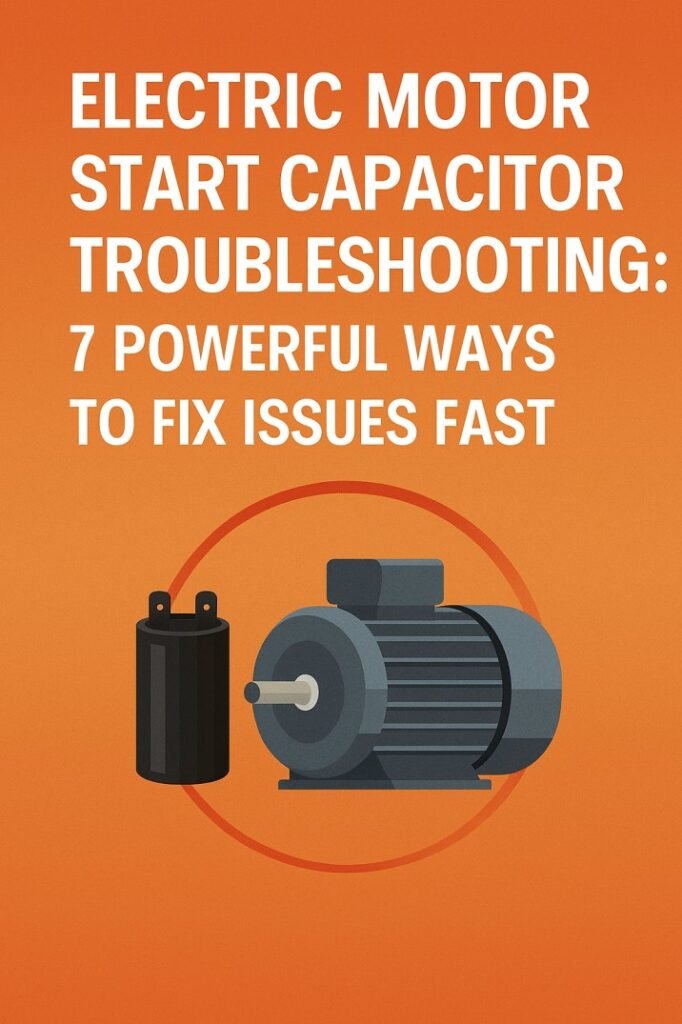
Table of Contents
Understanding Motor Start Capacitors
Motor start capacitors are designed to provide the extra torque required to start single-phase electric motors. They store electrical energy and release it during the motor’s initial rotation. Without a working start capacitor, motors can fail to start, run sluggishly, or draw excess current. Common applications include HVAC systems, refrigerators, compressors, and pumps.
Know more about MCC Panel Design Guide – IEC Standards, Wiring Diagram, Cost, and Sizing Calculations (Excel Template)
A failing capacitor can be caused by age, high voltage fluctuations, overheating, or environmental factors like humidity. Understanding the signs of a faulty capacitor is the first step in motor start capacitor troubleshooting.
Signs Your Motor Start Capacitor Is Failing
Before diving into repairs, look for these common symptoms:
| Symptom | Possible Cause | Troubleshooting Step |
|---|---|---|
| Motor hums but doesn’t start | Capacitor not providing starting torque | Check capacitor with a multimeter |
| Motor starts slowly or weakly | Capacitor losing capacitance | Measure voltage and replace if below specification |
| Motor trips breaker | Shorted capacitor | Inspect capacitor for bulging or leaks |
| Overheating motor | Overloaded start cycle due to capacitor failure | Test and replace capacitor promptly |
Recognizing these symptoms early allows you to avoid damage to your motor and other connected equipment.
1. Visual Inspection
Start with a careful visual inspection. Look for:
- Bulging or leaking casing
- Burn marks or discoloration
- Loose or corroded terminals
If any of these signs are present, the capacitor is likely failing. A visual check is fast and often reveals obvious issues, making it a crucial first step in motor start capacitor troubleshooting.
Use our online tool Motor Overload Setting Calculator for Single and Three Phase Motors
2. Discharge the Capacitor Safely
Before testing or handling a capacitor, always discharge it to prevent electrical shocks. Use a resistor or insulated screwdriver across the terminals, and wear protective gloves. A discharged capacitor ensures safety during measurement and removal.
3. Measure Capacitance with a Multimeter
A digital multimeter with capacitance testing can reveal whether the capacitor is within its rated specification.
Steps:
- Disconnect the capacitor from the motor.
- Set the multimeter to capacitance mode.
- Connect the meter leads to the terminals.
- Compare the reading to the capacitor’s rated value.
| Measured Capacitance | Action |
|---|---|
| Within ±5% of rating | Capacitor is fine |
| Below rating | Replace capacitor |
| Open or infinite reading | Capacitor is failed |
| Shorted or 0 reading | Immediate replacement needed |
This step is essential in accurate motor start capacitor troubleshooting.
Know more about Best Industrial Electric Motor Manufacturers Near Virginia
4. Check for Short Circuits or Leaks
A shorted capacitor can prevent the motor from starting and even trip breakers. Use an insulation resistance tester or ohmmeter to check for shorts. A low or zero reading indicates leakage or internal failure. Replace any capacitor that fails this test.
5. Observe Motor Behavior During Start
Sometimes the problem is intermittent. Turn on the motor and observe:
- Is there a delay in starting?
- Does it hum loudly for a few seconds?
- Does it vibrate excessively?
If the motor struggles but eventually starts, it may indicate a weakening capacitor that still partially functions. This observation provides real-time insight during motor start capacitor troubleshooting.
6. Replace the Capacitor with Correct Rating
Using the wrong capacitor rating can cause the motor to fail or burn out. Always replace with the exact microfarad (µF) and voltage rating specified by the manufacturer.
Tips for replacement:
- Use a capacitor with the same or slightly higher voltage rating.
- Avoid using physically smaller capacitors that cannot handle heat.
- Ensure proper connection to motor terminals to prevent reverse polarity issues.
Know more about Industrial Electric Motor Manufacturers Near Washington, DC
Proper replacement often resolves most start-up problems and restores normal motor operation.
7. Regular Maintenance and Testing
Prevention is better than repair. Schedule regular maintenance to inspect capacitors and motor connections. Regularly check:
- Capacitor casing for bulges or leaks
- Tightness of terminals
- Motor starting behavior
Proactive testing helps detect early signs of capacitor failure and improves motor lifespan.
Quick Reference Table for Motor Start Capacitor Troubleshooting
| Step | Action | Tools Needed |
|---|---|---|
| 1 | Visual inspection | None |
| 2 | Discharge capacitor | Resistor or insulated screwdriver, gloves |
| 3 | Measure capacitance | Digital multimeter |
| 4 | Check shorts/leaks | Ohmmeter or insulation tester |
| 5 | Observe motor start | Visual and auditory observation |
| 6 | Replace capacitor | Correct rated capacitor, screwdrivers |
| 7 | Regular maintenance | Inspection checklist, testing tools |
This table simplifies the troubleshooting process and ensures no step is skipped during motor start capacitor troubleshooting.
Common Mistakes to Avoid
Even experienced technicians can make mistakes. Watch out for:
- Ignoring capacitor ratings during replacement
- Handling charged capacitors without discharge
- Using damaged test equipment
- Assuming a humming motor is always capacitor-related
Correct procedures and careful testing help avoid these pitfalls.
Know more about Top 10 Electric Motor Manufacturers in the World
Final Thoughts
Mastering motor start capacitor troubleshooting can save time, reduce equipment downtime, and prevent costly repairs. By following visual inspections, safe testing, capacitance measurement, and proper replacement procedures, most start capacitor issues can be resolved quickly. Regular maintenance ensures your motors run smoothly, reliably, and efficiently.
When in doubt, always consult the motor manufacturer’s guidelines and safety instructions. Correct troubleshooting protects both the equipment and the technician, ensuring fast and effective motor repairs every time.
Follow Us on Social:
Subscribe our Newsletter on Electrical Insights for latest updates from Electrical Engineering Hub
#ElectricMotor, #StartCapacitor, #MotorTroubleshooting, #CapacitorRepair, #MotorMaintenance, #DIYMotorFix, #ElectricRepair, #MotorProblems, #CapacitorTips, #MotorEfficiency