What Is Earth Fault Relay Protection Zone? Best Guide
Understanding the earth fault relay protection zone is essential for anyone working with electrical power systems. When a ground fault occurs, the flow of fault current can damage equipment, interrupt service, and create hazardous conditions. An earth fault relay helps detect and isolate these faults. However, its real effectiveness depends on how well its protection zone is defined.
The protection zone sets the boundaries where the relay monitors, detects, and clears earth faults. If this zone is not designed correctly, faults may remain undetected or be cleared by the wrong protection device. This can lead to unnecessary outages or severe equipment failure. Knowing how this zone works improves system reliability, safety, and selective coordination.
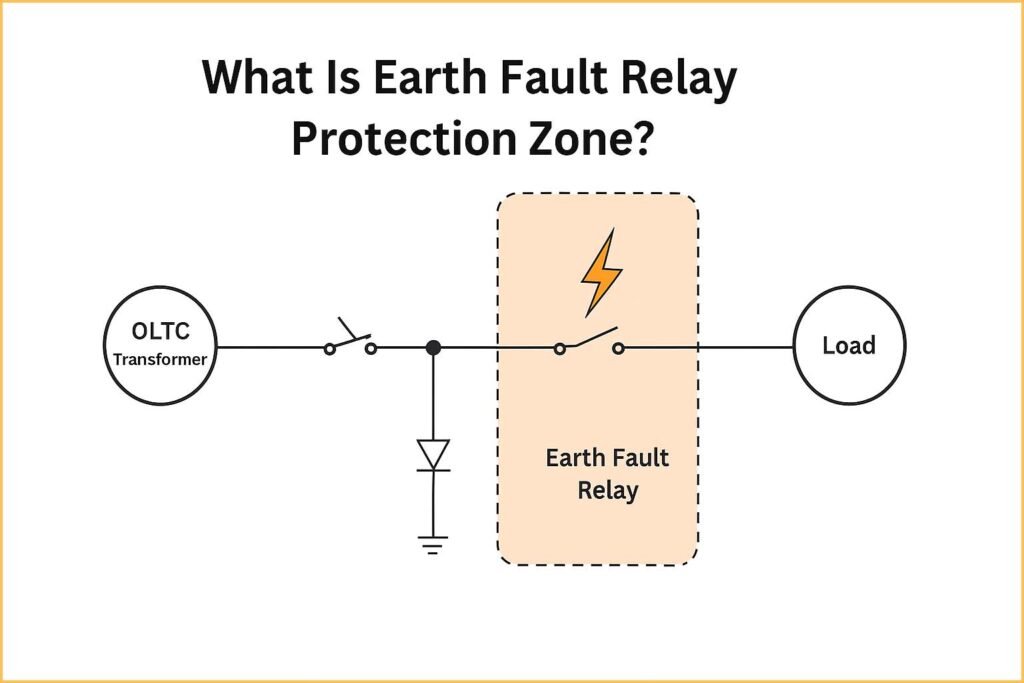
Table of Contents
Understanding the Earth Fault Relay Protection Zone
The earth fault relay protection zone is the specific area of the electrical network where the relay provides coverage. It includes the equipment and conductors that fall under its monitoring scope. When a ground fault occurs within this zone, the relay should operate instantly and accurately. If the fault occurs outside the zone, then another relay should respond. Read in detail about types of transformer protection relays
This selective operation is the backbone of effective protection. Power systems use different types of relays that cover transformers, feeders, busbars, generators, and cables. Each relay has its own protection zone. These zones must overlap slightly to avoid blind spots but should not overlap too much, as this can lead to unnecessary tripping.
Know more about Working Principle of an Earth Fault Relay: How It Protects Electrical Systems
Why the Protection Zone Matters
An earth fault relay provides much more than basic ground fault detection. The proper definition of its protection zone helps in several ways. One of the most important benefits is selective isolation. Only the equipment with the fault should be disconnected. This prevents larger blackouts. The zone also improves service continuity because healthy parts of the system continue to operate without disruption.
Another benefit is equipment protection. Ground faults produce large currents that can burn insulation, overheat conductors, and damage switchgear. When the zone is defined correctly, the relay reacts quickly. This prevents long fault duration and reduces thermal stress on the system. The zone also improves safety by minimizing the risk of electric shock, arcing, and fire. Learn more about types of generator protection relays
Components Within a Typical Protection Zone
The coverage of an earth fault relay depends on the system design. In general, it may include transformers, feeders, outgoing cables, switchgear, and bus sections. The relay measures imbalance in phase currents or neutral current and uses this data to determine whether a fault is inside the zone. Uncover insights on high impedance protection
Below is a simple table showing the common elements included in protection zones for various applications.
Typical Elements in Earth Fault Relay Protection Zones
| System Component | Included in Protection Zone | Notes |
|---|---|---|
| Transformer windings | Yes | Relay detects internal earth faults |
| Feeder cables | Yes | Relay covers line-to-ground faults |
| Busbars | Sometimes | Depends on scheme and CT placement |
| Generator terminals | Yes | High sensitivity required |
| Motor circuits | Yes | Motor earth fault protection used |
| Neutral grounding system | Always | Provides fault current path |
These elements may vary depending on current transformer locations and grounding practices. The goal is always the same: ensure that all critical equipment is within the supervised area.
Dive deeper into differential protection of alternator
How the Relay Determines Fault Location
An earth fault relay works by detecting current imbalance. In a healthy system, the sum of phase currents is nearly zero. When a ground fault occurs, current flows through the earth path, causing imbalance. The relay measures this residual current using CTs. The position of these CTs sets the boundaries of the protection zone. Find out more about transformer differential protection
For example, if the CTs are at the transformer secondary terminals, then the protection zone covers the transformer and all equipment downstream. If CTs are placed near busbars, then the zone includes the bus section and outgoing feeders.
Because the CT placement defines the zone, it must be carefully engineered. Wrong placement can create areas where the relay cannot see the fault. These are called blind zones and can result in delayed tripping.
Relationship Between Protection Zones and Coordination
Every relay in a power system must operate in a coordinated manner. Coordination ensures that the relay closest to the fault operates first. This reduces power disturbance and avoids unnecessary tripping of upstream breakers.
The earth fault relay protection zone directly influences coordination. If zones overlap too much, more than one relay may trip. If they do not overlap at all, a small gap is created, and no relay will trip for that area. Therefore, the protection engineer ensures controlled overlap.
Explore details on IEC Standard for Differential Protection
Here is a simple view of how zones should be arranged:
Recommended Zone Overlap Behavior
| Condition | Result | Recommended Action |
|---|---|---|
| No overlap | Fault not detected | Expand primary zone or adjust CT placement |
| Excessive overlap | Multiple trippings | Adjust pickup current or time delay |
| Controlled overlap | Selective operation | Ideal scenario |
Coordination studies use time-current curves and relay settings such as pickup current, time delay, and sensitivity adjustment to fine-tune these zones.
Factors That Affect Earth Fault Relay Protection Zones
Several factors influence the shape and behavior of protection zones. Grounding method plays a significant role. In solidly grounded systems, fault current is high, so relays must handle large currents. In resistance-grounded systems, fault current is limited, so relays require high sensitivity.
Another factor is CT ratio and accuracy. If CTs saturate, the relay may misinterpret the current. Load profile also impacts settings. Heavy industrial loads may cause natural imbalance, so pickup values must be selected carefully.
Feeder length is another consideration. Long cables have higher charging current and can affect relay measurements. System voltage level, network configuration, and equipment rating all influence the final design of the protection zone.
Protection Zone in Transformer Applications
Transformers are highly vulnerable to earth faults. Internal winding insulation failure can create serious damage. Therefore, their protection zone must be clearly defined. Ground fault relays for transformers often work with differential protection to cover the entire transformer area.
In a transformer system, CTs installed on both primary and secondary sides define two different zones. The earth fault relay on the secondary side typically covers downstream feeders and transformer windings. In some designs, restricted earth fault protection is used to enhance sensitivity and cover internal faults more precisely.
Protection Zone in Feeder Circuits
Feeders deliver power to distribution networks. Most feeder faults are earth faults due to insulation failure or mechanical damage. The earth fault relay for a feeder covers the entire cable length. CTs at the breaker end define the protection boundary.
If the feeder is long, pilot protection schemes may be added. These help detect faults near the far end of the cable where the relay may otherwise be less sensitive. Proper setting of sensitivity and time delay allows coordination with transformer and busbar protection.
Know more about alternator protection scheme
Protection Zone for Busbars
Busbars require high-speed clearing when an earth fault occurs because the fault current is large. In many systems, busbars use differential protection. However, earth fault relays still play a role, especially in smaller installations.
The busbar protection zone depends on CT placement around the bus sections. The relay must detect faults within the bus area but not respond to faults on outgoing feeders. Proper arrangement of CTs ensures clear separation between zones.
Conclusion
The earth fault relay protection zone is a critical concept in electrical protection engineering. It defines the exact area where the relay monitors and isolates ground faults. A well-designed zone improves safety, protects equipment, and ensures selective coordination across the network.
Get complete information about protection of alternator
Understanding how CT placement, grounding methods, load conditions, and equipment configuration influence this zone helps engineers design reliable systems. When each relay covers its intended zone with controlled overlap, the entire power system operates with greater stability and lower risk of failure.
Follow Us on Social:
Subscribe our Newsletter on Electrical Insights for latest updates from Electrical Engineering Hub
#earthfaultrelay, #protectionzone, #electricalsafety, #powerprotection, #earthfaultprotection, #relaycoordination, #distributionprotection, #faultdetection, #electricalengineering, #powersystem