KVA to Cable Size Calculator – Avoid Costly Undersizing with This Pro Sizing Tool
Introduction
The kVA to cable size calculator is a practical tool used to select the correct cable size based on apparent power demand. In electrical installations, loads are often specified in kilovolt-amperes (kVA), especially for transformers, generators, UPS systems, and large industrial equipment. Converting this power value into a suitable cable size is essential for safe and efficient system design.
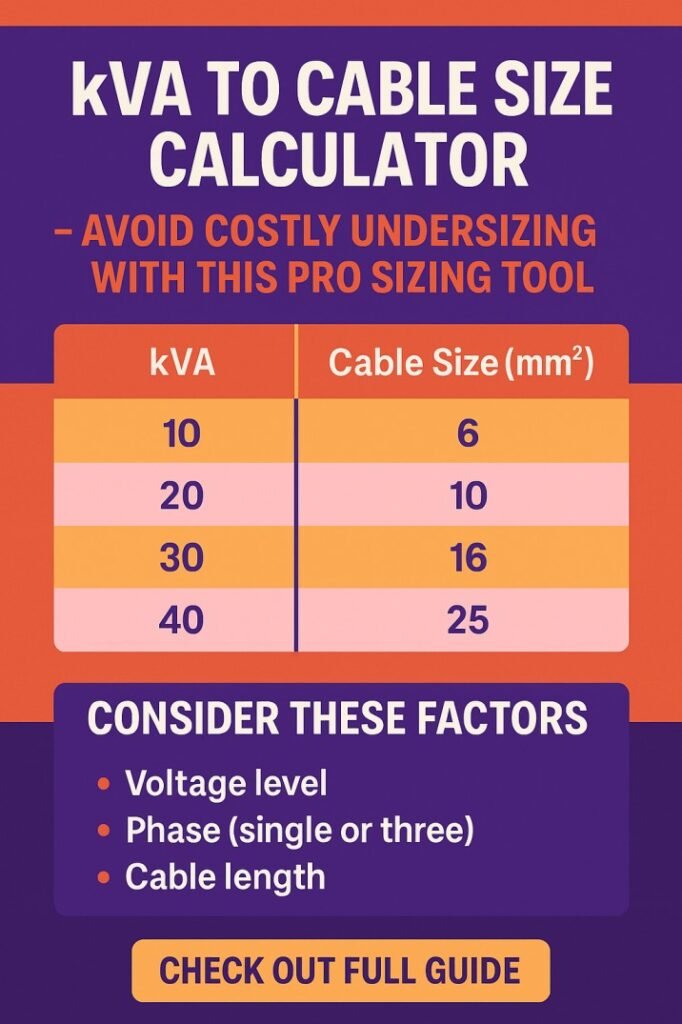
Table of Contents
This calculator is commonly used by electrical engineers, site electricians, project contractors, and maintenance teams. It helps ensure that cables can safely carry the required current without overheating, excessive voltage drop, or insulation stress. Accurate sizing is not only a performance issue but also a safety and compliance requirement in commercial and industrial electrical systems.
KVA to Cable Size Calculator
Enter the required kVA, system voltage, and installation details into the kVA to cable size calculator to get an estimated cable size.
Review the result carefully and compare it with site conditions before final selection.
KVA to Cable Size Calculator
Professional tool with IEC & NEC context for sizing cables from transformer/load KVA
Inputs
How to use
- Enter load in KVA, system voltage, power factor, and phase type.
- Select installation method to apply IEC/NEC derating context.
- Enter permissible voltage drop percentage.
- Click Calculate to see current, recommended cable size, and voltage drop check.
- Adjust inputs to reflect your project conditions and compliance requirements.
Technical notes
- Cable sizing considers current‑carrying capacity, voltage drop, and installation method.
- IEC/NEC tables provide detailed derating factors for soil, duct, and air installations.
- Results provide indicative sizing; always confirm with IEC/NEC tables and manufacturer data.
Find more Electrical Engineering Tools for easy electrical calculations and estimations.
How to Use KVA to Cable Size Calculator(Step-by-Step)
- Enter the load in kVA
Input the apparent power rating of the equipment, such as a transformer, motor group, or distribution board. - Select the system voltage
Choose the operating voltage of the circuit, for example 400 V for three-phase systems or 230 V for single-phase systems. - Choose the phase type
Indicate whether the supply is single-phase or three-phase, as this directly affects the current calculation. - Enter the power factor if required
For some loads, especially motors and mixed industrial loads, the power factor influences the real current flowing through the cable. - Consider installation conditions
Select the installation method if the calculator allows it, such as buried cable, cable tray, conduit, or free air. - Click calculate
The kVA to cable size calculator will estimate the load current and suggest a cable cross-sectional area suitable for that current.
Know more about Cable Size Chart Gland Guide for Engineers: NEC-Compliant Sizing, Selection & Best Applications
How the Calculation Works
The kVA to cable size calculator works by first converting apparent power into current. Apparent power represents the total electrical demand, including both useful power and reactive power. Once the voltage and phase type are known, the calculator determines how much current must flow through the cable to deliver that power.
After the current is known, the tool compares it with standard current-carrying capacities of common cable sizes. These capacities depend on conductor material, insulation type, and installation method. The calculator then selects a cable size that can safely handle the calculated current under typical conditions.
It also considers general assumptions about allowable temperature rise and safe operating limits. The final output is a recommended cable size that balances thermal performance and practical installation use.
Practical Electrical Example
Consider a small commercial workshop supplied by a 50 kVA three-phase load. The system operates at 400 V and includes a mix of lighting, small motors, and socket outlets.
First, the 50 kVA value is entered into the kVA to cable size calculator. The voltage is set to 400 V, and the supply type is selected as three-phase. A typical power factor for mixed loads, such as 0.9, may be used if the calculator requests it.
Designing electrical system? Use this clearance and creepage calculator for accurate distances
After calculation, the tool estimates the line current required to supply the workshop. Based on this current and standard cable ratings, it may suggest a specific copper cable size, for example in the range suitable for main distribution feeders.
The result tells the installer that this cable size can carry the expected load current under normal conditions. From there, voltage drop and installation factors should be checked before final approval.
Key Factors That Affect the Result
Several technical and environmental factors influence the cable size suggested by the kVA to cable size calculator:
- Voltage level
Higher voltage systems carry the same power with lower current, which can reduce the required cable size. - Load type
Motor loads, heating loads, and electronic equipment behave differently and can affect current and power factor. - Power factor
A lower power factor increases current for the same kVA value, which may require a larger cable. - Efficiency of equipment
Less efficient equipment may draw higher input power, increasing the current in the supply cable. - Installation method
Cables in conduit, underground ducts, or grouped with other cables cannot dissipate heat as easily as those in free air. - Ambient temperature
High surrounding temperatures reduce the current-carrying capacity of cables. - Length of cable run
Longer runs increase voltage drop, which may require a larger conductor size than current alone would suggest.
Use this tool if you are trying to calculate cable size for underground cables. Try here Underground Cable Size Calculator – Find Correct Wire Size for Long Distance Runs
Common Mistakes to Avoid
One common error is entering kW instead of kVA. The kVA to cable size calculator is based on apparent power, so using the wrong unit can significantly distort the current calculation.
Another frequent mistake is ignoring power factor. Assuming a perfect power factor when the actual load includes motors or inductive equipment can lead to undersized cables.
Users also sometimes select the wrong voltage level. Confusing line-to-line voltage with line-to-neutral voltage in three-phase systems can result in serious underestimation or overestimation of current.
Installation conditions are often overlooked. A cable that is safe in open air may overheat when installed in a tightly packed conduit or underground duct.
Why Use This KVA to Cable Size Calculator
The kVA to cable size calculator provides a fast and structured way to estimate cable sizes during design, planning, or site work. It reduces the need for manual conversions and repeated reference to current rating tables.
It supports engineering accuracy by linking load power directly to conductor selection. This helps in early-stage project decisions, budgeting, and equipment planning.
For contractors and maintenance teams, the tool saves time during troubleshooting or load expansion studies. Instead of relying on guesswork, users can base decisions on consistent electrical logic.
It also improves documentation quality, as calculated values can be recorded and reviewed during inspections or audits.
Discover how this tool works and why it’s worth using NEC Wire Size Calculator – Voltage Drop Compliant Sizing for 120V & 240V Circuits
Electrical Standards & Practical Considerations
Cable sizing must always align with recognized electrical standards and installation guidelines. These standards define safe current limits, insulation temperature ratings, and correction factors for different installation methods.
Following standard practices ensures that cables operate within their thermal limits, reducing the risk of insulation failure and fire hazards. It also helps maintain acceptable voltage levels at equipment terminals, which is important for motor performance and sensitive electronics.
In commercial and industrial environments, compliance with electrical codes is often required for approvals, insurance, and long-term system reliability. The kVA to cable size calculator is a helpful starting point, but final selection should always be checked against standard cable rating tables and site-specific conditions.
Take a look at this tool for a smarter way to handle feeder wire sizing Feeder Wire Size Calculator – Accurate Guide for Electricians and Homeowners
Frequently Asked Questions (FAQs)
What is the difference between kVA and kW when sizing cables?
kVA represents apparent power, while kW is real power. Cable current depends on apparent power, so kVA is generally used for cable sizing.
Can I use the same cable size for any installation method?
No. Installation method affects heat dissipation. Cables in ducts or grouped together usually require derating, which can increase the required size.
Does cable length affect the result from the calculator?
The calculator mainly focuses on current capacity. For long runs, voltage drop must also be checked, which may require a larger cable.
Is aluminum cable treated the same as copper in sizing?
No. Aluminum has lower conductivity than copper, so a larger cross-sectional area is typically needed for the same current.
Can this calculator replace detailed design calculations?
It is useful for estimation and planning, but final cable selection should always be verified with detailed calculations and standard reference tables.
Explore this tool here to simplify your work instantly Neutral Conductor Sizing Calculator – Accurate Neutral Wire Size for Electrical Circuits
Follow Us on Social:
Subscribe our Newsletter on Electrical Insights for latest updates from Electrical Engineering Hub
#KVAToCableSizeCalculator, #CableSizing, #ElectricalCalculations, #VoltageDrop, #CurrentRating, #ElectricalDesign, #PowerEngineering, #CableSelection, #LoadCalculation, #ElectricalTools