Car Charger Cable Size Calculator: Find the Perfect Wire for Fast & Safe EV Charging
Introduction
The car charger cable size calculator is a specialized tool designed to help electrical engineers, electricians, and contractors determine the correct wire size for charging electric vehicles safely and efficiently. With the growing adoption of electric cars, ensuring that the charging infrastructure is designed correctly is critical to prevent overheating, voltage drop, or energy losses.
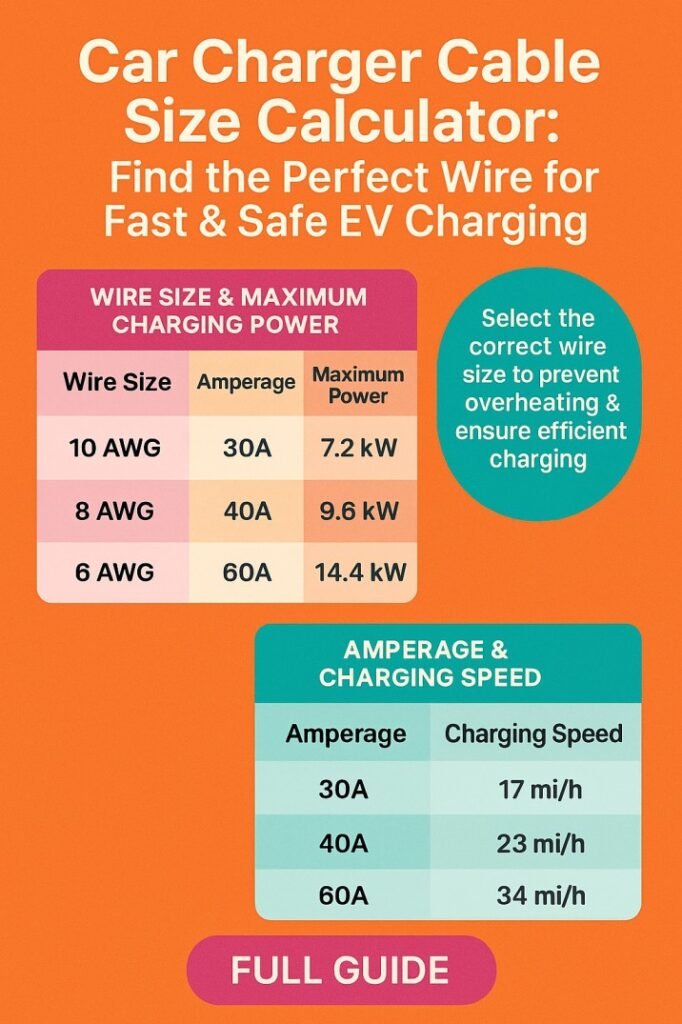
Table of Contents
Accurate electrical calculation is essential because undersized cables can compromise safety, reduce charging efficiency, and cause compliance issues with electrical standards. This calculator takes into account voltage, current, and distance to provide precise cable sizing recommendations, making it an indispensable tool for professional and industrial applications.
Use our online tool 3 phase cable size calculator
Car Charger Cable Size Calculator
Enter your electrical parameters below to determine the optimal cable size for your car charger. Simply provide the voltage, current, and cable length, then click calculate to get results instantly.
Car Charger Cable Size Calculator
How to Use
Enter charger power, voltage, power factor, cable length, conductor material, system type, and installation method. The calculator applies IEC/NEC formulas for design current and voltage drop to recommend the minimum cable cross‑section for safe EV charger installation.
Find more Electrical Engineering Tools for easy electrical calculations and estimations.
How to Use Car Charger Cable Size Calculator (Step-by-Step)
- Enter the operating voltage of the charger. This is usually the voltage supplied by your EVSE (Electric Vehicle Supply Equipment).
- Input the expected charging current. This value depends on your car’s onboard charger and the power rating of the charging point.
- Provide the cable length from the power source to the vehicle charging socket. This affects voltage drop.
- Click the calculate button to get the recommended cable size.
- Review the suggested wire specification and cross-check it with your installation environment.
Try our free online tool today ev charger cable size calculator
How the Calculation Works
The calculator evaluates the relationship between voltage, current, and cable length to ensure the wire can safely carry the charging load. It considers how electrical resistance causes voltage drop over distance, which can reduce charging efficiency and generate heat. The tool also factors in allowable temperature rise and standard cable ratings to provide a safe and reliable recommendation. By using these inputs, the calculator ensures the chosen cable will meet both performance and safety requirements for your charging setup.
Practical Electrical Example
Suppose an industrial facility is installing a 7 kW car charger operating at 230 volts, and the cable run from the distribution board to the charger is 15 meters.
- Given Values:
- Voltage: 230 V
- Charging Current: 32 A
- Cable Length: 15 m
- Input Selection:
Enter these values into the calculator. - Result Interpretation:
The calculator suggests a 6 mm² copper conductor. This cable size can safely handle the current with minimal voltage drop while ensuring compliance with standard installation guidelines. Engineers can use this information to source appropriate cables and plan installation without oversizing or risking unsafe conditions.
Start using our easy-to-use online tool earthing cable size calculator
Key Factors That Affect the Result
- Voltage Level: Higher voltages allow for smaller conductors, while lower voltages require thicker wires to carry the same current.
- Load Type: Continuous loads, like EV chargers, require cables rated for sustained current.
- Power Factor: While EV chargers are mostly resistive, reactive loads can increase current demands.
- Efficiency: Energy losses in cables are proportional to the square of the current; accurate sizing minimizes these losses.
- Environmental or Operational Conditions: Elevated temperatures, conduit bundling, or long cable runs may necessitate derating or larger conductors.
Common Mistakes to Avoid
- Ignoring Voltage Drop: Using too small a cable can reduce charging efficiency and overheat the wire.
- Overlooking Load Duration: Short-term and continuous loads require different considerations; using transient ratings can be misleading.
- Incorrect Cable Type: Selecting cables without proper insulation or temperature rating can lead to insulation degradation.
- Neglecting Standards: Failing to account for regional or international electrical guidelines can create compliance and safety issues.
- Misreading Input Units: Always ensure voltage, current, and distance are in compatible units to avoid calculation errors.
Check out this tool that makes the process much easier and faster MM to AWG Wire Size Calculator According to IEC and NEC
Why Use This Car Charger Cable Size Calculator
Using the car charger cable size calculator provides several practical benefits:
- Accuracy: Ensures the selected cable safely supports the specified current and voltage.
- Time-Saving: Eliminates manual calculations and reference checks for multiple scenarios.
- Engineering Reliability: Reduces risk of overheating, voltage drop, and inefficient charging.
- Decision-Making Support: Helps plan installations and budget cable requirements efficiently, making it easier to comply with industry standards. Explore details on ev battery degradation calculator
Electrical Standards & Practical Considerations
While this calculator provides accurate sizing recommendations, installations should always align with recognized electrical standards and guidelines. Proper adherence ensures system safety, optimizes performance, and prolongs cable and charger life. Using approved cable types, correct terminations, and protection devices are essential for safe operation in both residential and commercial environments.
Find out more about home ev charging station installation
Frequently Asked Questions (FAQs)
Q1: Can I use this calculator for high-power fast chargers?
Yes, the calculator is suitable for chargers of varying power levels, including fast chargers, as long as accurate voltage and current inputs are provided.
Q2: Does the cable material matter?
Yes, copper is typically recommended for its conductivity, but aluminum can also be used with adjusted sizing. Dive deeper into ev charger not working
Q3: How do I account for ambient temperature?
If the cable will operate in high-temperature conditions, consider using cables with higher temperature ratings or apply derating factors.
Q4: What happens if I choose a smaller cable than recommended?
Undersized cables can overheat, cause energy loss, and fail safety inspections. Always follow recommended sizing.
Q5: Is this calculator suitable for both residential and industrial installations?
Yes, it provides accurate recommendations for a wide range of installation scenarios, including home charging points and industrial EVSE setups.
Use our online tool EV Range Calculator: Instantly Estimate Your Electric Car Driving Distance
Follow Us on Social:
Subscribe our Newsletter on Electrical Insights for latest updates from Electrical Engineering Hub
#CarChargerCable, #CableSizeCalculator, #EVCharging, #ElectricCarTips, #FastCharging, #EVAccessories, #CarChargingGuide, #CableSafety, #EVDIY, #ChargingEfficiency