Internal Arc Testing of Medium Voltage Switchgear – Standards, Test Methods, and Safety Compliance Guide
Medium voltage power systems play a critical role in electrical distribution networks, industrial plants, and utility infrastructure. One of the most serious hazards associated with these systems is an internal arc fault. Such faults can generate extreme temperatures, pressure waves, and molten metal that pose severe risks to equipment and personnel. For this reason, internal arc testing of medium voltage switchgear has become an essential part of switchgear design verification and safety certification.

Table of Contents
Manufacturers and utilities rely on internal arc testing procedures to ensure that switchgear assemblies can safely withstand arc faults while protecting operators nearby. International standards have introduced strict testing procedures to simulate real-life arc conditions and confirm that equipment meets defined safety requirements. Understanding how internal arc testing works helps engineers, inspectors, and maintenance teams select safer electrical equipment for critical installations.
Understanding Internal Arc Faults in Medium Voltage Switchgear
An internal arc fault occurs when insulation failure, contamination, or mechanical damage causes an electrical arc inside the switchgear enclosure. These arcs can reach temperatures exceeding 20,000°C, instantly vaporizing copper and generating high-pressure gas.
Know more about GIS vs AIS Switchgear: Best Key Differences Every Electrical Engineer Must Know
Typical causes of internal arc faults include:
- Insulation degradation
- Loose connections or poor contact surfaces
- Foreign objects entering the enclosure
- Human error during maintenance
- Switching operations under abnormal conditions
When these faults occur, the resulting energy release can cause severe damage. Without proper design and testing, switchgear panels may rupture, sending hot gases and metal fragments into the surrounding environment.
This is why internal arc testing of medium voltage switchgear is conducted to evaluate how well the enclosure contains and redirects arc energy during such events.
Importance of Internal Arc Testing for Electrical Safety
Electrical installations in substations, factories, and power plants operate at voltages typically ranging from 1 kV to 36 kV. At these levels, arc faults can cause catastrophic consequences.
Internal arc testing verifies several safety aspects:
| Safety Aspect | Purpose |
|---|---|
| Personnel Protection | Ensures hot gases and debris are directed away from operators |
| Structural Integrity | Confirms that switchgear enclosures remain intact during faults |
| Pressure Relief | Tests the effectiveness of pressure relief flaps or ducts |
| Accessibility Classification | Defines safe operating areas around switchgear |
| Equipment Reliability | Validates design against worst-case fault scenarios |
Switchgear that successfully passes internal arc testing of medium voltage switchgear is assigned an Internal Arc Classification (IAC) rating, which indicates the level of protection provided to personnel.
Find more about Low Voltage Switchgear vs Medium Voltage Switchgear: Important Differences Every Engineer Must Know
International Standards for Internal Arc Testing
Several international standards govern arc fault testing procedures. These standards define test parameters, acceptance criteria, and safety classifications.
The most widely used standards include:
| Standard | Organization | Description |
|---|---|---|
| IEC 62271-200 | International Electrotechnical Commission | Primary standard for MV switchgear arc classification |
| IEEE C37.20.7 | IEEE | Arc-resistant switchgear testing guide |
| IEC TR 61641 | IEC | Guide for internal arc testing of low voltage assemblies |
| ANSI C37 Series | ANSI | North American switchgear testing framework |
Among these, IEC 62271-200 is the most recognized standard used globally for internal arc testing of medium voltage switchgear.
This standard defines test accessibility types such as Type A (authorized personnel) and Type B (general public) along with arc duration and current ratings.
Find all about Top 15 Medium Voltage Switchgear Manufacturers in UAE: Ultimate Guide for Engineers & Buyers
Test Setup for Internal Arc Testing
To replicate real arc fault conditions, laboratories use controlled testing environments with specialized equipment and measurement systems.
A typical test arrangement includes:
- A short-circuit power source capable of delivering high fault current
- Test switchgear panel installed in a realistic configuration
- Copper wire or fuse used to initiate the arc
- Cotton indicators placed around the enclosure
- Pressure and temperature sensors
The purpose of this setup is to determine whether flames, hot gases, or metal particles escape from the enclosure during the test.
| Test Parameter | Typical Range |
|---|---|
| Fault Current | 16 kA – 50 kA |
| Test Duration | 0.1 – 1 second |
| Voltage Level | 3.3 kV – 36 kV |
| Arc Initiation Method | Copper wire trigger |
During internal arc testing of medium voltage switchgear, the arc is intentionally initiated inside the panel while monitoring how the enclosure handles the intense energy release.
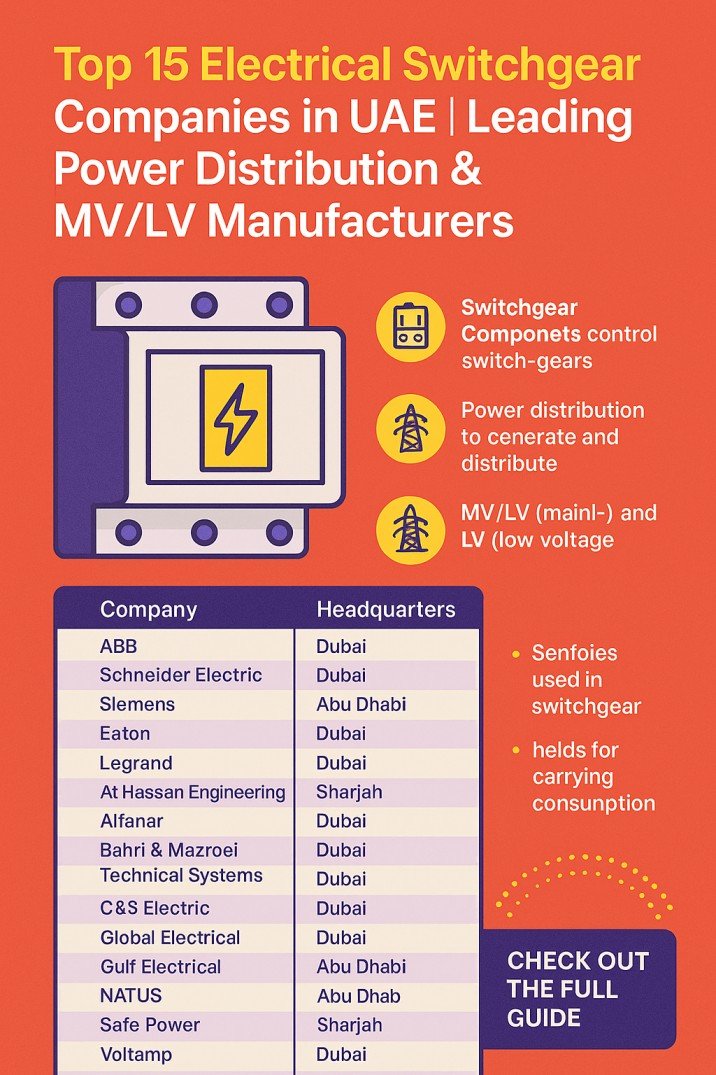
Know more about Top 15 Electrical Switchgear Companies in UAE | Leading Power Distribution & MV/LV Manufacturers
Internal Arc Classification Explained
After testing, switchgear is assigned an Internal Arc Classification (IAC) rating. This rating provides information about fault current level, duration, and accessibility.
The classification format generally follows this structure:
IAC AFLR 31.5 kA 1s
Where:
| Symbol | Meaning |
|---|---|
| A | Accessibility for authorized personnel |
| F | Front side protection |
| L | Lateral side protection |
| R | Rear side protection |
| 31.5 kA | Tested fault current |
| 1s | Arc duration |
When internal arc testing of medium voltage switchgear confirms that the enclosure successfully contains the arc, the equipment can be certified with the corresponding IAC rating.
This rating helps engineers determine safe installation clearances and operational zones around switchgear assemblies.
Know more about Top 15 Electrical Switchgear Companies in UAE
Acceptance Criteria During Arc Testing
Switchgear must satisfy strict performance criteria to pass the arc test. These requirements ensure that the enclosure effectively protects nearby personnel.
Common acceptance conditions include:
- Doors and covers must remain closed during the arc event
- No fragmentation of the enclosure is allowed
- Indicators placed around the panel must not ignite
- Hot gases should be directed away from operator positions
- Earthing continuity must remain intact
If any of these conditions fail during internal arc testing of medium voltage switchgear, the design must be modified and retested.
Safety Design Features in Arc Resistant Switchgear
Manufacturers incorporate several design features to improve arc fault containment and ensure compliance with testing standards.
Some key design elements include:
| Design Feature | Function |
|---|---|
| Pressure Relief Flaps | Release high-pressure gases safely |
| Arc Exhaust Ducts | Direct gases away from personnel |
| Reinforced Enclosures | Prevent panel rupture |
| Metal Shutters | Isolate energized components |
| Compartmentalization | Limit arc propagation |
These features significantly improve the performance of switchgear during internal arc testing of medium voltage switchgear and increase overall system safety.
Find all about Top 15 Medium Voltage Switchgear Manufacturers in UAE
Test Methods Used by Accredited Laboratories
Accredited high-power laboratories conduct arc fault testing using standardized procedures. The process typically follows several steps.
- Installation of the test switchgear in a controlled test chamber
- Placement of cotton indicators around the equipment
- Application of rated voltage conditions
- Initiation of the internal arc fault
- Recording of pressure, temperature, and fault current
- Post-test inspection of the equipment
High-speed cameras and thermal sensors are often used to analyze arc behavior. The collected data confirms whether the switchgear passes the internal arc testing of medium voltage switchgear requirements defined by international standards.
Practical Applications in Power Systems
Arc-tested switchgear is commonly used in environments where operator safety is critical. Industries handling large electrical loads depend heavily on such equipment.
Typical applications include:
- Utility substations
- Industrial manufacturing plants
- Oil and gas facilities
- Mining operations
- Renewable energy power stations
- Commercial building distribution systems
In these installations, proper internal arc testing of medium voltage switchgear helps reduce downtime, improve operational safety, and comply with regulatory requirements.
Know more about Top 12 Switchgear Training Courses in USA
Maintenance Considerations After Arc Tested Installation
Even when equipment has passed arc testing, proper maintenance remains essential. Internal arc faults are often triggered by poor maintenance practices or environmental contamination.
Recommended practices include:
- Periodic thermal imaging inspections
- Tightening of busbar and cable connections
- Cleaning of dust and moisture accumulation
- Verification of protection relay settings
- Routine insulation resistance testing
Maintaining equipment according to manufacturer recommendations ensures that the switchgear continues to perform as intended after passing internal arc testing of medium voltage switchgear.
Know more about Industrial Control Panel Design Software – Best Tools, Features & Pro Tips for Engineers
Conclusion
Internal arc faults represent one of the most dangerous events in medium voltage electrical systems. The intense heat, pressure, and mechanical stress generated during such faults can cause severe damage and endanger personnel. For this reason, internal arc testing of medium voltage switchgear is a critical step in verifying the safety and reliability of switchgear assemblies.
International standards such as IEC 62271-200 and IEEE C37.20.7 define strict testing methods to simulate real fault conditions and evaluate switchgear performance. Through controlled laboratory testing, manufacturers can confirm that their equipment safely contains arc energy and protects nearby operators.
Use our online tool for free Wire Size Calculator for Subpanels and Feeders – NEC Guidelines Included
Follow Us on Social:
Subscribe our Newsletter on Electrical Insights for latest updates from Electrical Engineering Hub
#InternalArcTesting, #MediumVoltageSwitchgear, #SwitchgearTesting, #ElectricalEngineering, #PowerDistribution, #ArcFaultSafety, #MVSwitchgear, #ElectricalTesting, #PowerSystemProtection, #SubstationEngineering