IEC 60364 Wiring Regulations: Standards for LV Electrical Installations in EU Engineers Can’t Afford to Ignore
Electrical engineers working across Europe are constantly challenged to keep up with evolving safety standards and installation codes. Among these, the IEC 60364 wiring regulations are universally recognized as a critical benchmark for designing and installing low-voltage (LV) electrical systems. Understanding these regulations is not only a matter of compliance but also a key factor in ensuring safety, reliability, and efficiency across residential, commercial, and industrial projects.
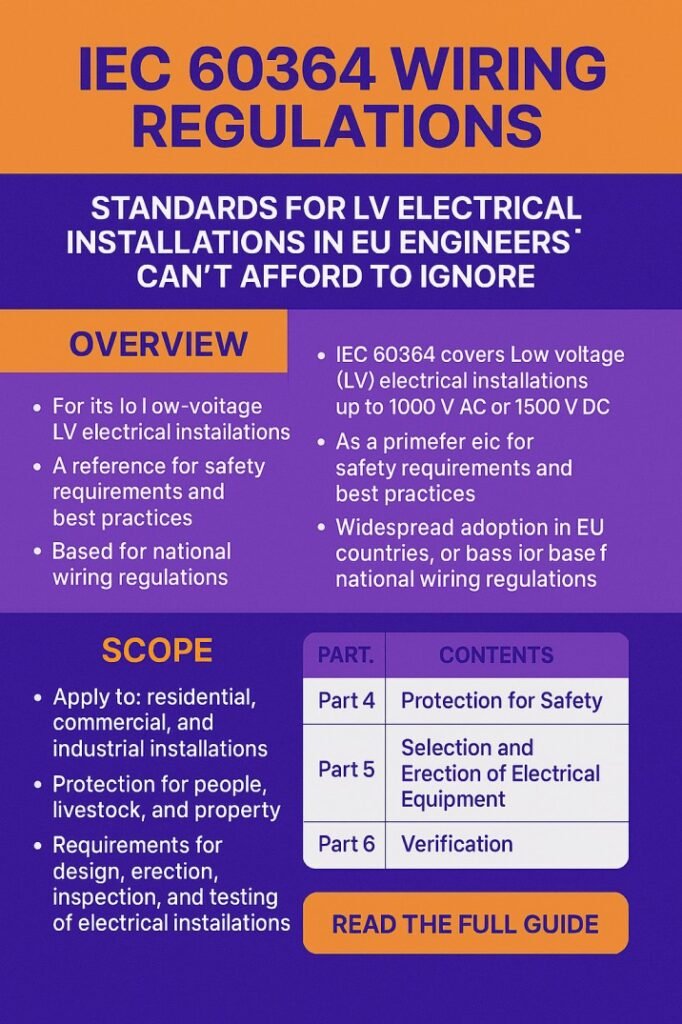
Table of Contents
The IEC 60364 series, issued by the International Electrotechnical Commission (IEC), sets out the general rules, protection measures, and technical requirements for electrical installations. In essence, these regulations provide a comprehensive framework for engineers to follow when designing LV systems, ranging from circuit layouts to protective device selection, grounding techniques, and maintenance protocols. For any engineer operating in EU countries, familiarity with these standards is indispensable.
Know more about Industrial Control Panel Design Software – Best Tools, Features & Pro Tips for Engineers
Core Principles of IEC 60364 Wiring Regulations
The IEC 60364 wiring regulations are built on several core principles that guide safe electrical design. These include the protection of persons and livestock against electric shock, safeguarding property from fire hazards, ensuring continuity of service, and providing guidelines for energy efficiency.
A key aspect of the regulations is risk-based planning. Engineers are required to analyze potential hazards, including short circuits, overcurrent, and insulation failures, and select appropriate protective devices accordingly. The standards also emphasize the use of harmonized components, ensuring interoperability and minimizing installation errors.
LV Electrical Installations and Compliance Requirements
Low-voltage installations, typically defined as systems operating below 1,000 V AC or 1,500 V DC, are widespread in domestic and commercial buildings. Compliance with IEC 60364 wiring regulations ensures that these systems are designed to prevent hazards while optimizing performance.
Key requirements include:
- Circuit Protection: Installation of circuit breakers, fuses, and residual current devices (RCDs) to prevent overloads and electric shocks.
- Earthing and Bonding: Proper grounding methods to prevent dangerous potential differences and ensure safety during faults.
- Wiring Methods: Guidelines for cable selection, routing, and support to avoid mechanical damage and overheating.
- Voltage Drop Limits: Ensuring the voltage drop does not exceed recommended limits to maintain efficient operation of equipment.
- Documentation: Maintaining accurate wiring diagrams, installation records, and test results for future reference and inspections.
Compliance is monitored through inspection and testing, making it essential for engineers to not only understand the theory but also implement it practically during installation.
Use our online tool for free Wire Size Calculator for Subpanels and Feeders – NEC Guidelines Included
Protective Measures and Device Selection
The regulations provide clear instructions for protective devices. Selection depends on the system type, load characteristics, and potential hazards. Below is a simplified table summarizing key protective measures as per IEC 60364 standards:
| Protection Type | Purpose | Recommended Device | Key Considerations |
|---|---|---|---|
| Overcurrent Protection | Prevents conductor overheating | Circuit breakers, fuses | Rated current and breaking capacity should match circuit design |
| Residual Current Protection | Protects against electric shock | RCDs (Type AC/Type A) | Sensitivity typically 30 mA for general use |
| Short Circuit Protection | Avoids equipment damage | MCBs, fuses | Coordination with upstream protection devices |
| Earth Fault Protection | Safety during insulation failures | Grounding, equipotential bonding | Ensure all metallic parts are bonded |
This table serves as a practical guide for engineers to quickly reference the correct protection method for different scenarios while adhering to IEC 60364 wiring regulations.
Know more about IEC Standard for MV Cable Testing: Complete Acceptance, Routine & Type Test Guide
Common Challenges in LV Installations
Even experienced engineers encounter challenges when applying these electrical engineering standards. Incomplete documentation, improper cable sizing, and inadequate earthing practices are among the most frequent issues. Voltage drops, electromagnetic interference, and thermal effects also require careful consideration during the design phase.
Another challenge lies in integrating modern electrical loads such as EV chargers, renewable energy systems, and smart home devices. These require updated knowledge of harmonics, load balancing, and energy efficiency measures, all covered under IEC 60364 wiring regulations.
Practical Tips for Engineers
Engineers working in EU countries can benefit from a few practical strategies to ensure full compliance:
- Regularly Update Knowledge: IEC standards are periodically revised. Staying informed ensures designs meet current safety and performance requirements.
- Use Standardized Components: Employing harmonized devices reduces installation errors and simplifies maintenance.
- Document Every Step: Accurate wiring diagrams, labeling, and test reports not only aid inspections but also streamline future upgrades or troubleshooting.
- Verify Earthing Systems: Conduct regular tests for continuity and resistance to maintain optimal safety levels.
- Plan for Future Loads: Designing with scalability in mind avoids costly retrofits and ensures long-term compliance.
Case Study: Residential Installation Compliance
Consider a typical 3-bedroom house in Germany with a total connected load of 10 kW. Applying IEC 60364 wiring regulations, engineers would start by calculating load distribution across multiple circuits, ensuring each circuit is protected with appropriately rated MCBs. RCDs would be installed for all socket outlets, and a comprehensive earthing system with equipotential bonding would be included. Voltage drop calculations would ensure appliances receive stable supply, while all installation details would be meticulously documented for inspection.
Know more about Phase to Phase Clearance as per IEC 61439: Best Guide
This approach minimizes risk, enhances efficiency, and guarantees that the installation meets both EU directives and IEC standards.
Benefits of Following IEC 60364 Wiring Regulations
Adhering to these regulations provides multiple benefits beyond legal compliance:
- Enhanced Safety: Reduces the risk of electric shock, fire, and equipment damage.
- Improved Reliability: Proper circuit design and protective measures minimize downtime.
- Cost Efficiency: Prevents costly retrofits, repairs, and liability issues.
- Energy Efficiency: Proper design reduces losses and optimizes consumption.
- Professional Credibility: Compliance demonstrates expertise and professionalism in the engineering community.
Use our online tool Creepage Distance Calculator – Calculate Safe Insulation & Clearance for PCB and High Voltage Design
Conclusion
For electrical engineers in Europe, understanding and implementing IEC 60364 wiring regulations is non-negotiable. From circuit design to protective measures and documentation, these standards cover every aspect of LV electrical installations. Adhering to them not only ensures legal compliance but also protects lives, property, and investments.
Whether you are handling residential projects, commercial buildings, or industrial installations, these regulations provide the roadmap to safe, reliable, and efficient electrical systems. Engineers who ignore or underestimate the importance of IEC 60364 risk safety hazards, legal consequences, and reputational damage. Mastery of these standards is therefore essential for every professional committed to excellence in electrical engineering.
Know more about Electrical Standards USA – National Electrical Code | Electrical Safety Foundation
Follow Us on Social:
Subscribe our Newsletter on Electrical Insights for latest updates from Electrical Engineering Hub
#IEC60364, #ElectricalStandards, #LVInstallations, #EURegulations, #ElectricalEngineering, #WiringRegulations, #PowerDistribution, #ElectricalSafety, #BuildingServicesEngineering, #ComplianceStandards
