Transformers Earthspark Size Chart – Accurate Selection & Load Calculation Guide
Selecting the right transformer is a critical step in ensuring the reliability, efficiency, and safety of any electrical installation. For engineers, electricians, and facility managers, the transformers Earthspark size chart serves as an essential tool for making informed decisions. This guide will explain how to use the Earthspark transformer size chart effectively, provide insights on load calculation, and offer practical tips to ensure optimal performance.
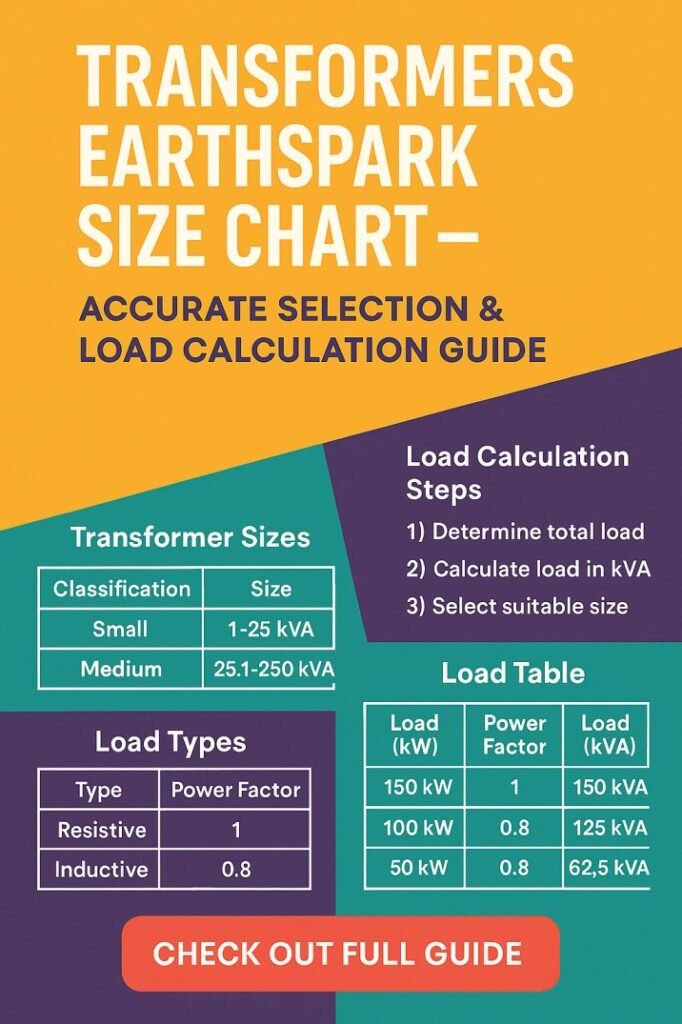
Table of Contents
Understanding Transformers and Their Importance
Transformers are electrical devices that transfer energy between two or more circuits through electromagnetic induction. They are vital for adjusting voltage levels in power distribution, enabling electricity to travel efficiently from generation sources to end users. Using a transformer that is either undersized or oversized can lead to energy losses, overheating, and even equipment failure. Therefore, consulting a transformers Earthspark size chart ensures you choose a transformer that matches your specific load requirements accurately.
Test our online tool for free Transformer Full Load Current Calculator – Accurate Load & Current Calculation Tool for Transformers
What is the Transformers Earthspark Size Chart?
The transformers Earthspark size chart is a reference table that lists transformer capacities based on input and output voltages, load current, and power ratings. It helps in selecting the correct transformer for residential, commercial, or industrial applications. The chart provides clear information on single-phase and three-phase transformers, their rated kVA, and recommended usage for different types of loads.
Key Factors in Transformer Selection
Before using the Earthspark size chart, it is important to understand the factors that influence transformer selection:
- Load Type: Identify whether the load is resistive, inductive, or a combination. Motors, HVAC systems, and heavy machinery require transformers capable of handling starting currents and power fluctuations.
- Voltage Rating: Ensure that the primary and secondary voltage ratings of the transformer match your supply and equipment needs.
- kVA Rating: The apparent power rating (kVA) determines the maximum load the transformer can handle safely. Choosing a transformer with an appropriate kVA ensures efficiency and longevity.
- Ambient Conditions: Temperature, humidity, and altitude can affect transformer performance. Earthspark transformers are designed to perform reliably under standard environmental conditions.
Try our free online tool Transformer Temperature Rise Calculator: Accurate and Easy Guide
How to Read the Transformers Earthspark Size Chart
The Earthspark size chart typically presents data in a table format with columns such as transformer type, kVA rating, voltage, and maximum load current. Here is an example of a simplified transformers Earthspark size chart for residential and commercial applications:
| Transformer Type | Primary Voltage (V) | Secondary Voltage (V) | kVA Rating | Max Load Current (A) |
|---|---|---|---|---|
| Single-phase | 230 | 115 | 1.0 | 4.35 |
| Single-phase | 230 | 115 | 2.5 | 10.87 |
| Three-phase | 415 | 230 | 5.0 | 6.9 |
| Three-phase | 415 | 230 | 10.0 | 13.9 |
| Three-phase | 415 | 230 | 25.0 | 34.8 |
| Three-phase | 415 | 230 | 50.0 | 69.6 |
This table shows a clear correlation between transformer rating and maximum load current, which is crucial for selecting a transformer that matches your energy requirements. Using the transformers Earthspark size chart ensures that you avoid underloading or overloading your equipment.
Access our online tool completely free Transformer Vector Group Calculation Tool | Easy & Accurate Vector Group Calculator
Accurate Load Calculation for Transformers
Proper load calculation is essential to ensure the transformer operates efficiently without overheating. The formula for calculating the required kVA is:
kVA = (Voltage × Current × √3) / 1000 for three-phase systems
kVA = (Voltage × Current) / 1000 for single-phase systems
For example, if you have a three-phase load of 20 A at 415 V, the required kVA would be:
kVA = (415 × 20 × √3) / 1000 ≈ 14.36 kVA
By referring to the transformers Earthspark size chart, you can select the nearest higher standard rating, such as a 15 kVA or 20 kVA transformer, to ensure safe operation.
Get started with our free online tool Transformer Efficiency Calculator – Calculate Power, Losses & Performance Instantly
Tips for Selecting the Right Transformer
- Add a Safety Margin: Always select a transformer with a kVA rating 10-20% higher than the calculated load to accommodate future expansion or unexpected load spikes.
- Consider Efficiency: Transformers operate most efficiently at 70-80% of their rated capacity. Oversized transformers may waste energy.
- Check Short-Circuit Ratings: Ensure the transformer can handle potential short-circuit currents without damage.
- Review Manufacturer Specifications: Earthspark transformers come with detailed datasheets. Cross-check ratings, losses, and temperature rise to ensure suitability.
Use our online tool without paying anything Transformer Impedance Calculation Tool – Accurate Transformer Impedance Calculator for Engineers
Common Applications of Earthspark Transformers
Earthspark transformers are used in a variety of applications, including:
- Residential homes for voltage step-down
- Commercial buildings for lighting and HVAC systems
- Industrial facilities for motor-driven equipment
- Renewable energy systems such as solar and wind integration
Selecting the right size using the transformers Earthspark size chart guarantees reliability, reduces downtime, and improves energy efficiency.
Start using our online tool today — it’s free Transformer Short Circuit Calculator – Accurate Fault Current & Transformer Protection Tool
Conclusion
The transformers Earthspark size chart is an indispensable resource for anyone involved in electrical system design or maintenance. By understanding how to read the chart, calculate loads accurately, and apply safety and efficiency considerations, you can ensure optimal transformer selection. Using the chart not only improves system reliability but also helps in minimizing energy losses and equipment failures. Always pair practical calculations with the chart recommendations to make the best choice for your electrical installations.
By integrating this approach, engineers and electricians can make confident, accurate decisions for residential, commercial, or industrial transformer applications, ensuring long-term performance and safety.
Follow Us on Social:
Subscribe our Newsletter on Electrical Insights for latest updates from Electrical Engineering Hub
#TransformersEarthsparkSizeChart, #TransformerSizing, #ElectricalEngineering, #PowerSystems, #EVCharger, #EnergySolutions, #ElectricalDesign, #LoadCalculation, #IndustrialTransformers, #SmartGrid