Renewable Energy Grid Compliance UK: Essential Rules for Connecting Solar, Wind, and Storage Systems
The transition to renewable energy is accelerating across the United Kingdom, with solar panels, wind turbines, and energy storage systems becoming integral to the national grid. However, integrating these technologies is not as simple as installing equipment; it requires strict adherence to renewable energy grid compliance UK standards. Compliance ensures safety, stability, and efficiency while maintaining the integrity of the electricity network. Understanding these rules is crucial for developers, installers, and energy managers looking to connect renewable systems to the UK grid.
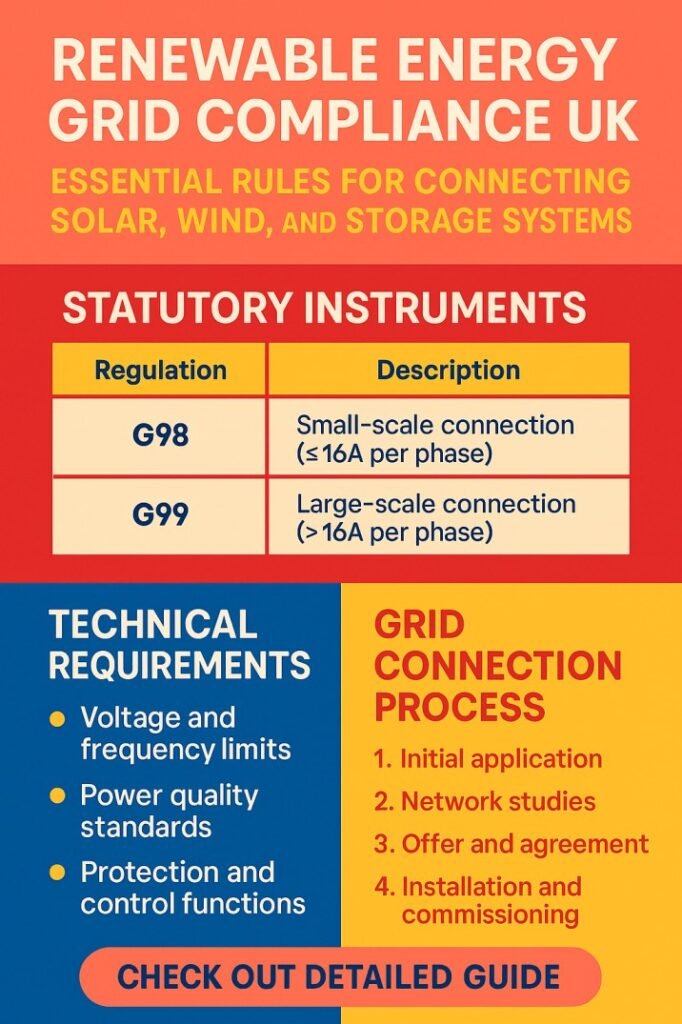
Table of Contents
Understanding Renewable Energy Grid Compliance UK
Renewable energy grid compliance UK involves meeting technical, operational, and safety standards set by regulatory authorities, including Ofgem, the Electricity Networks Association (ENA), and National Grid Electricity System Operator (ESO). Compliance guarantees that distributed energy resources (DERs) such as solar PV, wind farms, and battery storage systems operate harmoniously with the national electricity network, avoiding voltage fluctuations, frequency deviations, and potential power outages.
Know more about G99 Grid Connection Standard: Guide to Compliance, Safety & Efficient Integration
Grid compliance is not just a legal requirement; it is also a practical measure to protect equipment and ensure long-term economic viability. Non-compliance can lead to fines, disconnection from the grid, or rejection of feed-in tariffs, making it essential for project developers to follow the rules from the planning phase.
Key Standards and Regulations
Several standards govern the connection of renewable energy systems to the UK grid. The most relevant include:
| Standard/Regulation | Description | Applicable Technology |
|---|---|---|
| ENA Engineering Recommendation G99 | Governs connection of generation systems >16A per phase | Solar, Wind, Storage |
| ENA Engineering Recommendation G98 | Applies to smaller generation <16A per phase | Rooftop Solar, Small Storage |
| BS EN 50549 | Grid connection of generators in parallel with public distribution networks | All DERs |
| Grid Code (National Grid ESO) | Sets operational, frequency, and voltage standards | Utility-scale Wind & Solar |
| Ofgem Connection Standards | Legal framework for safety, contracts, and billing | All connected systems |
Following these standards ensures that your renewable system operates safely, avoids damaging the grid, and qualifies for financial incentives such as the Smart Export Guarantee (SEG).
Explore Top 30 UK G99 Grid Connection Interview Questions: Master Your Power System Job Prep
Connecting Solar Energy Systems
Solar PV systems are among the most common distributed energy resources in the UK. Connection to the grid requires both technical and regulatory compliance. Key steps include:
- Submitting a grid connection application to the Distribution Network Operator (DNO).
- Ensuring compliance with G98/G99 depending on system size.
- Installing protection devices to prevent reverse power flow and voltage fluctuations.
- Adhering to metering requirements under SEG for export of excess energy.
Solar installations often face challenges related to local grid capacity. Overloading a local distribution network can cause voltage instability. Pre-connection studies by DNOs are essential to assess the network’s capability to handle new solar generation.
Integrating Wind Energy Systems
Wind power plays a significant role in the UK’s renewable strategy, especially for large-scale offshore and onshore projects. Wind turbines must meet renewable energy grid compliance UK standards that address frequency response, fault ride-through, and reactive power capabilities. Compliance steps include:
- Conducting a connection impact assessment with the DNO or National Grid.
- Installing turbine controllers that meet grid code requirements.
- Implementing protection relays for voltage and frequency disturbances.
Know more about UK G100 HV Grid Standards: Compliance Rules, Export Limitation & DNO Approval Guide
Large wind farms may require additional studies such as dynamic simulations and short-circuit analysis to verify grid stability. Compliance ensures wind energy is delivered reliably and avoids penalties.
Energy Storage Systems Compliance
Battery storage and hybrid energy systems are increasingly common for balancing intermittent renewable generation. Compliance for storage systems involves:
- Following G99 for larger installations (>16A per phase).
- Ensuring bidirectional power control to maintain voltage and frequency stability.
- Integrating with demand response systems for optimized grid interaction.
Energy storage compliance is vital because storage systems can inject power into the grid, potentially causing voltage surges if not properly managed.
Technical Requirements for Compliance
Across solar, wind, and storage technologies, several technical criteria are fundamental for grid compliance:
| Requirement | Description | Why It Matters |
|---|---|---|
| Voltage Control | Systems must maintain voltage within ±10% of nominal | Prevents equipment damage |
| Frequency Response | Ability to respond to grid frequency changes | Ensures network stability |
| Fault Ride-Through | Systems stay connected during short-term faults | Avoids cascading disconnections |
| Protection Systems | Relays, breakers, and fuses installed correctly | Prevents accidents and equipment failure |
| Communication Protocols | Integration with DNO and National Grid monitoring | Enables grid management and reporting |
Ensuring these criteria are met during design and installation significantly reduces the risk of disconnection and ensures long-term operational reliability.
Find all about Ofgem Electricity Regulations Explained: Key UK Compliance Rules Every Energy Professional Must Know
Compliance Process
The process of achieving renewable energy grid compliance UK can be summarized as follows:
- Pre-connection Assessment: Identify grid capacity, local regulations, and potential network constraints.
- Design and Engineering: Select equipment and control systems that meet G98/G99 and BS EN 50549 standards.
- Application Submission: Submit necessary forms to the DNO, including technical specifications and site details.
- Testing and Certification: Conduct on-site testing and obtain approval certificates from regulatory authorities.
- Connection and Monitoring: Integrate the system with the grid and continuously monitor performance to ensure ongoing compliance.
Following this structured approach prevents delays and ensures smooth integration with the UK electricity network.
Common Challenges and Solutions
Renewable energy projects often face challenges in achieving grid compliance. Common issues include:
- Limited Grid Capacity: Network upgrades may be required for larger systems.
- Complex Approval Process: Early engagement with DNOs can reduce delays.
- Equipment Non-compliance: Using certified equipment and hiring experienced engineers mitigates risks.
Understanding these challenges early and planning accordingly ensures compliance without unnecessary cost or time overruns.
Here is a quick guide where you can find Best Batteries for Solar Panels in UK (2025) – Top Solar Storage Options for Homes
Benefits of Compliance
Adhering to renewable energy grid compliance UK standards offers multiple benefits:
- Guarantees safety for users and the local network.
- Enables participation in government incentive schemes like SEG and Contracts for Difference (CfD).
- Enhances system reliability and performance.
- Minimizes financial and legal risks.
Compliance also builds trust with stakeholders, investors, and regulatory bodies, which is crucial for long-term project success.
Future Trends
The UK government is encouraging smart grid technologies and more distributed energy resources. Compliance standards are evolving to incorporate:
- Advanced energy storage integration.
- Grid-supportive inverters with real-time communication.
- Automated demand response systems.
Staying updated on emerging standards ensures that renewable energy systems remain compliant and efficient.
Learn more about Top 15 Best Electrical Courses in UK: Industrial Trainings Which Pay More
Conclusion
Achieving renewable energy grid compliance UK is essential for anyone looking to connect solar, wind, or storage systems to the UK grid. Compliance is not just a regulatory obligation but a practical requirement to maintain grid stability, safety, and long-term economic benefits. By following ENA G98/G99 standards, National Grid codes, and relevant technical guidelines, renewable energy projects can operate efficiently while contributing to the UK’s sustainable energy future.
Early planning, proper equipment selection, and proactive engagement with grid operators are key steps toward achieving successful compliance and ensuring renewable energy systems deliver maximum value.
Follow Us on Social:
Subscribe our Newsletter on Electrical Insights for latest updates from Electrical Engineering Hub
#RenewableEnergyGridComplianceUK, #SolarGridConnectionUK, #WindEnergyUK, #EnergyStorageCompliance, #UKRenewableStandards, #GridConnectionRules, #CleanEnergyUK, #SolarWindIntegration, #RenewableEnergyStandards, #UKEnergyRegulations