Electrical Engineer Salary in Germany: Complete Guide to Pay, Benefits & Career Growth
Germany has long been recognized as a hub for engineering excellence, and electrical engineers are in high demand across industries ranging from automotive and energy to electronics and manufacturing. For professionals considering relocation or career growth within Germany, understanding the electrical engineer salary in Germany is crucial. This guide provides a comprehensive overview of salary expectations, benefits, career progression, and factors influencing pay for electrical engineers in Germany.
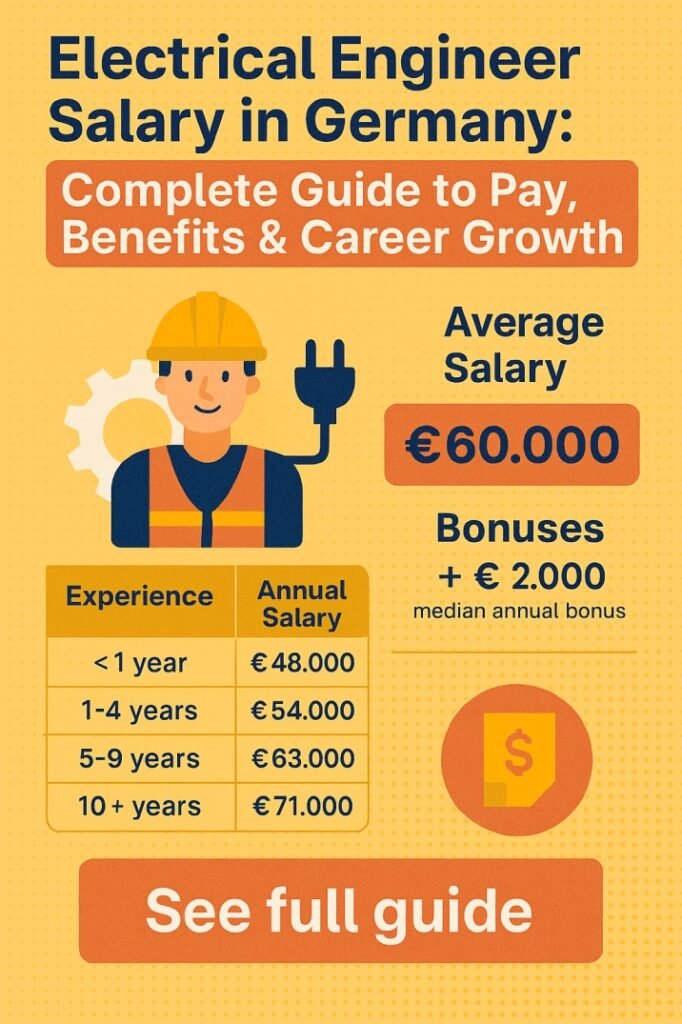
Table of Contents
Average Electrical Engineer Salary in Germany
The average electrical engineer salary in Germany varies depending on experience, location, industry, and education level. On average, electrical engineers earn between €50,000 and €70,000 annually. Entry-level positions typically start at around €45,000 per year, while experienced professionals and specialists can earn up to €90,000 or more.
| Experience Level | Average Salary (Gross per Year) | Notes |
|---|---|---|
| Entry-Level (0-2 years) | €45,000 – €52,000 | Fresh graduates or interns in small to mid-sized firms |
| Mid-Level (3-7 years) | €55,000 – €70,000 | Engineers with project management experience or specialization |
| Senior-Level (8+ years) | €75,000 – €90,000 | Senior engineers, team leads, or project managers |
| Specialist/Expert | €90,000+ | Highly specialized engineers, R&D roles, or consulting positions |
These figures reflect gross income before taxes, which in Germany can range from 30% to 45%, depending on your income bracket and personal circumstances. Net salary, which is take-home pay after taxes and social contributions, is typically 55–70% of the gross salary.
Know more about DEWA Electrical Engineer Salary
Factors Affecting Electrical Engineer Salary in Germany
Several factors influence the electrical engineer salary in Germany, including:
- Location: Salaries vary across cities. Engineers in Munich, Frankfurt, and Stuttgart often earn more due to higher living costs, while smaller cities and rural areas may offer lower salaries.
- Industry: Automotive, aerospace, and energy sectors usually offer higher pay compared to smaller electronics or manufacturing companies.
- Education: A master’s degree or additional certifications can significantly increase earning potential.
- Experience and Skills: Engineers with project management skills, knowledge of renewable energy systems, or proficiency in specialized software like MATLAB, Simulink, or AutoCAD are often better compensated.
- Company Size: Multinational corporations typically pay more than small local firms but may require more experience and advanced technical skills.
Find the Professional Electrical Engineer Resume Template (Free)
Salary Comparison Across German Cities
Understanding regional differences helps professionals make informed career decisions. Here’s a comparison of average electrical engineer salaries in major German cities:
| City | Average Salary (Gross per Year) | Cost of Living Index |
|---|---|---|
| Munich | €65,000 – €85,000 | High |
| Frankfurt | €60,000 – €80,000 | High |
| Stuttgart | €60,000 – €78,000 | Medium-High |
| Berlin | €55,000 – €70,000 | Medium |
| Hamburg | €55,000 – €72,000 | Medium |
| Cologne | €53,000 – €70,000 | Medium |
This data shows that engineers in southern Germany, particularly Munich and Stuttgart, often enjoy higher salaries due to the concentration of industrial and automotive companies.
Find the best Resume Format for Freshers: 9 Things To Consider
Benefits and Perks for Electrical Engineers in Germany
Beyond the base salary, electrical engineers in Germany receive various benefits that enhance overall compensation. Common benefits include:
- Health Insurance: Mandatory and usually covered by the employer partially.
- Pension Contributions: Employer contributes to statutory pension schemes.
- Paid Leave: Typically 25–30 days per year, plus public holidays.
- Performance Bonuses: Vary by company, often tied to project completion or annual performance.
- Professional Development: Many companies offer funding for certifications, workshops, and further education.
- Flexible Work Arrangements: Remote work and flexible hours are becoming more common, especially in tech and R&D sectors.
Explore details on Boeing Electrical Engineer Salary: Complete Guide to Pay, Benefits & Career Growth
| Benefit | Typical Offering |
|---|---|
| Health Insurance | 50% employer contribution |
| Pension | 18–20% combined employer-employee contribution |
| Vacation Days | 25–30 per year |
| Bonus | 5–15% of annual salary |
| Training & Development | Funded certifications, workshops, conferences |
| Work Flexibility | Remote work, flexible hours, hybrid options |
These benefits are an essential part of total compensation and can significantly impact overall satisfaction and career growth.
Explore everything about Automation Engineer Certification Cost in 2026 – Fees, Duration & Best Value Programs
Career Growth and Salary Progression
Career growth plays a key role in increasing the electrical engineer salary in Germany. Engineers can advance from junior roles to senior positions, technical specialists, or management. The typical career ladder includes:
- Junior Electrical Engineer: Focuses on learning and supporting senior engineers, involved in basic design and testing.
- Electrical Engineer / Project Engineer: Handles projects independently, participates in design, testing, and implementation.
- Senior Electrical Engineer: Leads projects, mentors juniors, oversees technical documentation, and interacts with clients.
- Technical Specialist / Expert: Focuses on niche technologies such as power systems, automation, or renewable energy solutions.
- Engineering Manager / Team Lead: Manages teams, budgets, and projects, often with higher compensation and bonuses.
Find all about Electrical Engineer Salary in Botswana: Latest Pay Scale, Benefits, and Career Outlook (2026)
| Career Level | Average Salary (Gross per Year) | Key Responsibilities |
|---|---|---|
| Junior Engineer | €45,000 – €52,000 | Support, learning, basic project tasks |
| Mid-Level Engineer | €55,000 – €70,000 | Independent project work, technical decisions |
| Senior Engineer | €75,000 – €90,000 | Project leadership, mentoring, client interaction |
| Specialist / Expert | €90,000+ | Advanced technical expertise, R&D |
| Manager / Team Lead | €85,000 – €110,000 | Team management, budgets, strategic planning |
With consistent performance and upskilling, an electrical engineer can achieve significant salary growth within 5–10 years.
Industry-Specific Electrical Engineer Salary in Germany
Different sectors offer varying compensation based on specialization and demand:
- Automotive Industry: €60,000 – €85,000
- Energy & Power Systems: €55,000 – €80,000
- Aerospace & Defense: €65,000 – €90,000
- Electronics & Manufacturing: €50,000 – €70,000
- Research & Development: €55,000 – €85,000
Engineers in high-tech or renewable energy sectors often have higher earning potential due to specialized skills and global demand.
Know more about PLC Programming Salary 2026 – Experience-Wise Pay, Country Comparison & Skills That Boost Income
Tips to Maximize Electrical Engineer Salary in Germany
To boost earning potential and career growth, electrical engineers should focus on:
- Gaining Relevant Experience: Hands-on project experience and internships improve prospects.
- Continuous Learning: Advanced degrees, certifications in PLC programming, renewable energy, or automation tools can increase value.
- Networking: Engaging with industry associations like VDE (Association for Electrical, Electronic & Information Technologies) helps open high-paying opportunities.
- Negotiating Smartly: When changing jobs, negotiate based on skills, certifications, and industry standards.
- Exploring High-Demand Sectors: Renewable energy, electric vehicles, and automation are booming industries in Germany.
Know more about Electrical Engineer Salary in USA 2026 – State-Wise Pay, Experience Levels & Top Paying Industries
Conclusion
The electrical engineer salary in Germany offers a competitive and rewarding career path for both domestic and international professionals. With average salaries ranging from €45,000 for entry-level roles to €90,000+ for experts, the financial prospects are attractive. Combined with benefits like health insurance, paid leave, and professional development, Germany provides a balanced and growth-oriented environment for electrical engineers. By focusing on skill development, strategic career moves, and exploring high-demand sectors, engineers can maximize both salary and career growth in this thriving market.
Follow Us on Social:
Subscribe our Newsletter on Electrical Insights for latest updates from Electrical Engineering Hub
#ElectricalEngineerSalary, #GermanyJobs, #EngineeringSalaryGermany, #ElectricalEngineeringCareer, #TechJobsGermany, #EngineerPay, #GermanySalaryInsights, #ElectricalEngineerLife, #STEMCareersGermany, #HighPayEngineering