Difference Between GFCI and ELCB: NEC Compliance, Operating Principle, Cost Comparison, and Professional Selection Guide
Understanding the difference between GFCI and ELCB is crucial for electrical safety, compliance with codes, and selecting the right protection for homes, offices, or industrial installations. While both devices are designed to prevent electric shock, they operate differently, adhere to distinct electrical standards, and serve different purposes. This guide explores the technical differences, NEC compliance requirements, operating principles, cost comparison, and professional selection tips for electricians and facility managers.
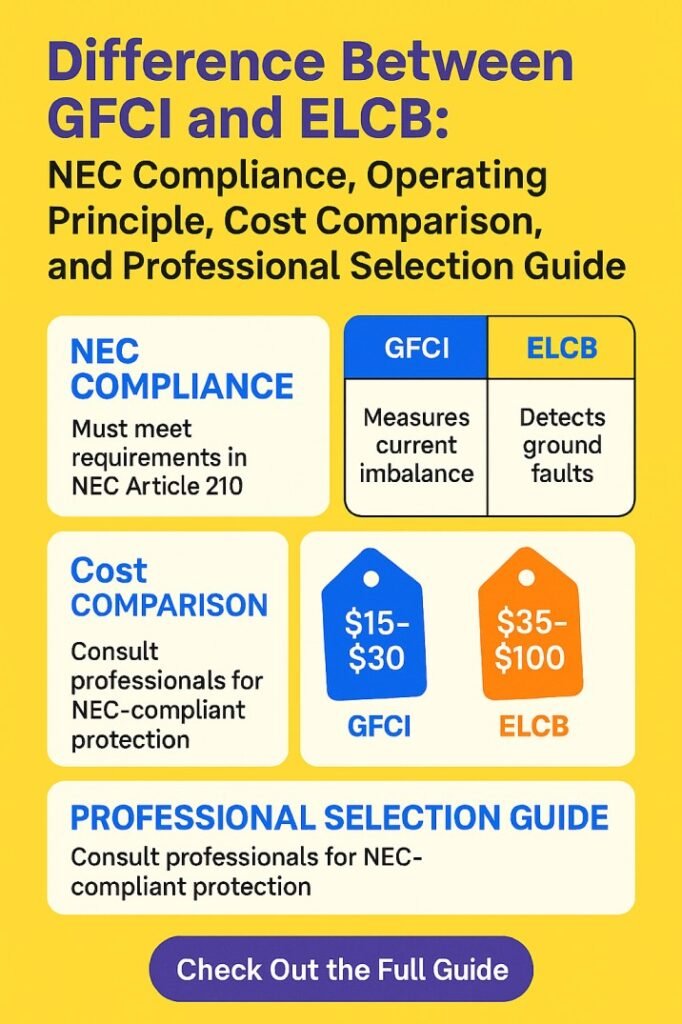
Table of Contents
Difference Between GFCI and ELCB
What is a GFCI?
A Ground Fault Circuit Interrupter (GFCI) is a device designed to protect people from electric shocks caused by ground faults. It constantly monitors the current flowing through the hot and neutral wires. If it detects an imbalance, even as small as 4–6 milliamps, it trips the circuit within milliseconds, cutting off electricity to prevent injury. GFCIs are commonly installed in areas with high moisture exposure, such as bathrooms, kitchens, garages, and outdoor outlets.
Know more about What is the Difference Between GFCI and Overcurrent Protection?
Key Features of GFCI
- Trips instantly on low-level current leakage.
- Protects people, not equipment.
- Required in wet or damp locations by NEC.
- Available in outlets, breakers, and portable forms.
- Easy to test and reset manually.
What is an ELCB?
An Earth Leakage Circuit Breaker (ELCB) is an older protection device that detects earth leakage currents. There are two types: Voltage Earth Leakage Circuit Breakers (vELCB) and Current Earth Leakage Circuit Breakers (cELCB). Modern ELCBs are mostly of the current-operated type.
ELCBs detect leakage currents flowing to earth and disconnect the power supply to prevent shocks and fire hazards. They are commonly used in industrial setups and main distribution boards to protect both humans and equipment.
Key Features of ELCB
- Detects earth leakage currents typically above 30–300 milliamps.
- Protects both people and equipment depending on rating.
- Can be used in dry and industrial environments.
- Usually installed at the main distribution board.
- Offers some protection against electrical fires.
Know more about Coincidence Factor vs Diversity Factor: The Load Calculation Mistake Engineers Still Make
NEC Compliance for GFCI and ELCB
The National Electrical Code (NEC) has specific requirements for GFCI and ELCB usage.
- GFCI Compliance: NEC Article 210.8 mandates GFCI protection for all 125V, 15A, and 20A outlets in kitchens, bathrooms, laundry areas, outdoor receptacles, basements, and garages. NEC also requires periodic testing of GFCIs to ensure proper operation.
- ELCB Compliance: While ELCBs are not explicitly mentioned in the NEC, their function is comparable to modern Ground Fault Protection of Equipment (GFPE) in Article 230.95 and 240.21 for commercial or industrial setups. Current-operated ELCBs meeting UL standards are considered compliant in certain industrial installations.
Operating Principle
The primary difference between GFCI and ELCB lies in their operating principles:
- GFCI Operating Principle: GFCI measures the current balance between live and neutral conductors. If a difference occurs, it trips almost instantly. It reacts to very small leakages (4–6 mA) which makes it highly sensitive for personal protection.
- ELCB Operating Principle: ELCB measures current leakage to earth. A current above the set threshold (usually 30–300 mA) will trip the device. It reacts slower than GFCIs and is primarily aimed at preventing electrical fires or protecting larger equipment.
Know more about Difference Between Relay and Contactor: 7 Powerful Reasons This Guide Makes It Easy
Comparison Table: Difference Between GFCI and ELCB
| Feature | GFCI | ELCB |
|---|---|---|
| Protection Focus | People | People and Equipment |
| Leakage Detection | 4–6 mA | 30–300 mA |
| Installation Location | Outlets, Bathrooms, Kitchens | Main distribution boards, Industrial |
| Trip Speed | Milliseconds | Slower than GFCI |
| NEC Requirement | Required in wet/damp locations | Not directly mentioned, industrial use |
| Reset Mechanism | Manual Reset | Manual or automatic depending on model |
| Sensitivity | High (for personal safety) | Medium (for equipment protection) |
| Typical Use Case | Residential, commercial | Industrial, larger electrical systems |
| Cost | Moderate | Higher than basic GFCI |
| Maintenance | Easy to test and maintain | Requires periodic testing and calibration |
Cost Difference Between GFCI and ELCB
When deciding between a GFCI and an ELCB, cost is often a key consideration.
- GFCI Cost: Standard GFCI outlets range from $15–$50 depending on brand, type, and amperage rating. GFCI breakers for panels can range from $30–$120. The installation is straightforward and requires minimal modifications.
- ELCB Cost: ELCBs are more expensive, typically ranging from $50–$250 depending on rating and industrial specifications. Installation is more complex, often requiring professional electricians to connect at the main board with proper earth connections.
While GFCIs are cost-effective for residential protection, ELCBs are justified in industrial environments where higher leakage thresholds and equipment protection are critical.
Know more about Power Factor vs Crest Factor: Important Differences & Comparison
Professional Selection Guide
Selecting between a GFCI and ELCB requires careful evaluation of the environment, load type, and compliance requirements:
- Residential Settings: GFCIs are the preferred choice due to their sensitivity, ease of installation, and NEC-mandated applications. Bathrooms, kitchens, and outdoor outlets should always have GFCI protection.
- Industrial Settings: ELCBs or modern RCCBs (Residual Current Circuit Breakers) are suitable where equipment protection and fire prevention are priorities. Industries with heavy machinery, high-voltage circuits, or long wiring runs benefit from ELCBs.
- Mixed Environments: In commercial spaces like restaurants or small factories, a combination of GFCIs for personal protection and ELCBs for main equipment protection may be the optimal solution.
Selection Checklist
- Identify wet or high-risk areas (use GFCI).
- Determine earth leakage current thresholds (use ELCB for higher currents).
- Ensure NEC compliance for residential and commercial installations.
- Consider long-term maintenance and testing requirements.
- Compare upfront cost with long-term safety benefits.
Know more about What is Demand Factor and Diversity Factor? Quick Concepts
Installation and Maintenance Tips
Proper installation ensures reliable protection and compliance:
- GFCI: Install at point-of-use outlets or breakers. Test monthly using the built-in test button. Replace if tripping fails repeatedly.
- ELCB: Ensure correct earthing and proper calibration. Test regularly with professional equipment. Industrial setups may require periodic maintenance logs.
Neglecting maintenance can reduce sensitivity and compromise safety, regardless of device type.
Know more about Coincidence Factor vs Demand Factor
Conclusion
The difference between GFCI and ELCB is more than just technical—it defines the level of protection, regulatory compliance, and suitability for specific environments. GFCIs are ideal for residential and commercial applications where human safety is the priority, responding quickly to small leakages. ELCBs are better suited for industrial and equipment-heavy settings, capable of preventing fires and protecting large loads.
Understanding NEC compliance, operating principles, cost, and installation requirements ensures professionals make informed decisions to maximize safety and efficiency.
Follow Us on Social:
Subscribe our Newsletter on Electrical Insights for latest updates from Electrical Engineering Hub
#differencebetweenGFCIandELCB, #GFCIvELCB, #ElectricalSafetyDevices, #NECCompliance, #ResidentialElectrical, #IndustrialElectrical, #ElectricalCodeStandards, #GroundFaultProtection, #ELCBvsGFCI, #ElectricalEngineering