NFPA 20 Fire Pump Testing | Certified Inspection, Performance Testing & Compliance Services
Fire protection systems are only reliable when every component performs correctly during an emergency. Among these components, the fire pump plays a critical role in maintaining adequate water pressure for sprinklers and standpipe systems. NFPA 20 Fire Pump Testing is an essential process that ensures the fire pump system operates according to safety standards, manufacturer specifications, and local fire code requirements.
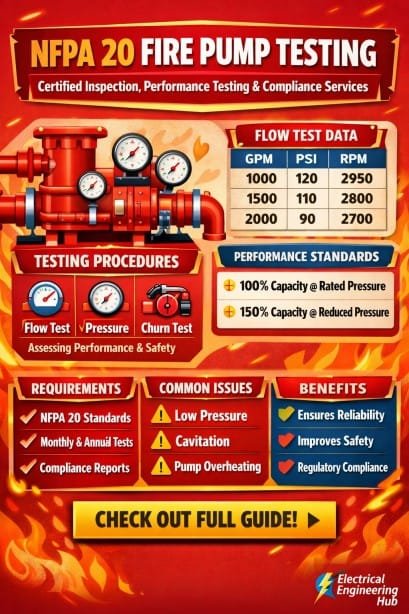
Table of Contents
Commercial buildings, industrial facilities, warehouses, hospitals, and high-rise properties depend on properly tested fire pumps to protect lives and assets. Routine testing also helps facility owners avoid system failures, costly downtime, insurance issues, and compliance violations.
What Is NFPA 20 Fire Pump Testing?
NFPA 20 Fire Pump Testing refers to the inspection and performance evaluation of fire pump systems according to the National Fire Protection Association standard NFPA 20, which governs the installation of stationary fire pumps for fire protection.
Use our online tool for free Conduit Fill Calculator for Fire Alarm Cable: Best Tool for Engineers
The testing process verifies that the fire pump can deliver the required water flow and pressure during fire emergencies. It includes mechanical inspection, operational checks, pressure readings, flow testing, controller verification, and performance curve analysis.
Fire pump testing is commonly required for:
- Commercial buildings
- Industrial plants
- Shopping malls
- Data centers
- Manufacturing facilities
- Residential towers
- Healthcare facilities
- Educational institutions
A certified fire pump testing company uses calibrated instruments and approved procedures to confirm system reliability and code compliance.
Importance of Fire Pump Performance Testing
A fire pump may remain inactive for long periods. Without proper testing and maintenance, hidden issues can develop inside the system. Regular NFPA 20 Fire Pump Testing helps identify these problems before they lead to equipment failure.
Key benefits include:
| Benefit | Description |
|---|---|
| Improved Safety | Ensures reliable water supply during emergencies |
| Regulatory Compliance | Helps meet NFPA and local authority requirements |
| Reduced Downtime | Detects mechanical issues early |
| Insurance Support | Maintains compliance for insurance inspections |
| Longer Equipment Life | Prevents damage through preventive maintenance |
Performance testing also confirms that the fire protection system can meet hydraulic demand under full load conditions.
Know more about Residential Fire Alarm System: Best Guide
Components Checked During Fire Pump Testing
A professional fire pump inspection involves multiple system components. Each part is carefully evaluated to ensure operational readiness.
Fire Pump Assembly
Technicians inspect the pump casing, bearings, seals, couplings, and alignment. Excess vibration, leakage, or abnormal noise may indicate mechanical problems.
Fire Pump Controller
The controller is tested for automatic and manual operation. Voltage readings, transfer switches, alarm indicators, and emergency start functions are also checked.
Pressure Gauges
Pressure gauges are calibrated and inspected for accuracy. Incorrect readings can affect system performance analysis.
Diesel Engine or Electric Motor
Depending on the pump type, technicians inspect fuel systems, batteries, cooling systems, lubrication, and motor performance.
Relief Valves and Piping
The piping network, valves, and discharge components are checked for leaks, corrosion, and proper operation.
Types of Fire Pump Testing Services
Different testing procedures are performed depending on the installation, occupancy type, and code requirements.
Weekly and Monthly Testing
Routine churn tests verify that the fire pump starts automatically and maintains pressure without flowing water.
Common checks include:
- Pump startup time
- Suction and discharge pressure
- Controller status
- Battery condition
- Fuel levels
- Seal leakage
Explore details on Addressable Fire Alarm System All you need to know about
Annual Fire Pump Flow Testing
Annual flow testing measures the actual performance of the pump under different flow conditions. The test compares measured results against the manufacturer’s performance curve.
Typical flow test points include:
| Test Point | Performance Requirement |
|---|---|
| Churn | No-flow pressure condition |
| 100% Rated Capacity | Pump must meet rated pressure |
| 150% Capacity | Pump should maintain minimum required pressure |
This process confirms that the system can supply sufficient water during fire suppression operations.
Acceptance Testing
Newly installed fire pump systems require acceptance testing before commissioning. This verifies proper installation according to NFPA standards and project specifications.
Emergency System Testing
Backup power systems, transfer switches, and emergency operation modes are tested to ensure uninterrupted functionality during power failures.
NFPA Standards Related to Fire Pump Testing
Several NFPA standards work together to regulate fire protection systems.
| NFPA Standard | Purpose |
|---|---|
| NFPA 20 | Installation of stationary fire pumps |
| NFPA 25 | Inspection, testing, and maintenance of water-based systems |
| NFPA 70 | Electrical safety requirements |
| NFPA 110 | Emergency power systems |
Compliance with these standards helps maintain safe building operations and reduces liability risks.
If you are interested in Fire Alarm System Installation follow this Step by Step Guide
Common Problems Found During Testing
Professional NFPA 20 Fire Pump Testing often reveals issues that may not be visible during normal operation.
Some common findings include:
- Low discharge pressure
- Controller malfunction
- Corroded piping
- Air leaks in suction lines
- Battery failure
- Improper pump alignment
- Blocked relief valves
- Overheating motors
Early detection allows facility managers to schedule repairs before the system becomes unreliable.
Why Certified Fire Pump Inspection Matters
Certified testing professionals understand code requirements, hydraulic calculations, and manufacturer recommendations. Using qualified inspectors ensures accurate reporting and dependable performance evaluations.
A certified fire pump testing provider typically offers:
- Detailed inspection reports
- Pressure and flow analysis
- Calibration verification
- Compliance documentation
- Maintenance recommendations
- Deficiency reporting
These records are important during fire marshal inspections, insurance audits, and safety reviews.
Industries That Require Fire Pump Testing
Many industries rely on fire pumps due to high occupancy levels or fire risks.
Industrial Facilities
Factories and processing plants often require high-capacity fire protection systems because of combustible materials and operational hazards.
Commercial Buildings
Shopping centers, office towers, and hotels must maintain compliant fire suppression systems for occupant safety.
Healthcare Facilities
Hospitals and medical centers require uninterrupted fire protection to safeguard patients and critical equipment.
Warehouses and Logistics Centers
Large storage facilities depend on reliable sprinkler systems supported by properly functioning fire pumps.
Choosing a Professional Fire Pump Testing Company
Selecting the right testing company is important for safety and compliance. Look for providers with industry certifications, experienced technicians, and modern testing equipment.
If you are interested in installing a brand new fire Alarm system the we have covered Best Wireless Fire Alarm System which will make your decision easy during Selection
Consider the following factors:
| Selection Criteria | Why It Matters |
|---|---|
| Certified Technicians | Ensures code-compliant testing |
| Experience | Improves inspection accuracy |
| Advanced Equipment | Provides reliable performance data |
| Detailed Reporting | Supports compliance documentation |
| Emergency Support | Helps address urgent deficiencies |
A reputable service provider can also recommend preventive maintenance strategies to improve system reliability.
Know more about Smoke Detector Beeping: Why It Happens and How to Stop It
How Often Should Fire Pumps Be Tested?
Testing frequency depends on system type, occupancy classification, and local regulations. NFPA guidelines generally recommend:
- Weekly or monthly churn testing
- Annual flow testing
- Periodic controller inspections
- Battery and fuel system checks
- Full operational performance evaluation
Regular testing helps maintain readiness and minimizes the risk of unexpected failures.
Compliance and Safety Documentation
Proper documentation is a major part of NFPA compliance. Inspection reports should include:
- Test date and location
- Pump performance readings
- Pressure and flow measurements
- Equipment condition
- Deficiency notes
- Corrective action recommendations
Maintaining organized records simplifies future inspections and demonstrates compliance with fire safety regulations.
Find all about Best Commercial Fire Alarm System
Conclusion
NFPA 20 Fire Pump Testing is a critical part of maintaining a dependable fire protection system. Regular inspection and performance testing help ensure that fire pumps deliver the required pressure and water flow during emergencies. Certified testing services also support compliance with NFPA standards, insurance requirements, and local fire safety regulations.
Whether for commercial buildings, industrial facilities, hospitals, or warehouses, professional fire pump testing improves system reliability and reduces operational risks. Investing in scheduled inspections, annual flow testing, and preventive maintenance protects both property and lives while ensuring long-term fire safety compliance.
Follow Us on Social:
Subscribe our Newsletter on Electrical Insights for latest updates from Electrical Engineering Hub
#Nfpa20FirePumpTesting,#FirePumpTesting,#NFPA20Compliance,#FireProtectionSystems,#PumpPerformanceTest,#FireSafetyInspection,#EmergencyPumpTesting,#IndustrialFireSafety,#FirePumpMaintenance,#NFPAStandards