NEC Article 400 Explained: Flexible Cords, Uses, Limits & Code Mistakes to Avoid
Understanding NEC Article 400 is crucial for electricians, contractors, and engineers who work with flexible cords and cables. This article dives deep into the code’s key points, practical applications, limitations, and common mistakes to avoid. By the end, you will have a clear understanding of how to use flexible cords safely, comply with electrical codes, and prevent hazards in residential, commercial, or industrial settings.
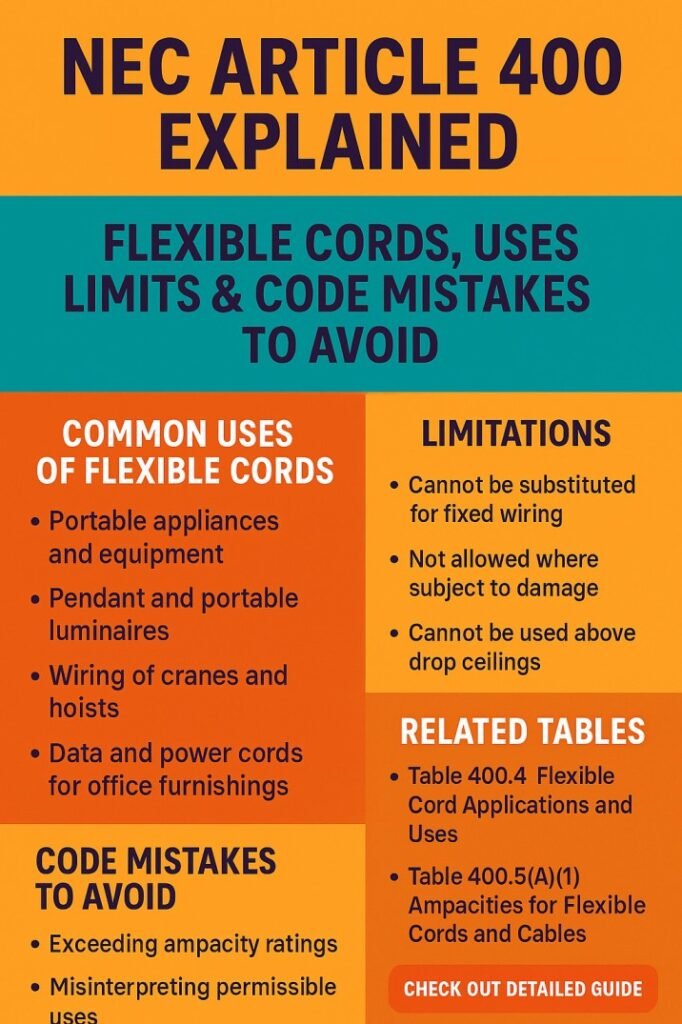
Table of Contents
What is NEC Article 400?
NEC Article 400 specifically addresses the installation, use, and limitations of flexible cords and cables. These cords are widely used in applications where permanent wiring is impractical or where mobility is required, such as with appliances, tools, and temporary wiring setups. The article defines what qualifies as a flexible cord, its allowable uses, and scenarios where it is strictly prohibited.
Flexible cords are different from permanent wiring because they are designed to withstand bending and movement without damaging the conductors inside. However, misuse of flexible cords can lead to overheating, short circuits, and even fire hazards. NEC Article 400 ensures that electricians understand where and how these cords can be safely applied.
Know everything about NEC Article 310 which include Ampacity Rules, Wire Sizing & Code Secrets Electricians Must Know
Types of Flexible Cords
NEC Article 400 categorizes flexible cords based on construction, insulation, and intended use. Common types include:
- Type SJT – Heavy-duty, portable cords for appliances and industrial tools.
- Type SO – Service cords for outdoor or damp environments.
- Type SVT – Light-duty cords for lamps and household equipment.
- Type SEOW – Weather-resistant cords suitable for wet locations.
The type of cord determines its voltage rating, flexibility, insulation thickness, and allowable application. Choosing the correct type is essential for safety and code compliance.
Allowable Uses of Flexible Cords
NEC Article 400 outlines scenarios where flexible cords can be used. Key permitted uses include:
- Connecting portable lamps, appliances, and tools.
- Temporary power supply for equipment during construction or maintenance.
- Extension cords for non-permanent applications.
- Wiring of movable equipment where flexibility is required.
Using flexible cords for permanent wiring, routing through walls, ceilings, or floors is strictly prohibited. This is one of the most common code violations that electricians make.
Discover all about NEC Code Practice Test: A Complete Guide to Boost Your Exam Success
Installation Rules and Best Practices
Proper installation ensures that flexible cords operate safely without causing damage or hazards. NEC Article 400 emphasizes several installation rules:
- Avoid sharp bends: Excessive bending can damage insulation and conductors.
- Prevent abrasion: Use protective sheaths or raceways if cords pass through high-traffic areas.
- Support cords properly: Do not let cords hang unsupported; use cord hooks or straps.
- Do not exceed ampacity: Check the cord’s ampacity rating against the connected load.
- Temperature rating: Ensure cords are used within their specified temperature limits.
Following these installation practices reduces the risk of overheating, mechanical damage, and electrical fires.
Common Code Violations
Even experienced electricians sometimes overlook NEC Article 400 requirements. Common violations include:
- Using flexible cords as permanent wiring.
- Running cords through walls, ceilings, or doors.
- Overloading cords beyond their rated capacity.
- Using damaged or worn cords without replacement.
- Connecting cords in series using multiple extension cords, creating a fire hazard.
Being aware of these mistakes and correcting them ensures code compliance and prevents dangerous situations.
Explore everything about NEC Article 220: A Comprehensive Guide
Flexible Cord Ampacity Table
A practical way to ensure safe usage is by referring to ampacity ratings for flexible cords. Here’s a simplified guide:
| Cord Type | Wire Gauge | Max Ampacity | Typical Use |
|---|---|---|---|
| SJT | 16 AWG | 10 A | Household tools, lamps |
| SJT | 14 AWG | 15 A | Medium-duty appliances |
| SO | 12 AWG | 20 A | Industrial equipment |
| SVT | 18 AWG | 7 A | Lamps, light-duty tools |
| SEOW | 10 AWG | 30 A | Outdoor equipment |
This table ensures electricians select the correct cord type and gauge for the intended load, preventing overheating and code violations.
Flexible Cord Length Limits
NEC Article 400 does not set a strict maximum cord length, but practical limits are essential. Longer cords can cause voltage drops and overheating. General recommendations include:
- Household appliances: ≤25 feet
- Portable tools: ≤50 feet
- Industrial machinery: ≤100 feet with proper gauge
Always calculate voltage drop and ensure cords are rated for the full load over the desired length.
Understand better about nec 430.32
Temperature and Environmental Considerations
Flexible cords are rated for specific temperatures and environmental conditions. Using a cord beyond its rating can lead to insulation breakdown and short circuits. Key points from NEC Article 400 include:
- Indoor cords should not be used outdoors unless rated for wet locations.
- Heat-resistant cords must be used near ovens, heaters, or industrial equipment.
- Sunlight-resistant cords are necessary for long-term outdoor exposure.
Practical Tips to Avoid Mistakes
- Inspect cords regularly for fraying, cuts, or exposed wires.
- Label extension cords with maximum allowable load.
- Never staple or nail cords to surfaces.
- Avoid placing cords under rugs or heavy furniture.
- Use grounded cords for all metal appliances.
These precautions align with NEC Article 400 guidelines and prevent common hazards.
Know more about NEC Grounding Table 250.122 Explained: Correct Equipment Grounding Conductor Size
Real-World Applications
Flexible cords are indispensable in daily electrical work. Common real-world uses include:
- Powering construction tools on job sites.
- Temporary lighting for events or maintenance.
- Connecting movable office equipment.
- Outdoor landscaping or irrigation systems using portable pumps.
In all these cases, selecting the right cord type and following NEC Article 400 ensures safety and longevity of the electrical installation. Access our powerful online calculator now Conduit Fill Calculator (NEC Standard): Best Tool
Conclusion
Understanding NEC Article 400 is essential for anyone working with flexible cords. This article covered cord types, allowable uses, installation rules, ampacity, environmental considerations, and common mistakes. By following NEC Article 400, electricians and engineers ensure safe, code-compliant installations while avoiding costly violations and potential hazards.
Read in detail about nec 392.22
Always remember: flexible cords are convenient and versatile, but misuse can lead to serious electrical problems. Proper selection, installation, and regular inspection keep your electrical systems safe and reliable.
Follow Us on Social:
Subscribe our Newsletter on Electrical Insights for latest updates from Electrical Engineering Hub
#NECArticle400, #NECCode, #ElectricalCode, #FlexibleCords, #ElectricalWiring, #CodeCompliance, #ElectriciansLife, #NFPA70, #ElectricalStandards, #WireInstallation